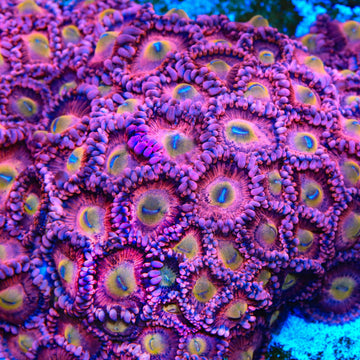
JF Fairy Tale Zoanthids Coral
Overview
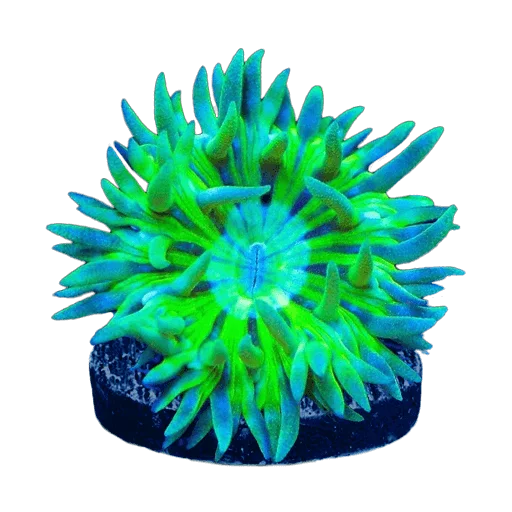
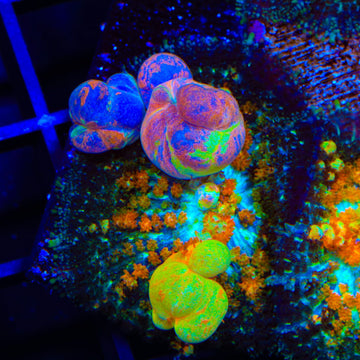
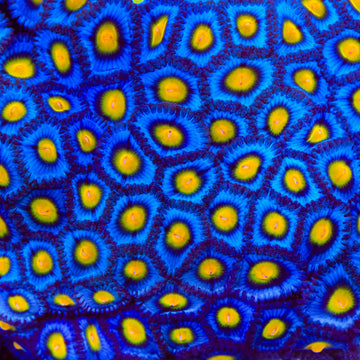
JF Fairy Tale Zoanthids Coral displays small button polyps with contrasting skirts and a colored central disc. Zoanthus sp., a colonial soft polyp coral, forms mat-like colonies and does well under moderate light and low to moderate water flow. It is photosynthetic with symbiotic algae but will accept fine meaty foods; occasional feeding can support faster growth and maintain color. Give it space as it can spread over rockwork, and handle with care due to potential toxins.
Quick Facts
Care
Easy
Lighting
Low–Moderate
Flow
Moderate indirect
Placement
Low–Mid
Temperament
Peaceful to semi-aggressive (2–3 inches spacing)
Recommended Parameters
Temp
76–80°F
pH
8.1–8.4
Salinity
1.025–1.026
Calcium
400–450 ppm
AlkAlkalinity
8–10 dKH
Magnesium
1250–1350 ppm
Feeding
photosynthetic (primary), microplankton, phytoplankton, zooplankton, rotifers, cyclops, powdered coral foods (e.g., Reef-Roids), marine snow
Care & Placement
FAQ
Frequently Asked Questions
About the JF Fairy Tale Zoanthids Coral
-
Why do my JF Fairy Tale Zoanthids lose pastel hues under white light but glow under blues?
This morph’s pigments fluoresce strongly in the 420–470 nm range. Under heavy white, greens and lavenders can wash out; under royal blue/UV they pop. Aim for moderate PAR (80–150) with a blue-heavy schedule. If colors brown, reduce nutrients/light a bit; if they pale, increase feeding or shorten peak intensity. Gradual 10–15% weekly light changes prevent stress. -
My colony is “melting” after rapid growth—what’s the likely cause?
Sudden downturns often follow compounding stress: high organics, bacterial film, and pests. Check for zoa-eating nudibranchs and sundial snails at night. Improve flow to prevent detritus settling between polyps, run fresh carbon, and consider a Furan-2 dip for suspected bacterial issues. Stabilize temp and alkalinity. Avoid large water chemistry swings after heavy fragging or pruning. -
Can I speed growth without pushing the colony to overrun the rockwork?
Zoanthus sp. spreads by mat, so provide isolated “islands” to contain it. For faster but controlled growth, keep stable NO3 5–15 ppm, PO4 0.03–0.1 ppm, moderate flow, and occasional fine-particle feeds (rotifers, reef roids). Avoid excess iodine/trace dosing—let regular water changes handle it. Trim the mat edge monthly with a sharp blade to guide direction. -
My fairy-tale morph stays closed near other soft corals—what’s happening?
Chemical warfare is likely. Zoanthus tolerates some allelochemicals but can sulk near leathers or palys. Increase distance, run high-quality carbon and change it every 2–4 weeks, and boost flow to disperse metabolites. A 10–20% water change and relocating the colony slightly off direct downstream from the aggressor usually restores extension within days.