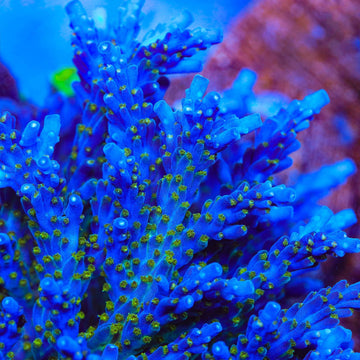
Mattv Orange Passion Acropora Coral
Overview
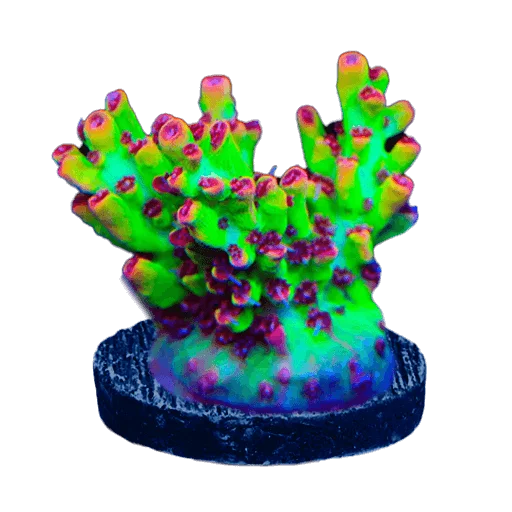
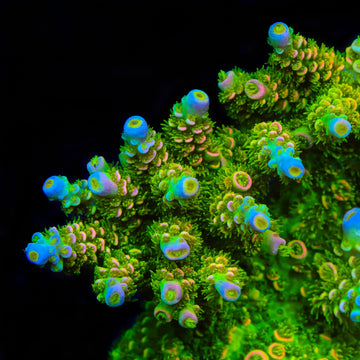
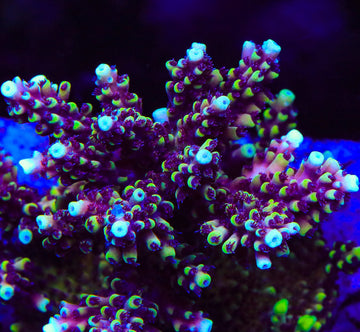
MattV Orange Passion Acropora Coral shows bright orange polyps on blue to teal branches. Acropora tenuis is a branching small-polyp stony coral that prefers strong lighting and high, turbulent water flow. It relies mainly on symbiotic algae for energy but accepts fine particulate foods, which can support growth and color stability. Place high on stable rockwork with ample space from other corals to avoid shading and aggressive contact.
Quick Facts
Care
Difficult
Lighting
High
Flow
High
Placement
High
Temperament
Peaceful (2–4 inches spacing)
Recommended Parameters
Temp
77–80°F
pH
8.1–8.4
Salinity
1.025–1.026
Calcium
420–450 ppm
AlkAlkalinity
7.5–8.5 dKH
Magnesium
1280–1350 ppm
Feeding
photosynthetic (primary), microplankton, rotifers, copepod nauplii, oyster eggs, powdered coral foods, amino acids
Care & Placement
FAQ
Frequently Asked Questions
About the Mattv Orange Passion Acropora Coral
-
How do I keep the signature orange base and blue tips on a MattV Orange Passion Acropora?
Target PAR around 300–400 with strong blue spectrum (actinic-heavy). Keep nutrients low but present (NO3 5–15 ppm, PO4 0.03–0.08 ppm). Maintain alk 7.5–8.5 dKH with tight stability; spikes wash out tips. Adequate potassium (380–420 ppm) supports blue tones; iron in balance helps polyp color. Excess white light can push the base toward green; gradual light acclimation prevents bleaching. -
What growth pattern should I plan for, and where should I place it?
This A. tenuis encrusts first, then throws dense, short branches with thick radial corallites. Give it space from overhead shade—place mid-to-high on rock with open, turbulent flow so branches develop evenly. Avoid laminar blasts that strip tissue on one side. Mount on a small pedestal or plug stem to keep the base clean and encourage even encrustment. -
Why are the tips burning or the base slowly receding even though parameters look fine?
Tip burn often follows alk spikes combined with high PAR; dial back light 10–20% and stabilize dosing. Base STN can stem from stagnant zones or bacterial stress: increase random flow around the base, siphon detritus, and consider an iodine-based dip on affected margins. Check for micro-shading from nearby colonies and verify temp stability; small daily swings can trigger tissue loss. -
Are there pests that target this tenuis, and how can I detect them early?
AEFW favor smooth-skinned acros but will hit tenuis; look for oval bite marks, pale patches, and egg clusters on the underside. Night inspections with a flashlight reveal crawling flatworms and improved polyp extension elsewhere. Red bugs reduce polyp fluff and color saturation. Use dips (e.g., Bayer/iodine) for frags, quarantine new pieces, and consider Acropora guard crabs to improve polyp grooming.