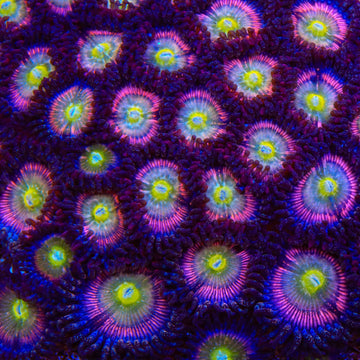
Hallucination Zoanthids Coral
Overview
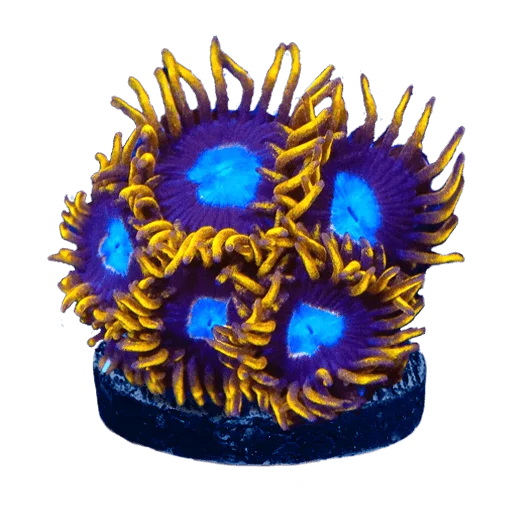
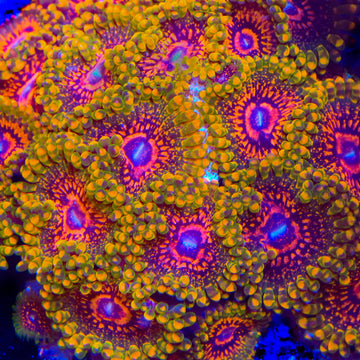
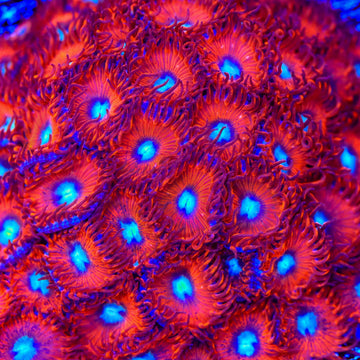
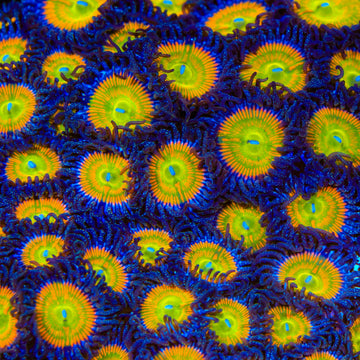
Hallucination Zoanthids Coral shows bright, contrasting oral discs with a defined ring and short tentacles. Classified as Zoanthus sp., it is a soft colonial polyp coral; provide moderate light and low to moderate, steady flow. It is mainly photosynthetic via symbiotic algae, but occasional fine particulate feeding can support faster growth and maintain color. Place on isolated rock to control spreading and leave space from aggressive neighbors.
Quick Facts
Care
Moderate
Lighting
Moderate
Flow
Moderate, indirect
Placement
Low–Mid
Temperament
Semi-aggressive (2–4 inches spacing)
Recommended Parameters
Temp
76–82°F
pH
8.1–8.4
Salinity
1.025–1.026
Calcium
380–430 ppm
AlkAlkalinity
8–9.5 dKH
Magnesium
1250–1350 ppm
Feeding
photosynthetic, microplankton, phytoplankton, marine snow, powdered coral foods (e.g., Reef-Roids), fine zooplankton suspensions, amino acid supplements
Care & Placement
FAQ
Frequently Asked Questions
About the Hallucination Zoanthids Coral
-
My Hallucination polyps looked great, then shrank and “melted.” What’s the usual culprit and fix?
Rapid shifts in salinity/alkalinity, pest nudibranchs, or bacterial “zoa pox” are common triggers. Stabilize salinity and alk, provide moderate, random flow, and reduce light slightly during recovery. Inspect at night for nudis and their egg spirals; dip with iodine for pests. For pox, a Furan‑2 bath can help. Trim away necrotic tissue and avoid handling stress. -
How do I keep the neon speckling and deep reds from washing out?
Prioritize strong blue spectrum with modest whites; acclimate to roughly 80–150 PAR. Keep nutrients measurable (NO3 ~5–15 ppm, PO4 ~0.03–0.10 ppm) to prevent paling. Stable temp and low metals are key; small, consistent water changes help trace balance. If colors dull, lower whites first, not total intensity, and give 2–3 weeks before judging. -
Do Hallucinations benefit from feeding, or is light enough?
Light sustains them, but occasional feeding boosts growth and color. Target-feed when skirts are extended with fine foods (rotifers, reef roids, enriched nauplii) or dilute aminos 1–2x weekly. Use tiny amounts; excess fuels film algae that irritates polyps. Watch for a feeding response (mouth puckering). Skip feeding during recovery from dips or fragging. -
Any placement or neighbor issues unique to this morph?
It’s a slower grower, so avoid shade from tall LPS or fast zoa mats. Give moderate, detritus‑shedding flow and a clean base to prevent grime under the mat. Run fresh carbon and maintain space from palythoa and stinging LPS with long sweepers. If skirts shorten or stay tucked, it’s often a flow or chemical irritation cue—adjust gradually.