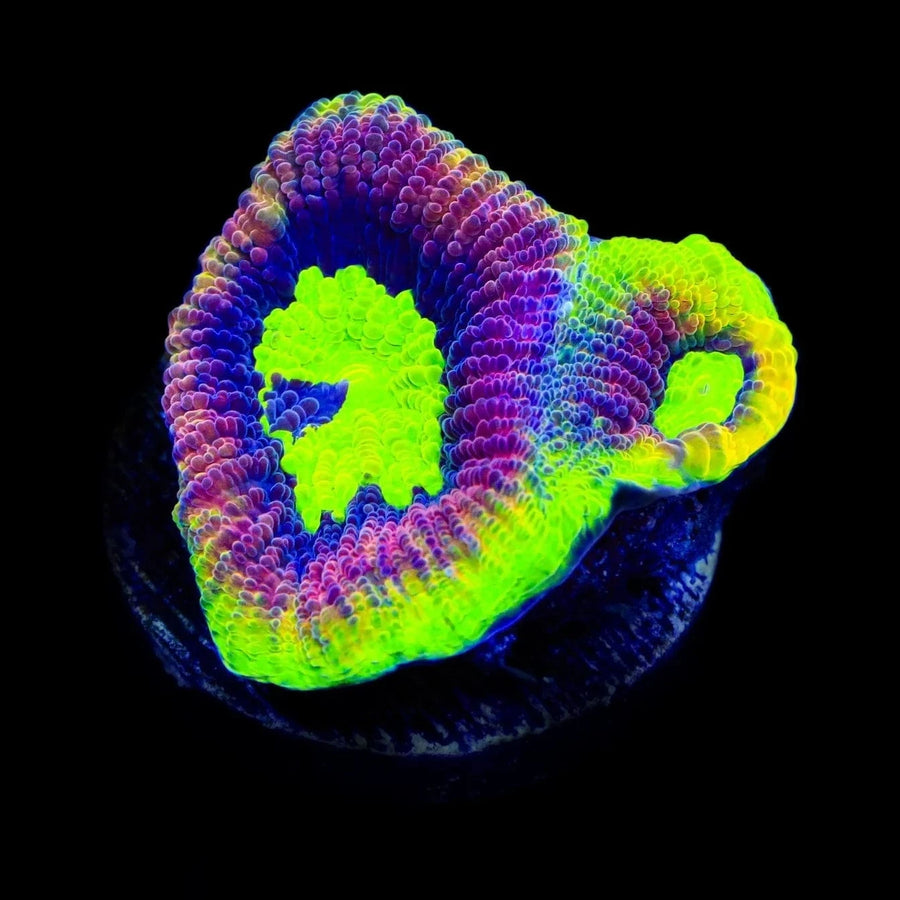
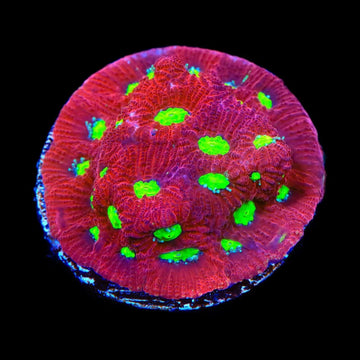
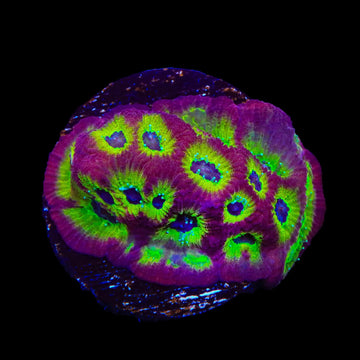
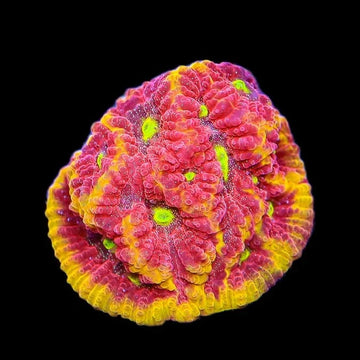
JF Psycho Rim Favia Coral
Overview
JF Psycho Rim Favia Coral shows bright contrasting rims around each polygonal eye (corallite). Scientifically Favia favus, it is a hardy stony, encrusting to massive brain coral; provide moderate lighting and moderate, indirect water flow. It is photosynthetic via symbiotic algae but benefits from occasional small meaty feedings after lights out to support growth and color. Give it space for night sweeper tentacles and place where it will not shade or sting neighboring corals.
Quick Facts
Care
Moderate
Lighting
Low–Moderate
Flow
Moderate
Placement
Low–Mid
Temperament
Semi-aggressive (4–6 inches spacing)
Recommended Parameters
Temp
76–80°F
pH
8.1–8.4
Salinity
1.025–1.026
Calcium
400–450 ppm
AlkAlkalinity
8–10 dKH
Magnesium
1280–1350 ppm
Feeding
photosynthetic, mysis shrimp, enriched brine shrimp, chopped krill or clam, zooplankton, microplankton, marine snow, coral-specific powders (e.g., Reef-Roids), oyster eggs, rotifers
Care & Placement
FAQ
Frequently Asked Questions
About the JF Psycho Rim Favia Coral
-
Why does the neon “psycho” rim fade or turn brown on my JF Psycho Rim Favia Coral?
Rim color often washes out from too much white light, abrupt PAR increases, or ultra-low nutrients. Aim for moderate PAR with strong blue/violet (420–460 nm), and keep nutrients detectable (NO3 5–15 ppm, PO4 0.03–0.08). Acclimate light slowly over 2–3 weeks. Stable alkalinity (8–9 dKH) and magnesium near 1300 help pigment retention. Avoid prolonged shading of the rim. -
How aggressive are the sweepers at night, and how should I place it?
Favia favus deploys 2–6 inch sweepers after lights out, with reach extending under higher flow and after heavy feeding. Give at least 6 inches of clearance from neighbors, especially softies and LPS with weaker stings. Medium, indirect flow prevents detritus buildup without provoking excessive sweeper extension. Use a rubble “moat” or isolated rock to protect nearby frags. -
My colony has slow tissue recession from the base—what should I check first?
Verify stability: recent alkalinity swings, rapid salinity changes, or low magnesium often precede recession. Inspect for vermetid snails and their mucous nets irritating tissue; remove or glue over tubes. Increase gentle flow to reduce detritus. If bacterial “brown jelly” appears, frag healthy margins well away from the lesion, perform iodine dips, and reduce organics with improved skimming and frequent filter sock changes. -
Can I keep vibrant color and promote a tidy, dome-like growth form?
Provide moderate, even PAR and rotate the frag/colony 90° every week for uniform light until it domes. Mount on a larger tile or flat rock so tissue can encrust before thickening upward. Maintain slightly nutrient-rich water (not stripped) and target feed fine meaty foods 1–2x weekly at lights-out for polyp inflation and coloration. Keep flow crosswise to avoid shaded valleys.