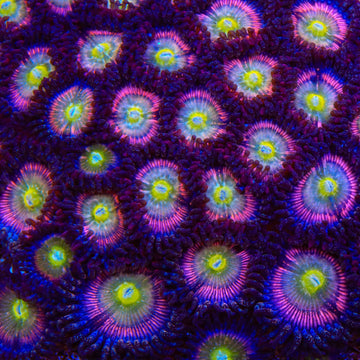
God of War Zoanthids Coral
Overview
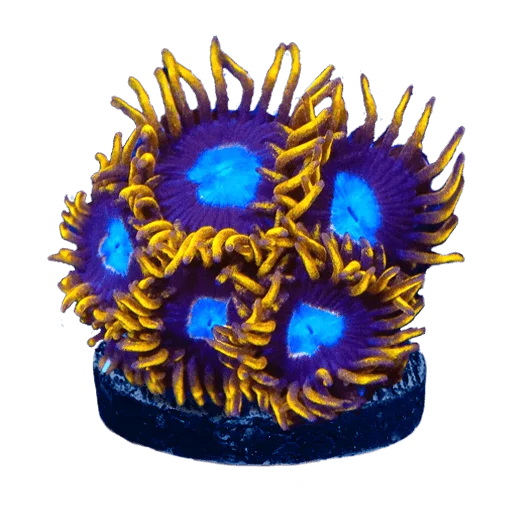
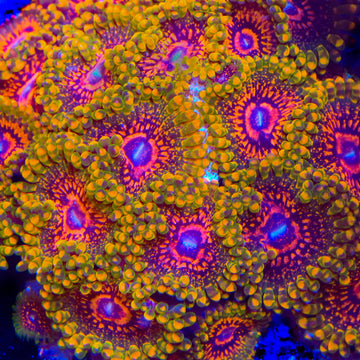
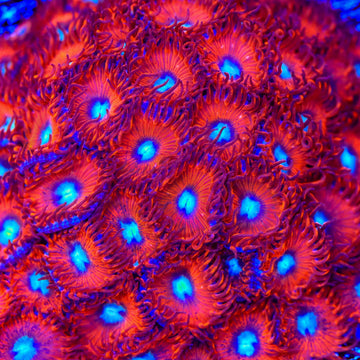
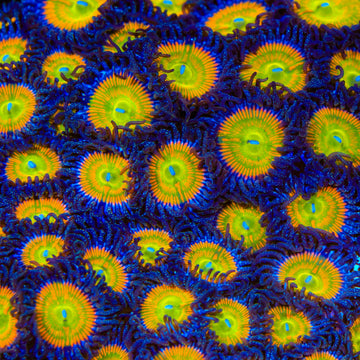
God of War Zoanthids Coral features bright red to orange centers with contrasting skirts on small button polyps. Zoanthus sp., a soft colonial polyp, does well with moderate light and low to moderate, steady water flow. Primarily photosynthetic with symbiotic algae, it can take occasional small particulate foods to support growth and color. Place on an isolated rock to control spreading and avoid contact with delicate neighbors; handle carefully, as some zoanthids may contain toxins.
Quick Facts
Care
Easy
Lighting
Moderate
Flow
Moderate, indirect
Placement
Low–Mid
Temperament
Peaceful to semi-aggressive (2–3 inches spacing)
Recommended Parameters
Temp
78–80°F
pH
8.1–8.4
Salinity
1.025–1.026
Calcium
380–430 ppm
AlkAlkalinity
8–10 dKH
Magnesium
1250–1350 ppm
Feeding
photosynthetic (primary), microplankton, phytoplankton, rotifers, copepod nauplii, baby brine shrimp, zooplankton suspensions, powdered coral foods, marine snow
Care & Placement
FAQ
Frequently Asked Questions
About the God of War Zoanthids Coral
-
Why do my God of War zoas lose their fiery red/orange skirts under higher light?
They can brown or shift under intense white or very high PAR. Aim for moderate PAR (80–150) with blue-heavy spectrum to keep saturation. Maintain stable nutrients (NO3 5–15 ppm, PO4 0.03–0.1 ppm); ultra-low nutrients wash out color. Avoid sudden light increases; ramp over 1–2 weeks. Iron/iodine dosing helps only if tested and deficient. -
These polyps spread fast—how do I keep God of War from overrunning nearby corals?
They mat across rock and can shade slower encrusters. Place them on an isolated “island” rock or use sand gaps. Trim the mat edge monthly with a scalpel and siphon fragments. Maintain moderate, cross-flow to prevent detritus buildup that fuels faster creep. Keep a 2–3 inch buffer from sensitive SPS and low-growing LPS. -
Do God of War zoas benefit from feeding, or is light enough?
They photosynthesize well but respond to occasional fine foods (reef roids, cyclops, rotifers) 1–2x weekly. Target lightly; overfeeding can cause film bacteria and closed polyps. Feed with pumps off for 10–15 minutes, then restore flow to clear leftovers. Watch for fuller skirts and faster matting as signs of positive response. -
My colony is “pouting” or melting—what uncommon causes should I check?
Inspect at night for zoa-eating nudibranchs, sundial snails, and spiders; remove manually and dip (iodine or peroxide 1–2 mL 3% per 100 mL, 2–3 minutes). Check for vermetid snail mucus irritating skirts. Correct low flow that traps detritus between polyps. Stabilize alk 8–9.5 dKH and avoid rapid nutrient swings; sudden ULN shifts often trigger receding mats.