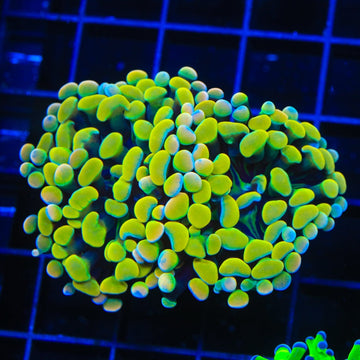
Holy Grail Torch Coral
Overview
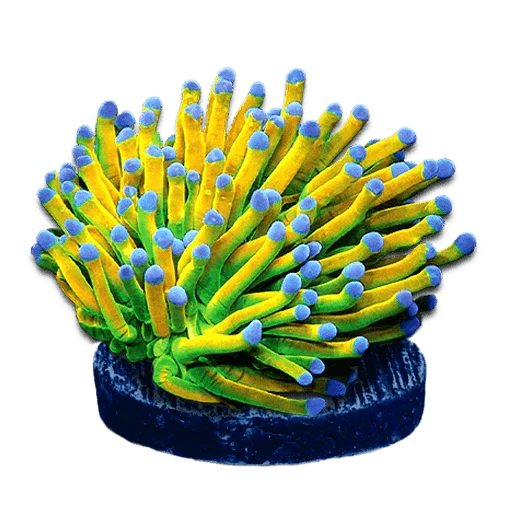
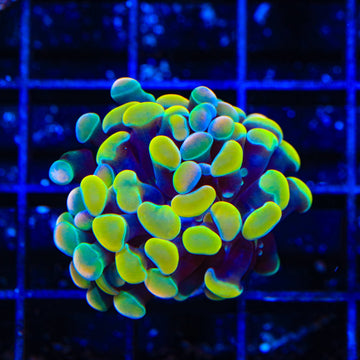
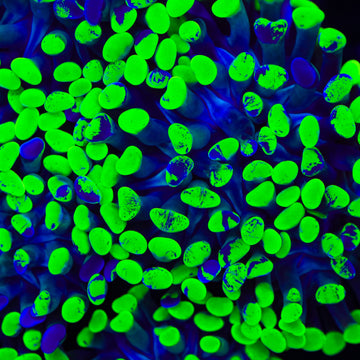
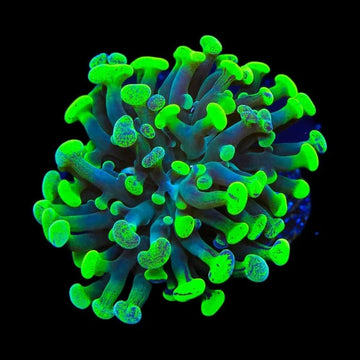
Holy Grail Torch Coral displays long, fleshy tentacles with bright yellow to gold tips. Euphyllia glabrescens is a large-polyp stony coral with a branching skeleton; provide moderate lighting and low to moderate, gently varied flow. It relies on symbiotic algae for energy but accepts small meaty foods, which can support growth and help maintain coloration. Place with ample space, as its sweeper tentacles can sting nearby corals.
Quick Facts
Care
Moderate
Lighting
Moderate–High
Flow
Moderate, indirect
Placement
Mid–Low
Temperament
Aggressive (6–10 inches spacing)
Recommended Parameters
Temp
78–80°F
pH
8.1–8.4
Salinity
1.025–1.026
Calcium
420–450 ppm
AlkAlkalinity
8–9 dKH
Magnesium
1280–1350 ppm
Feeding
photosynthetic, mysis shrimp, enriched brine shrimp, finely minced clam or shrimp, zooplankton, rotifers, microplankton, coral-specific powdered foods
Care & Placement
FAQ
Frequently Asked Questions
About the Holy Grail Torch Coral
-
How do I keep the “Holy Grail” gold coloration from fading to green or brown?
Balance light and nutrients. Aim for PAR ~180–250 with a blue-leaning spectrum, but avoid blasting it with high whites. Keep nitrate 5–15 ppm and phosphate 0.03–0.1 ppm; ultra-low nutrients can dull gold, while high nutrients push brown. Stable alkalinity 8–9 dKH and consistent trace elements (especially iron/manganese via regular water changes) support pigment. Sudden light changes cause shifts—acclimate slowly. -
My torch has great color but short, reluctant extension—what should I adjust?
Check flow first. Torches want strong, indirect, alternating flow that moves tentacles without folding the flesh over the skeleton. Direct, laminar streams cause retraction and tip burn. Verify alk 8–9 dKH, magnesium 1300–1400, and temperature 24–26°C; minor swings shut them down. Carbon helps if nearby leathers are releasing chemicals. Inspect for pests and avoid recent large GFO drops that shock phosphate. -
Can I place it with other Euphyllia, and how far should I space it?
Torch corals are more combative than hammers or frogspawn and often sting even other Euphyllia. Allow 15–25 cm clearance; nighttime sweepers can reach surprising lengths. Don’t let different species touch; “fusion” is risky and often ends in tissue loss. If you must keep several, separate colonies with rock ridges, run carbon, and keep flow patterns that prevent tentacles from being pinned against neighbors. -
How do I handle sudden brown jelly on a valued head?
Act fast. Remove the colony, siphon away jelly, and excise the affected head below the disease line. Give the remaining heads an antiseptic dip (iodine or commercial alternatives), then return to high, indirect flow. Increase aeration and run fresh carbon. Stabilize parameters and avoid stressors like rapid light changes. If shipping stress caused it, consider a short, controlled antibiotic bath in a separate container per vetted protocols.