Bicolor Frogspawn Coral
Overview
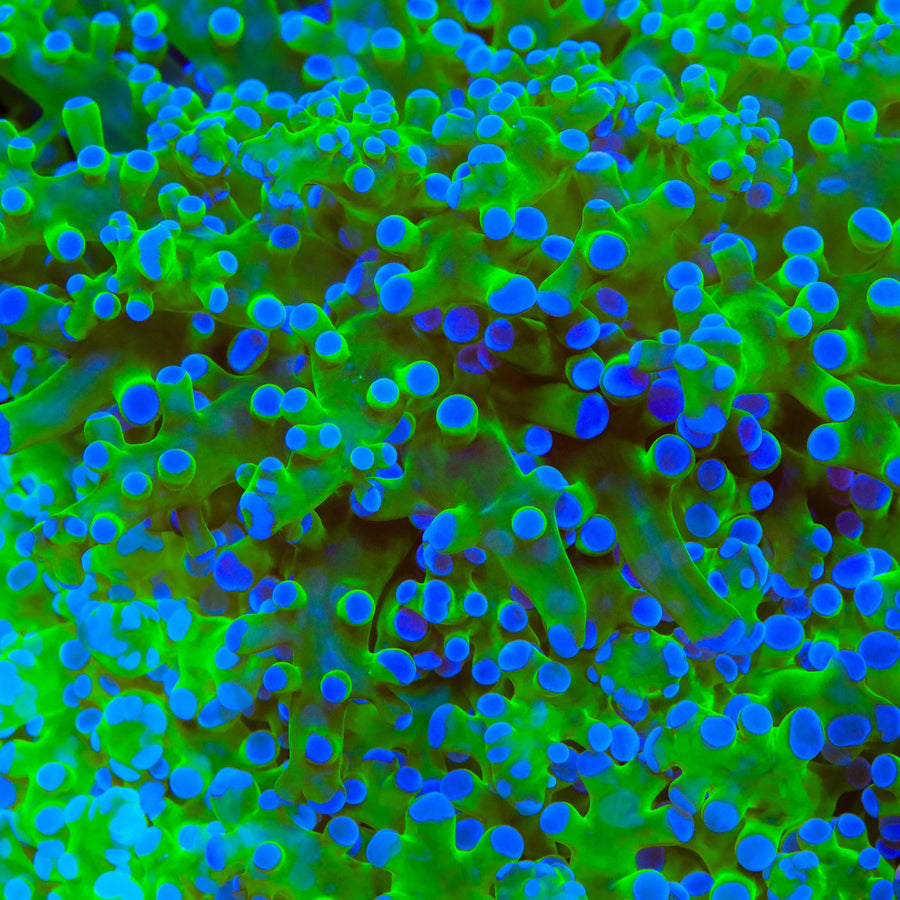
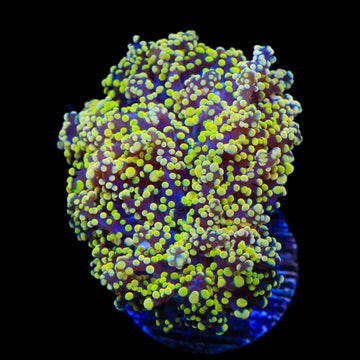
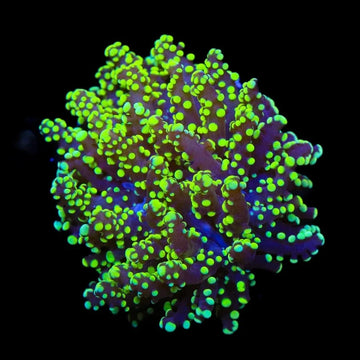
Bicolor Frogspawn Coral shows two-toned, bubble-tipped polyps with branching heads. Scientifically Fimbriaphyllia divisa, it is a large-polyp stony coral with a branching skeleton; it prefers moderate light and gentle to moderate, indirect flow. It relies on symbiotic algae for most nutrition but accepts small meaty foods, which can support growth and maintain color. Place with space around it, as long sweeper tentacles can sting nearby corals, and avoid strong direct flow that collapses the polyps.
Quick Facts
Care
Moderate
Lighting
Moderate
Flow
Moderate, indirect
Placement
Mid–Low
Temperament
Aggressive (6–8 inches spacing)
Recommended Parameters
Temp
77–80°F
pH
8.1–8.4
Salinity
1.025–1.026
Calcium
400–450 ppm
AlkAlkalinity
8–10 dKH
Magnesium
1280–1350 ppm
Feeding
photosynthetic, mysis shrimp, enriched brine shrimp, finely chopped krill or clam, zooplankton, microplankton, marine snow, coral-specific powdered foods
Care & Placement
FAQ
Frequently Asked Questions
About the Bicolor Frogspawn Coral
-
Is Fimbriaphyllia divisa the branching or wall-type frogspawn, and why does that matter?
F. divisa is the wall type. Instead of separate heads, it forms a continuous meandering skeleton, making it harder to frag and slower to recover from damage. Tissue recession can spread along the wall, so stability is key. Choose a secure, semi-permanent placement with moderate, indirect flow to avoid flesh abrasion and minimize the risk of brown jelly spreading across a large connected polyp. -
How can I keep the bicolor look from fading or turning uniformly green or brown?
Two-tone color holds best under moderate PAR (roughly 80–150) with strong blue spectrum and stable, slightly nutrient-rich water (detectable nitrate 5–15 ppm, phosphate 0.03–0.1 ppm). Avoid sudden shifts in light intensity or spectrum. If tips dull, reduce white channels, lengthen photoperiod gradually, and correct low nutrients. Iron and iodine at natural seawater levels can help pigment expression, but avoid heavy dosing swings. -
My wall frogspawn is retracting on one side; how do I stop a recession from traveling?
First, correct the trigger: reduce direct blast, remove detritus, and stabilize parameters (alk swings are common culprits). Gently turkey-baste debris, increase intermittent flow for gas exchange, and target-feed lightly to support recovery. If brown jelly appears, perform an iodine or coral dip and increase isolation flow. Last resort for localized infection is a precise skeletal cut well into healthy tissue, but this is risky for wall forms. -
Can it touch other Euphyllia, and which neighbors are most problematic?
It usually tolerates other frogspawn and many hammers at a respectful distance, but torches often win contact wars. Expect night sweeper tentacles reaching 3–6 inches, especially under higher nutrients. Give extra space down-current where sweepers extend. Avoid close proximity to aggressive Faviids or Galaxea. If you see repeated stinging, rotate rockwork to shift flow or relocate the neighbor rather than the wall colony