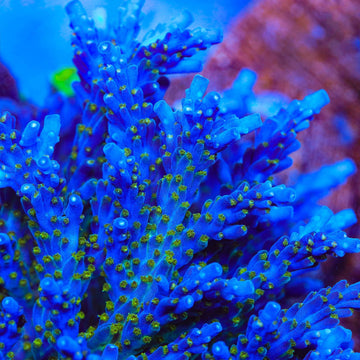
Homewrecker Acropora Coral
Overview
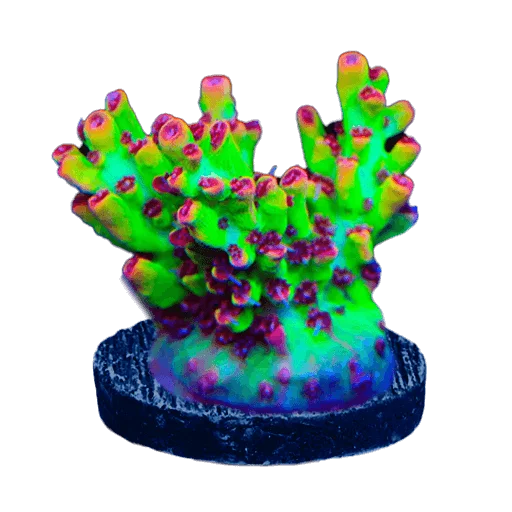
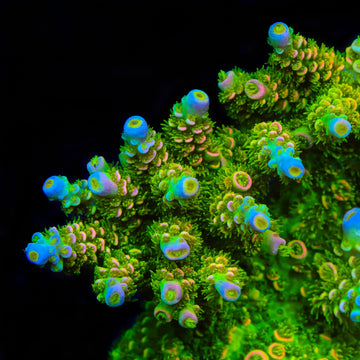
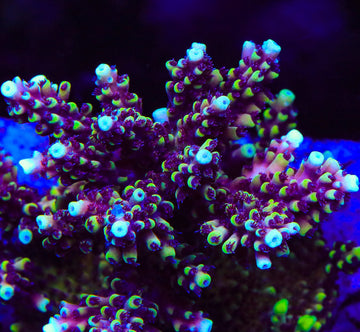
Homewrecker Acropora Coral shows branching stalks with small, tightly spaced corallites and contrasting pastel tips. Acropora tenuis is a small-polyp stony branching coral that prefers strong lighting and high, turbulent water flow. It is primarily photosynthetic with symbiotic algae, but occasional fine particulate foods can support growth and color. Place high on stable rockwork with space from aggressive corals, as the branches can break easily.
Quick Facts
Care
Difficult
Lighting
High
Flow
High
Placement
High
Temperament
Peaceful (2–3 inches spacing)
Recommended Parameters
Temp
77–80°F
pH
8.1–8.4
Salinity
1.025–1.026
Calcium
420–450 ppm
AlkAlkalinity
7.5–9 dKH
Magnesium
1280–1350 ppm
Feeding
photosynthetic (primary), microplankton, zooplankton, rotifers, copepod nauplii, oyster eggs, reef-specific powdered coral foods (e.g., Reef-Roids), amino acid supplements
Care & Placement
FAQ
Frequently Asked Questions
About the Homewrecker Acropora Coral
-
Why does my Homewrecker Acropora lose its rainbow pop and look pastel or dull?
Color shifts usually track the light–nutrient balance and trace availability. Target 250–350 PAR heavy blue/UV (400–470 nm), nitrate 5–15 ppm, phosphate 0.03–0.08 ppm. If it washes out, reduce PAR slightly or raise nutrients. If it browns, increase PAR or flow and check phosphate creep. Maintain alk 8–9 dKH, pH 8.2–8.5. Potassium (380–420 ppm), iron, and manganese support blues/greens; dose only after testing. -
How do I tell “burnt tips” from slow tissue loss at the base, and what fixes each?
Burnt tips show white, fresh-looking ends with good base color—often high alk plus high PAR with low nutrients. Lower alk to ~8–8.5 dKH or raise nutrients slightly. Base STN starts at the plug and creeps upward—commonly from instability (temp/alk swings), low flow at the base, or shading. Stabilize parameters, add more random flow, lift the colony off the rockwork, and improve light to the base. -
What placement and flow pattern suit Acropora tenuis to prevent base browning?
Mid–high placement with strong, randomized flow (gyre plus alternating pulses) keeps detritus off and light even. Tenuis branches quickly; it shades its foot if planted too low or in uniform laminar flow. Angle the frag so new branches don’t shadow the base, and let it fully encrust before vertical growth. Rotating or slightly raising the mount can restore light to the underside and revive base color. -
Are there pests this coral is particularly sensitive to, and how can I screen for them?
Tenuis shows polyp retraction and dull tips early with Acropora-eating flatworms and red bugs. Inspect at night with a blue flashlight and white light burst for bite marks or “sand” on tissue. Dip all new pieces (iodine or commercial AEFW-targeted dips), turkey-baste during quarantine to expose flatworms, and use magnification to spot eggs on the base. Maintain a 4–6 week QT with repeat dips to break life cycles.