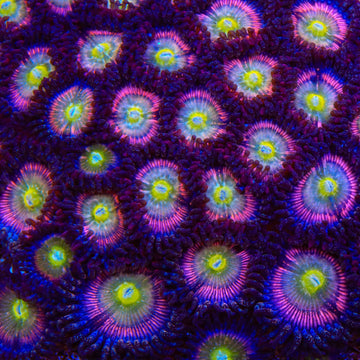
Halle Berry Zoanthids Coral
Overview
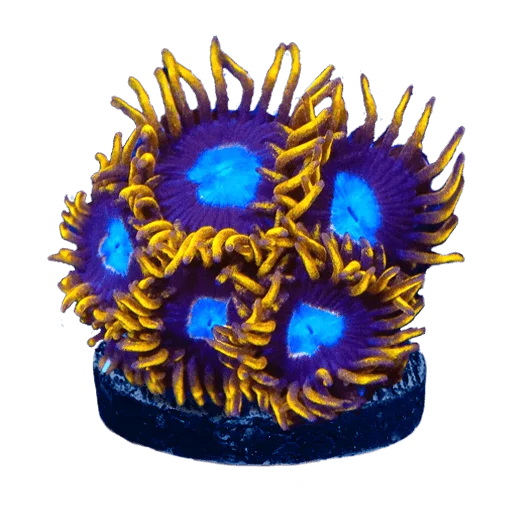
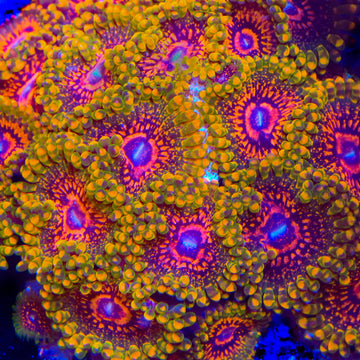
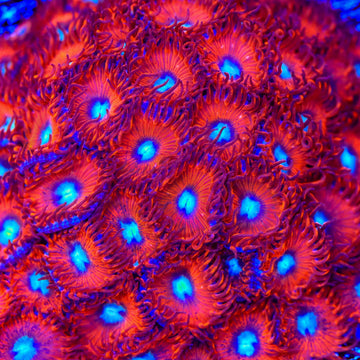
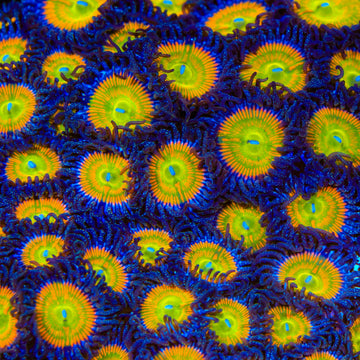
Halle Berry Zoanthids Coral shows small button polyps with distinct centers and frilled skirts. Zoanthus sp., a soft, mat-forming colonial polyp, does well under moderate light and low to moderate, indirect water flow. It is photosynthetic with symbiotic algae but benefits from occasional small planktonic or meaty foods to support growth and color. Place on an isolated rock to limit spreading and keep space from more aggressive corals.
Quick Facts
Care
Easy
Lighting
Low–Moderate
Flow
Moderate, indirect
Placement
Low–Mid
Temperament
Peaceful (2–3 inches spacing)
Recommended Parameters
Temp
76–80°F
pH
8.1–8.4
Salinity
1.025–1.026
Calcium
380–420 ppm
AlkAlkalinity
8–10 dKH
Magnesium
1250–1350 ppm
Feeding
photosynthetic, microplankton, phytoplankton, zooplankton (rotifers, copepod nauplii), powdered coral foods, marine snow
Care & Placement
FAQ
Frequently Asked Questions
About the Halle Berry Zoanthids Coral
-
How do I keep Halle Berry Zoanthids from browning or washing out?
Target a blue-heavy spectrum (420–460 nm) with moderate PAR around 80–150 and acclimate slowly after any light change. Keep nutrients non-zero (nitrate 5–15 ppm, phosphate 0.03–0.10 ppm) to support color. Stable alkalinity and salinity matter more than chasing trace tweaks, though light iodine and iron dosing can help if tested. Avoid blasting them with white light. -
My polyps stay tight or tiny—what should I check first?
Rule out pests: look for zoa-eating nudibranchs, sundial snails, and zoa pox. Use a commercial dip and remove egg spirals. Increase random flow to shed film algae, run fresh carbon for allelopathy, and inspect for detritus buildup at the base. Verify stable temp and salinity; sudden swings often trigger prolonged closures. -
Will they overgrow or fight nearby corals?
Zoanthus can spread quickly by matting, shading slower neighbors. Give a buffer from meaty LPS with long sweepers and from soft corals known for chemical warfare. Use carbon and regular water changes if mixing species. Consider “island” rocks to contain the mat and trim back runners before they cross to the main structure. -
Do they prefer the sand bed or rockwork, and how much flow?
Rockwork is better for clean encrusting growth and easier trimming. Moderate, indirect flow keeps skirts dancing without folding; long skirts often signal lower flow, stubby skirts higher flow. Avoid dead spots that trap detritus at the base. Place colonies where they get even light from above to maintain uniform coloration.