Mint Leather Coral
Overview
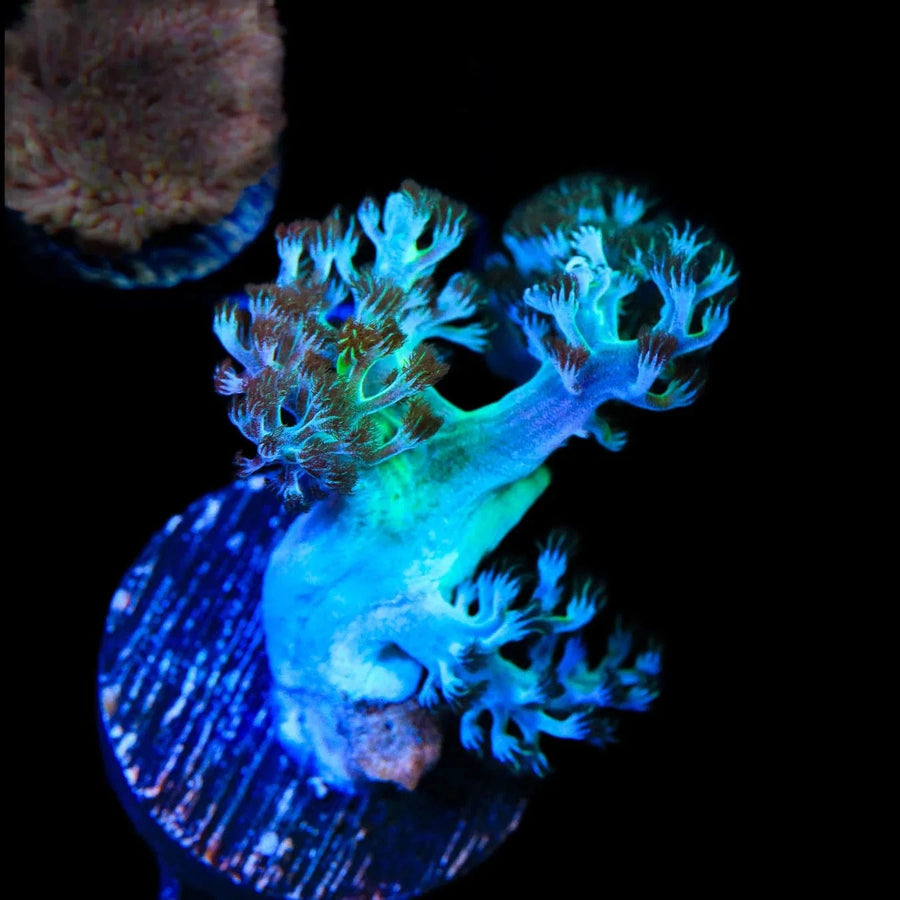
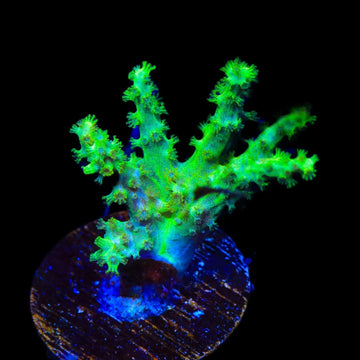
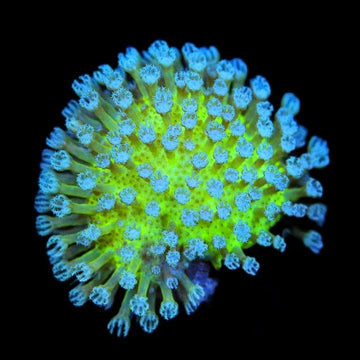
Mint Leather Coral shows a smooth, mint-green surface with finger-like lobes that extend polyps. Sinularia sp. is a soft, branching leather coral; it prefers moderate lighting and moderate to strong, varied water flow. Primarily photosynthetic via symbiotic algae, it benefits from occasional fine particulate foods, which can support growth and maintain color. Place with room for expansion and avoid contact with neighbors, as it can release chemicals that irritate other corals.
Quick Facts
Care
Easy
Lighting
Moderate–High
Flow
Moderate, indirect
Placement
Mid–High
Temperament
Semi-aggressive (3–6 inches spacing)
Recommended Parameters
Temp
75–80°F
pH
8.1–8.4
Salinity
1.025–1.026
Calcium
380–430 ppm
AlkAlkalinity
8–10 dKH
Magnesium
1250–1350 ppm
Feeding
photosynthetic (primary), phytoplankton, microplankton, marine snow, dissolved organics, coral foods
Care & Placement
FAQ
Frequently Asked Questions
About the Mint Leather Coral
-
My Mint Leather Coral hasn’t extended polyps after a waxy shed. How do I troubleshoot a prolonged “closed” phase?
Check for film algae or cyanobacteria trapped on the surface—gently baste with a turkey baster in strong, random flow. Replace activated carbon; Sinularia release terpenes that can suppress itself and neighbors. Verify stable alkalinity and temperature; small swings often delay reopening. Increase oxygenation and surface agitation. Avoid handling; retraction can last 7–14 days after stress or rescape. -
Why did the mint-green tone fade or brown, and how can I restore the look?
Sinularia color shifts with spectrum and nutrients. The green fluoresces under higher blue channels (actinic/royal blue). Excess warm white or high nutrients encourage brown zooxanthellae density; ultra-low nutrients can wash out color. Aim for moderate nutrients, strong but not bleaching light, and good flow to keep tissue clean. Consistent photoperiod and fresh carbon help maintain clarity and pop. -
It seems to irritate nearby SPS and some LPS without touching—what’s happening?
Sinularia can wage chemical warfare, especially during growth spurts and sheds. Symptoms include SPS dulling, poor polyp extension, or tissue edge recession downcurrent. Space it well, keep it on its own rock “island,” maintain strong skimming and regular carbon changes, and increase water changes after pruning or sheds. Direct a portion of flow and carbon reactor output between it and sensitive corals. -
The colony droops or collapses onto itself at times. Is this normal, and how do I manage shape?
Periodic “deflation” is common as it adjusts internal water pressure or prepares to shed. Ensure turbulent, not laminar, flow so branches don’t fold one direction all day. Anchor to a sturdy base; large heads get top-heavy and can tip. Prune selectively to open inner flow paths and prevent self-shading. Stable alkalinity and pH help maintain turgidity and structure.