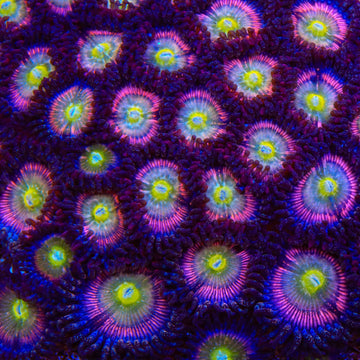
Electric Gatorade Zoanthids Coral
Overview
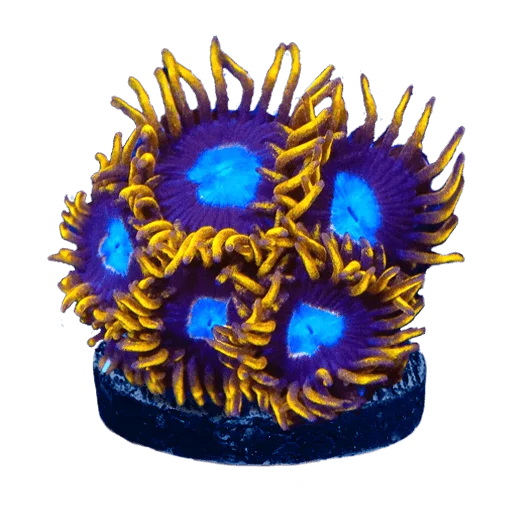
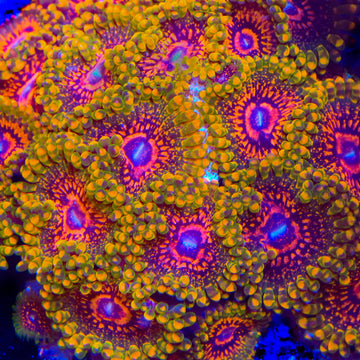
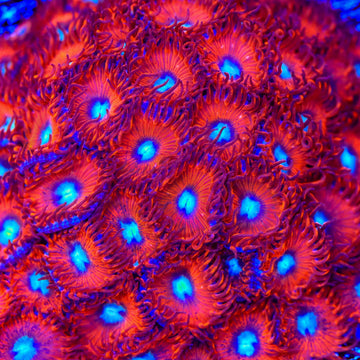
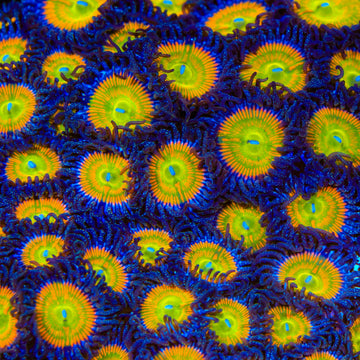
Electric Gatorade Zoanthids Coral displays bright green oral discs with contrasting centers and short skirts. The scientific name Zoanthus sp. identifies it as a soft, colonial polyp coral that does well under moderate light and low to moderate water flow. It is primarily photosynthetic via symbiotic algae but accepts small particulate foods, which can support growth and color. Place on an isolated rock to limit spreading, and handle with care to avoid exposure to potential toxins.
Quick Facts
Care
Easy
Lighting
Low–Moderate
Flow
Moderate
Placement
Low–Mid
Temperament
Semi-aggressive (2–3 inches spacing)
Recommended Parameters
Temp
76–80°F
pH
8.1–8.4
Salinity
1.025–1.026
Calcium
400–450 ppm
AlkAlkalinity
8–10 dKH
Magnesium
1250–1350 ppm
Feeding
photosynthetic (primary), phytoplankton, zooplankton, rotifers, copepod nauplii, Cyclops, powdered coral foods (e.g., Reef-Roids), marine snow, very fine meaty foods
Care & Placement
FAQ
Frequently Asked Questions
About the Electric Gatorade Zoanthids Coral
-
How do I keep Electric Gatorade Zoas from shifting to dull green or brown under my lights?
Aim for moderate PAR (80–150) with a blue-heavy spectrum. Stable, low-to-moderate nutrients (NO3 ~5–15 ppm, PO4 ~0.03–0.1 ppm) keep pigments vibrant without starving them. Strong white channels can wash color; run a longer blue photoperiod and slowly ramp intensity. Avoid sudden light increases—use acclimation modes. Trace elements like iodine/iron help, but test before dosing. -
These zoas spread fast—how do I prevent them from overrunning neighbors?
Mount them on an isolated “island” rock with a sand moat to limit mat creep. Prune by slicing the mat between polyps and removing small plugs. Increase laminar flow at borders to discourage encroachment. Keep distance from slower growers (acans, favias) and softies like discosoma that can chemically irritate. Inspect for stolon runners weekly. -
What’s the best feeding strategy for brighter skirts and faster growth?
They rely mostly on light but respond to occasional micro-feeds. Twice weekly, broadcast fine particulate foods (rotifers, reef roids, live phyto) during lower flow so polyps can catch it, then resume normal flow. Overfeeding fuels film algae on the mat—watch for slime buildup. Amino acids can help color, but dose lightly and monitor nutrients. -
Closed polyps and a “melting” look—what uncommon issues should I check?
Inspect at night for zoa-eating nudibranchs and sundial snails; remove manually and dip. Look for zoa pox (tiny pale pustules)—treat with Furan-2 dips. Increase turbulent flow to shed bacterial films. Check for vermetid snails and nearby stingers. If recently moved, reduce PAR by 20–30% and ramp back up over 1–2 weeks.