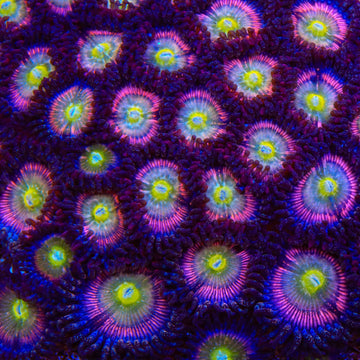
Bowzer Zoanthids Coral
Overview
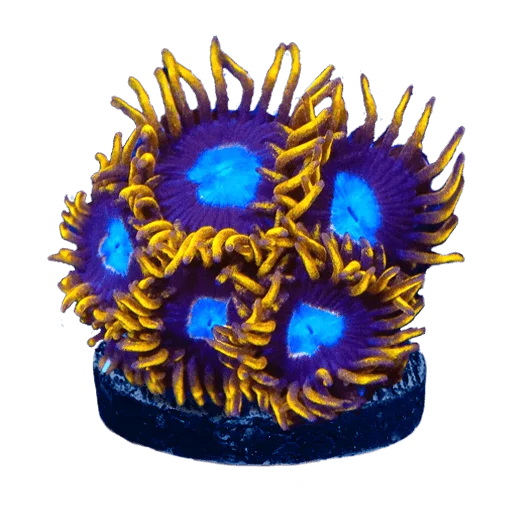
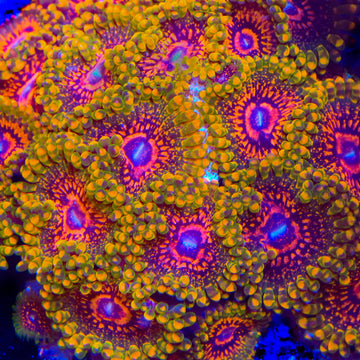
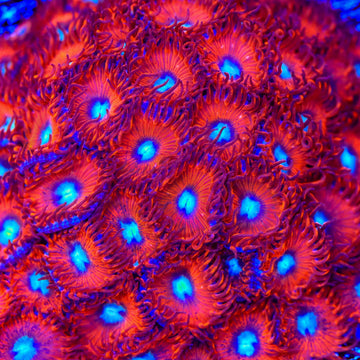
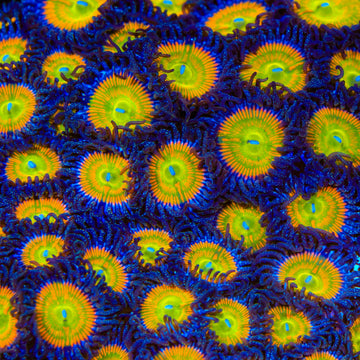
Bowzer Zoanthids Coral displays small button-like polyps on matting colonies with varied, contrasting centers and skirts. Classified as Zoanthus sp., it is a soft, colonial polyp coral that adapts to moderate light and low to moderate water flow. It is primarily photosynthetic via symbiotic algae but benefits from occasional fine particulate foods, which can support faster growth and deeper color. Place on isolated rock to manage spread and keep space from aggressive neighbors to avoid chemical or sting conflicts.
Quick Facts
Care
Easy
Lighting
Low–Moderate
Flow
Moderate, indirect
Placement
Mid–Low
Temperament
Semi-aggressive (can overgrow neighbors; 2–4 inches spacing)
Recommended Parameters
Temp
76–80°F
pH
8.1–8.4
Salinity
1.025–1.026
Calcium
400–450 ppm
AlkAlkalinity
8–10 dKH
Magnesium
1250–1350 ppm
Feeding
photosynthetic, microplankton, phytoplankton, rotifers, copepod nauplii, cyclops, oyster eggs, powdered coral foods
Care & Placement
FAQ
Frequently Asked Questions
About the Bowzer Zoanthids Coral
-
Why do my Bowzer Zoanthids change color or stay “pouted” after a move?
Shifts in spectrum, PAR, and nutrients drive color and extension. Aim for blue-heavy lighting (18–22K appearance), moderate PAR (80–150), nitrate 5–15 ppm, phosphate 0.03–0.10. Sudden increases bleach; too little light causes stretching. Maintain stable alkalinity and potassium (380–420 ppm) to support blues. Increase random flow to reduce films on the mat. Allow 1–2 weeks for re-acclimation. -
What pests and infections are most common, and how do I identify them?
Look for zoa-eating nudibranchs (ruffled backs; egg spirals near skirts), sundial snails (black-and-white spiral shell), and tiny “spider” crabs. Zoa pox shows as tan/white pustules on stalks. Treat with dips: iodine or 1–1.5% H2O2 for 30–60 seconds on affected areas, then rinse; Furan-2 baths for pox. Inspect at night with a flashlight and quarantine new frags. -
How can I manage rapid spread without losing other corals?
Mount colonies on “island” rocks separated by sand to limit creeping mats. Give space from LPS sweepers and aggressive soft corals. Run fresh activated carbon and change it weekly to reduce allelopathic compounds. Maintain brisk, cross-flow to keep detritus off the mat, which discourages bacterial films that can smother skirts. Trim runners periodically with a scalpel. -
Do Bowzer Zoanthids need feeding, and what’s the best approach?
Primarily photosynthetic, they still benefit from occasional fine foods (reef roids, powdered plankton, rotifers). Target or light broadcast feed once or twice weekly with pumps off for 10–15 minutes. Overfeeding fuels algae on the mat, so feed sparingly and maintain nutrients in range. A small amino dose before lights-out can improve extension; watch for film buildup and adjust flow.