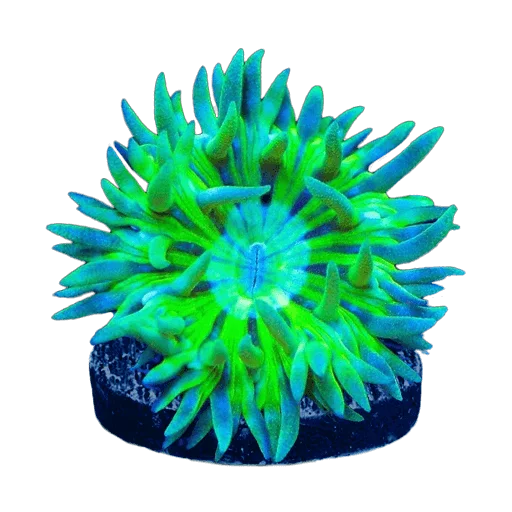
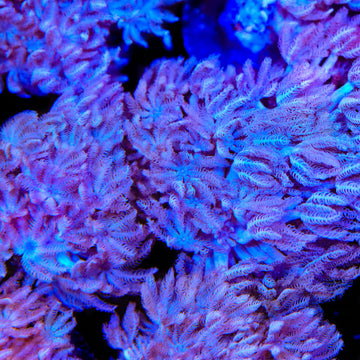
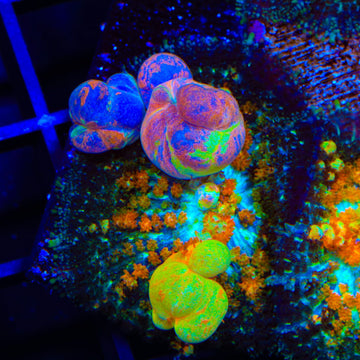
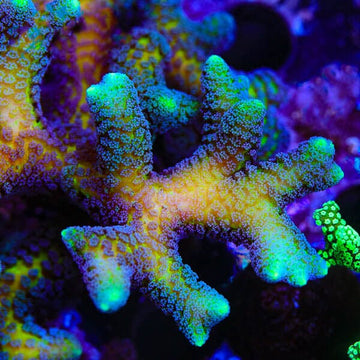
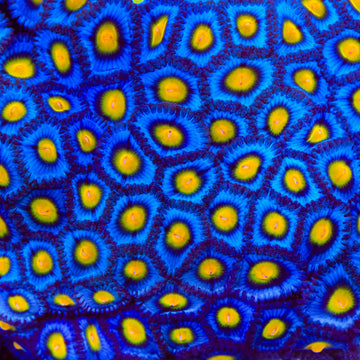
Great Owl Zoanthids Coral
Overview
Great Owl Zoanthids Coral forms a mat of small button-like polyps with contrasting centers and skirts. Classified as Zoanthus sp., this soft, colonial polyp coral prefers low to moderate light and moderate, indirect water flow. It is photosynthetic through symbiotic algae but benefits from occasional small particulate foods to support faster growth and stronger color. Place on a separate rock to control spreading and give space to slower corals; handle with care due to potential toxins.
Quick Facts
Care
Easy
Lighting
Low–Moderate
Flow
Moderate
Placement
Low–Mid
Temperament
Semi-aggressive (2–3 inches spacing; may overgrow neighbors)
Recommended Parameters
Temp
76–80°F
pH
8.1–8.4
Salinity
1.025–1.026
Calcium
380–420 ppm
AlkAlkalinity
8–9 dKH
Magnesium
1250–1350 ppm
Feeding
photosynthetic, phytoplankton, microplankton, zooplankton, rotifers, cyclops, marine snow, powdered coral foods
Care & Placement
FAQ
Frequently Asked Questions
About the Great Owl Zoanthids Coral
-
My Great Owl Zoanthids look dull compared to photos. How can I keep their owl-eye pattern and pop?
Maintain moderate PAR (120–200) with strong blue/UV (420–460 nm). Too much white or red light can wash colors; excessive PAR can cause paling. Keep nutrients moderate (NO3 5–15 ppm, PO4 0.03–0.1) and stable alkalinity. Trace elements like iodine and iron help pigmentation, but dose only if you test. Avoid rapid spectrum changes; adjust over a week. -
The colony is growing upward on long stalks and reaching—normal?
Stretched polyps signal they’re chasing light or flow is too low. Increase PAR gradually by 10–15% over 1–2 weeks or move them higher. Provide random, moderate flow to keep skirts moving without folding. If stretching persists, check for film algae shading the mat and clean gently with a soft brush or turkey baster. -
What pests uniquely target Zoanthus sp., and how do I spot early signs?
Watch for zoa-eating nudibranchs (match colony colors), sundial snails, and tiny “zoa spiders.” Early clues: bite marks, half-moon nips, nighttime closures, or egg spirals under polyps. Inspect after lights out with a flashlight. Use a dip (iodine or commercial) and manually remove adults and eggs. Repeat every 3–4 days for two weeks to break life cycles. -
My colony closed for days after adding a leather coral—what’s going on?
Chemical warfare is likely. Run fresh activated carbon, increase water changes, and add a bit more flow over the zoa mat. Space them apart or place Great Owls on an “island” rock to limit contact and overgrowth. If closure persists, move one species downstream of the other’s flow path and refresh carbon monthly to keep allelopathic compounds low.