Green Tip Frogspawn Coral
Overview
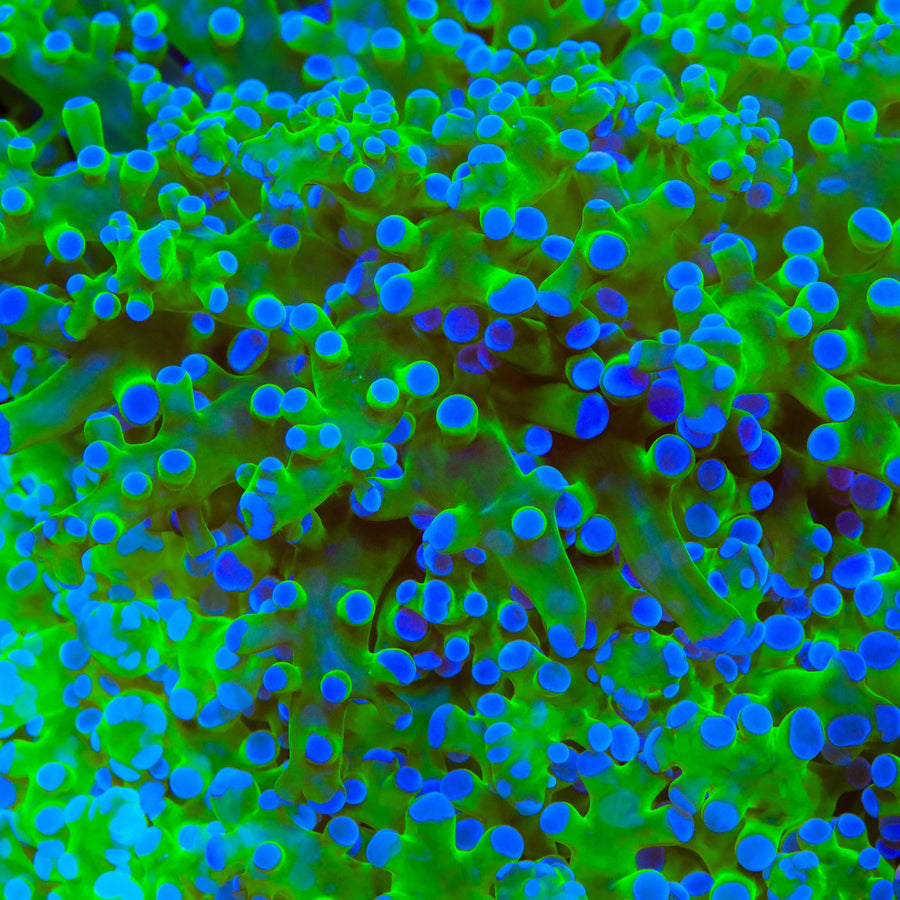
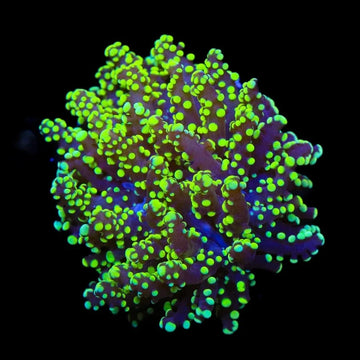
Green Tip Frogspawn Coral shows branching heads with fleshy, paddle-like tentacles tipped in green. Fimbriaphyllia divisa is a large-polyp stony coral that forms branching skeletons; it prefers moderate lighting and gentle to moderate, indirect flow. It hosts symbiotic algae for photosynthesis but accepts small meaty foods, which can support faster growth and maintain color. Place with space around it, as its sweeper tentacles can sting nearby corals, and avoid high-flow areas that cause tissue damage.
Quick Facts
Care
Moderate
Lighting
Moderate
Flow
Moderate, indirect
Placement
Mid–Low
Temperament
Semi-aggressive (6–8 inches spacing)
Recommended Parameters
Temp
76–80°F
pH
8.1–8.4
Salinity
1.025–1.026
Calcium
400–450 ppm
AlkAlkalinity
8–10 dKH
Magnesium
1280–1350 ppm
Feeding
photosynthetic, mysis shrimp, enriched brine shrimp, finely chopped krill or shrimp, zooplankton, microplankton, pellet or powdered coral-specific foods
Care & Placement
FAQ
Frequently Asked Questions
About the Green Tip Frogspawn Coral
-
Why do the green tips on my Green Tip Frogspawn fade or turn pastel under strong lighting?
The tips contain fluorescent proteins that peak under blue-heavy spectrum. Very high PAR bleaches the tips first. Aim for moderate PAR (80–150) with strong royal blue channels, and avoid rapid increases. Keep nutrients non-zero (nitrate 5–15 ppm, phosphate 0.03–0.1) to support pigments. Trace element stability (iodine/iron within normal reef ranges) also helps maintain color without chasing supplements. -
My Fimbriaphyllia divisa occasionally retracts and drops a polyp—what causes polyp bailout and can it recover?
Bailout is a stress response to harsh flow, rapid parameter swings, stings, or bacterial insult. Reduce direct flow, stabilize alkalinity and temperature, and inspect for vermetid snails or stinging neighbors. If a bailed polyp is intact, place it in a low-flow cup with rubble and gentle light; some reattach and calcify. Address the root stressor to prevent repeats. -
How can I safely propagate this branching frogspawn without causing tissue loss or infection?
Target natural branch junctions where skeleton narrows. Cut only bone with a diamond saw or bone cutters, keeping tissue clear of the blade. Pre-dip tools, then iodine-dip the frags for 5–10 minutes. Provide moderate, indirect flow for healing and hold off target feeding for a week. Avoid splitting a single head through fleshy tissue; wait until clear branching forms. -
Can it coexist with hammers and torches, or will it fight them despite being related?
It can still sting close neighbors, including other Fimbriaphyllia. Torches (F. glabrescens) are usually more aggressive and can outcompete it. Leave several inches of space downcurrent from torches and monitor for sweeper extension at night. Mixing different lineages increases risk of allelopathy; carbon and regular water changes help. Watch for recession at contact points and relocate early.