Blue Snake Eye Goniopora Coral
Overview
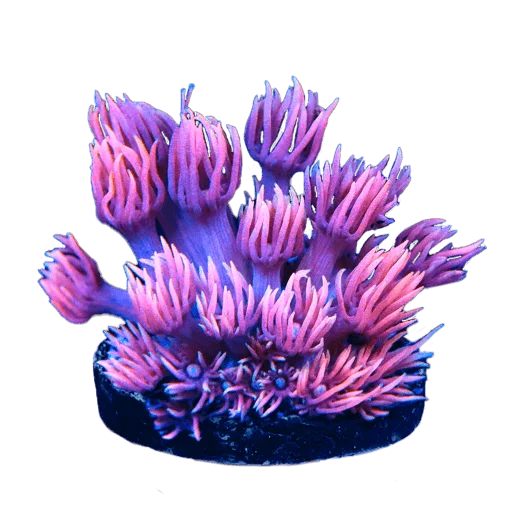
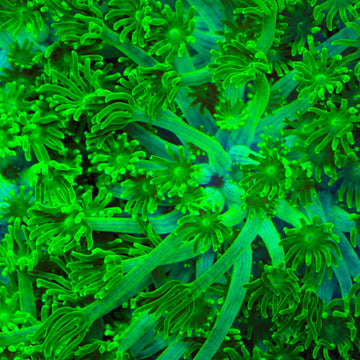
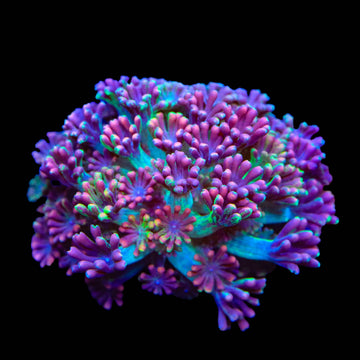
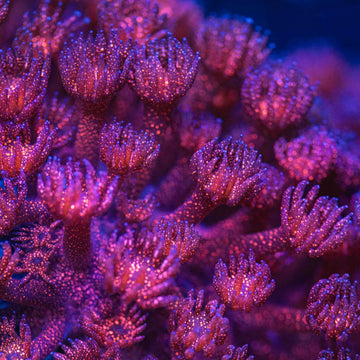
Blue Snake Eye Goniopora Coral shows long, daisy-like polyps with blue-ringed mouths. Goniopora sp. Coral is a large-polyp stony coral that prefers moderate light and low to moderate, gentle water flow for full extension. It is photosynthetic with symbiotic algae but benefits from small particulate feedings, which can support growth and polyp extension. Place on a stable sandbed or isolated rock with space around it, and keep clear of more aggressive corals to avoid stings.
Quick Facts
Care
Difficult
Lighting
Moderate
Flow
Moderate indirect
Placement
Low–Mid
Temperament
Semi-aggressive (3–6 inches spacing)
Recommended Parameters
Temp
76–80°F
pH
8.1–8.4
Salinity
1.025–1.026
Calcium
420–450 ppm
AlkAlkalinity
8–9 dKH
Magnesium
1250–1350 ppm
Feeding
photosynthetic, microplankton, phytoplankton, zooplankton, rotifers, copepod nauplii, oyster eggs, cyclops, powdered coral foods, finely minced meaty foods
Care & Placement
FAQ
Frequently Asked Questions
About the Blue Snake Eye Goniopora Coral
-
Why does my Blue Snake Eye Goniopora lose its blue “eye” pattern under new lights?
Rapid spectrum or PAR changes can wash out the blue fluorescence. Aim for 80–150 PAR, with a strong royal-blue/UV component and gradual acclimation over 2–3 weeks. Avoid heavy warm-white peaks. Maintain stable nutrients (nitrate 5–15 ppm, phosphate 0.03–0.1) and dose trace elements—especially iron and manganese—sparingly. Color usually rebounds once light and nutrients stabilize. -
My colony retracts at night and after feeding—normal or stress?
Nightly retraction is normal. Extended daytime retraction after feeding often points to particulate size or flow. Offer smaller foods (rotifers, reef chili, oyster eggs) in moderate, indirect flow so particles drift past polyps. Too much blast compacts tissue; too little allows detritus to settle. If retraction exceeds 48 hours, check alkalinity swings and pests like vermetid snails. -
How can I prevent base recession and “polyp bailout” in this species?
Keep the base off abrasive rock edges; a sandbed puck or smooth frag tile helps. Provide steady, cross-flow to keep the base clean. Target iodine dips at early recession or brown-jelly signs, and gently siphon necrotic tissue. Maintain alk 8–9 dKH and avoid sudden nutrient drops. Short, daily micro-feeding supports tissue while the base re-calcifies. -
What placement suits the long polyps without causing damage?
Place low to mid in the tank with room for full extension and at least 3–4 inches from neighbors; Goniopora can sting and be stung. Moderate, oscillating flow should sway polyps without folding them. If sandbed placement, keep sand grain movement minimal—coarse grit can abrade the oral disk. Elevate slightly on a tile if sand drifts.