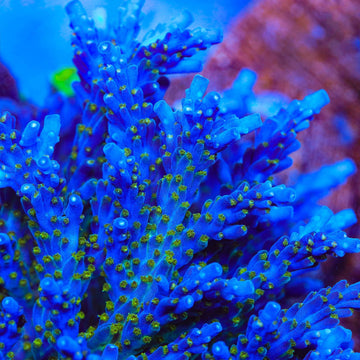
Green Slimer Acropora Coral
Overview
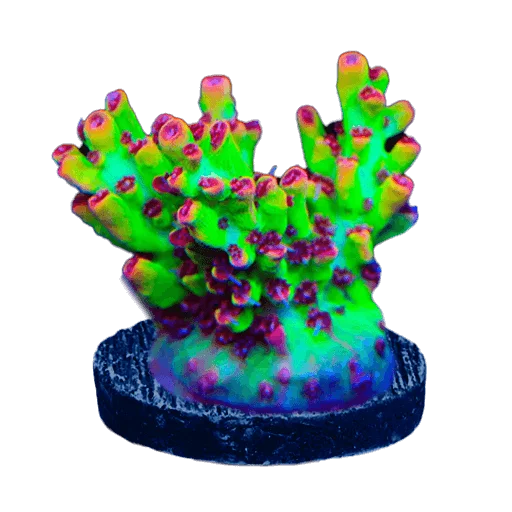
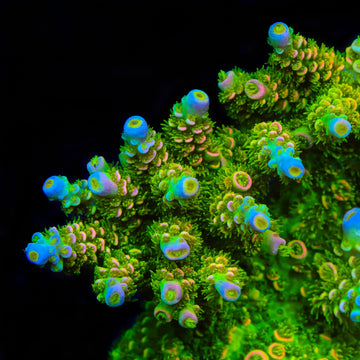
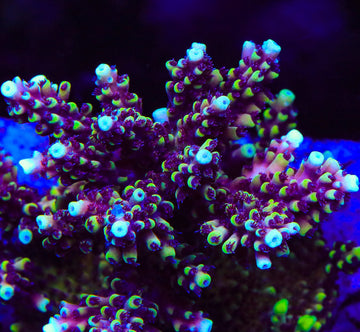
Green Slimer Acropora Coral shows bright green, slimy-looking branches with fast-growing, upright tips. Acropora yongei is a branching stony coral (SPS) that prefers strong lighting and high, turbulent water flow. It relies mainly on symbiotic algae for energy but can accept fine particulate foods, which may support growth and color. Place high in the tank with stable parameters and allow space from aggressive neighbors to avoid tissue damage.
Quick Facts
Care
Difficult
Lighting
High
Flow
High
Placement
High
Temperament
Peaceful (3–4 inches spacing)
Recommended Parameters
Temp
76–80°F
pH
8.1–8.4
Salinity
1.025–1.026
Calcium
420–450 ppm
AlkAlkalinity
8–9 dKH
Magnesium
1280–1350 ppm
Feeding
photosynthetic (primary), microzooplankton (rotifers, copepod nauplii), reef roids/powdered coral foods, oyster eggs, marine snow/bacterioplankton, amino acid supplements
Care & Placement
FAQ
Frequently Asked Questions
About the Green Slimer Acropora Coral
-
Why does my Green Slimer Acropora produce so much slime when fragging or moving it?
Acropora yongei secretes copious mucus as a stress response, especially when cut or exposed to air. Gently swish frags in clean saltwater to remove excess, then use a mild iodine or povidone dip to reduce bacterial load. Minimize handling time, keep tissues submerged, and provide strong turbulent flow post-frag to clear mucus and promote rapid healing at the cut sites. -
My Green Slimer’s neon color is fading—should I increase light?
Fading often signals nutrient starvation under already strong light. First verify nitrate 5–15 ppm and phosphate 0.03–0.1 ppm; raise nutrients slightly before changing PAR. If PAR exceeds 300–350, back it down 10–15%. Add amino acids sparingly and ensure stable alk (7.5–8.5 dKH). Subtle shading or increased flow can also help reduce photoinhibition and restore saturation of green pigments. -
The base is receding while tips keep growing—what causes this “base STN”?
Base recession with active tips typically points to low flow and detritus accumulation at the encrust line, or pests such as AEFW. Increase crossflow to keep the base clean, turkey-baste weekly, and inspect under white light for bite marks or eggs. Run carbon if near soft corals. If pests are confirmed, perform a structured dip schedule and consider a wrasse known to hunt flatworms. -
How can I encourage thicker, more wind-swept branches instead of thin, spindly growth?
Orientation to flow matters. Place the colony so predominant current hits it laterally, not just from below. Higher, chaotic flow yields thicker axial growth and tighter radial spacing. Maintain moderate nutrients and consistent alk/Ca to avoid tip burn that thins branches. Periodic tip pruning redirects energy to lateral branches, improving structure and reducing self-shading over time.