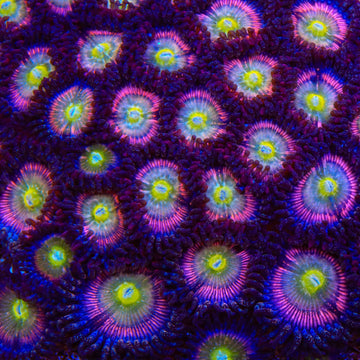
JF Jungle Juice Zoanthids Coral
Overview
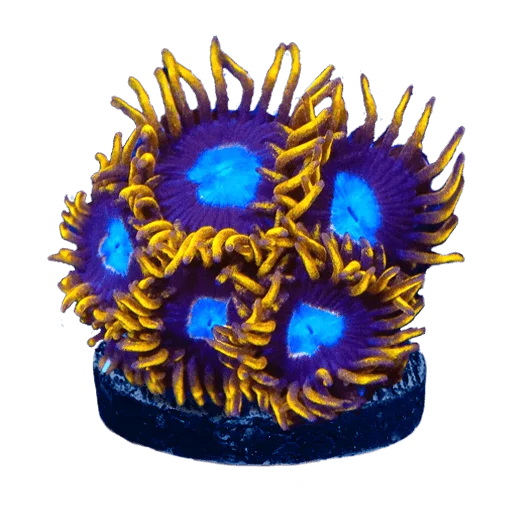
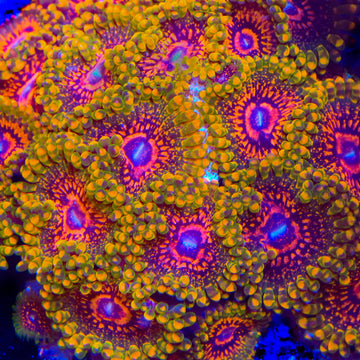
JF Jungle Juice Zoanthids Coral displays small button polyps with bright green centers and contrasting skirts. Zoanthus sp., a soft colonial polyp, does well under moderate light and moderate, indirect flow. It is photosynthetic via symbiotic algae but benefits from occasional small particulate foods, which can improve growth and color. Place on an isolated rock to manage spread and keep space from more aggressive corals.
Quick Facts
Care
Easy
Lighting
Moderate
Flow
Moderate, indirect
Placement
Low–Mid
Temperament
Peaceful (2–3 inches spacing)
Recommended Parameters
Temp
76–82°F
pH
8.1–8.4
Salinity
1.025–1.026
Calcium
380–450 ppm
AlkAlkalinity
8–10 dKH
Magnesium
1250–1350 ppm
Feeding
photosynthetic, microplankton, phytoplankton, zooplankton, rotifers, cyclops, baby brine shrimp, powdered coral foods (Reef-Roids), marine snow
Care & Placement
FAQ
Frequently Asked Questions
About the JF Jungle Juice Zoanthids Coral
-
Why do my JF Jungle Juice Zoanthids shift from neon to duller greens under the same PAR?
This morph is highly spectrum-sensitive. Too much white (6.5–10K) can mute fluorescence; blue-heavy (14–20K) keeps the pop. Stable nitrate 5–15 ppm and phosphate 0.03–0.1 ppm prevent browning or starvation fade. Iron/iodide imbalances can skew tones—dose only if test-guided. Increase random flow to reduce film on skirts, which can mute color, and avoid direct blasting that causes polyp squinting. -
They spread fast—how do I prevent them from overrunning neighboring corals?
Mount them on an isolated “island” rock with a sand moat, or score a shallow trench in the base rock to guide growth. Prune monthly by slicing the mat between polyps and peeling carefully; glue a rubble “speed bump” to redirect the mat. Keep a thin snail-shell border glued in place for a physical barrier. Wear eye/skin protection during pruning. -
My colony is closing in waves without visible pests. What subtle issues target Jungle Juice specifically?
This morph dislikes smothering films and microalgae at the base. Increase turbulent flow, turkey-baste daily, and peroxide-dab (3%, 1:3 with tank water) on encroaching algae with polyps closed. Check for nighttime predators: zoa-eating nudibranchs, tiny spiders, and sundial snails—inspect after lights out. If lesions appear, use Furan-2 dips (per label) for suspected bacterial pox, followed by iodine dips and a week in moderate light. -
Can chemical warfare from other corals stunt Jungle Juice growth even if they’re not touching?
Yes. Zoanthus are sensitive to dissolved allelochemicals from leathers, some LPS, and larger palys. Run fresh carbon changed weekly, maintain strong skimming, and space them downstream from aggressive softies. Observe for reduced extension only when certain neighbors inflate—if so, relocate the colony or the offender. Regular 10–15% water changes help clear compounds and restore normal polyp extension.