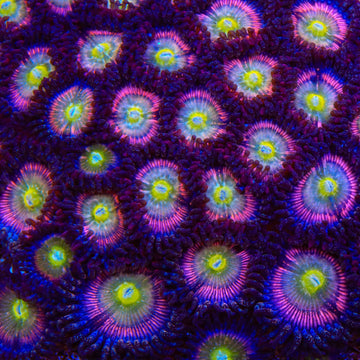
Eagle Eye Zoanthids Coral
Overview
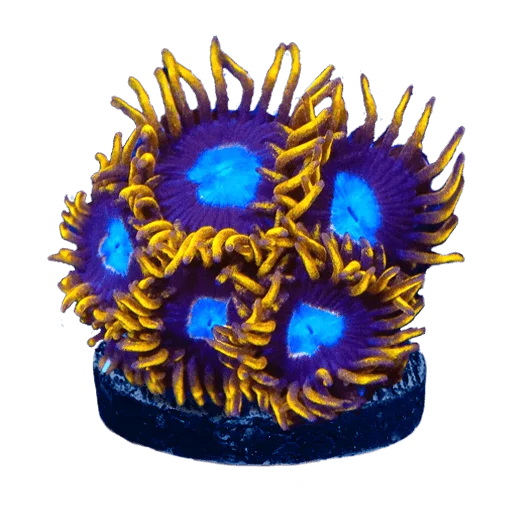
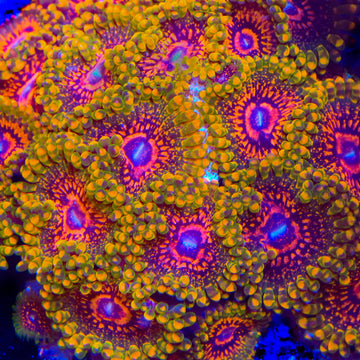
Eagle Eye Zoanthids Coral shows bright orange centers with green skirts on small button-like polyps. Zoanthus sp. is a soft, colonial polyp that forms mats; it prefers moderate light and gentle to moderate water flow. It is photosynthetic via symbiotic algae but will accept small meaty foods, which can improve growth and color. Place on an isolated rock to limit spread and avoid contact with aggressive stingers; handle with care due to potential toxins.
Quick Facts
Care
Easy
Lighting
Moderate
Flow
Moderate
Placement
Low–Mid
Temperament
Generally peaceful, fast-growing—allow 2–3 inches spacing
Recommended Parameters
Temp
76–82°F
pH
8.1–8.4
Salinity
1.025–1.026
Calcium
380–420 ppm
AlkAlkalinity
8–10 dKH
Magnesium
1250–1350 ppm
Feeding
photosynthetic (primary), phytoplankton, zooplankton, rotifers, cyclops, microplankton, marine snow, powdered coral foods (e.g., Reef-Roids)
Care & Placement
FAQ
Frequently Asked Questions
About the Eagle Eye Zoanthids Coral
-
My Eagle Eye Zoanthids Coral faded from bright orange/green to dull brown. How can I bring back the color?
Color shifts usually follow spectrum and nutrient changes. Aim for stable alkalinity and moderate PAR (80–150) with strong blue spectrum. Keep nitrate 5–15 ppm and phosphate 0.03–0.1 to avoid starving. Improve, not blast, flow to keep debris off. Reduce shading, and light-acclimate upward over 2–3 weeks. Fresh activated carbon helps with chemical warfare that can mute colors. -
The polyps are “stretching” on long stalks instead of forming a tight mat. What’s causing this?
Stretching signals insufficient light or low flow. Gradually increase light intensity or reduce distance to the source, keeping PAR within a moderate range. Add slightly more random flow to keep skirts moving without folding. Verify nutrients aren’t bottomed out, as near-zero phosphate can weaken tissue and exaggerate elongation. Expect compaction over a few weeks after adjustments. -
My colony stays closed despite stable parameters. What rare issues should I check for?
Inspect after lights out for zoa-eating nudibranchs, sundial snails, and tiny “spider” crabs; remove adults and egg spirals manually. Follow with a targeted dip (iodine or peroxide at safe reef ratios) and a week of observation. Also check for vermetids casting mucus, detritus accumulation at the base, and nearby soft corals releasing irritants—use carbon and increase intermittent flow. -
Will Eagle Eye Zoanthids Coral overrun other corals, and how do I manage space and chemistry?
They can spread quickly and shade neighbors. Mount on isolated “islands” to confine growth, trim the mat at the margin, and redirect it onto frag tiles. Keep a small gap from slow growers and euphyllia stings. Run carbon and change it monthly to buffer allelopathy. For your safety, avoid boiling rock and handle colonies with protective gear.