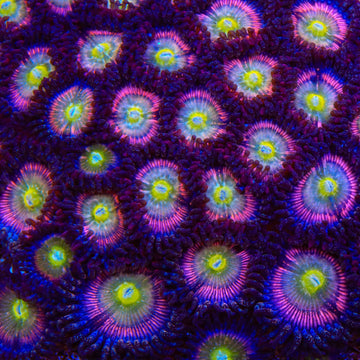
Magneto Zoanthids Coral
Overview
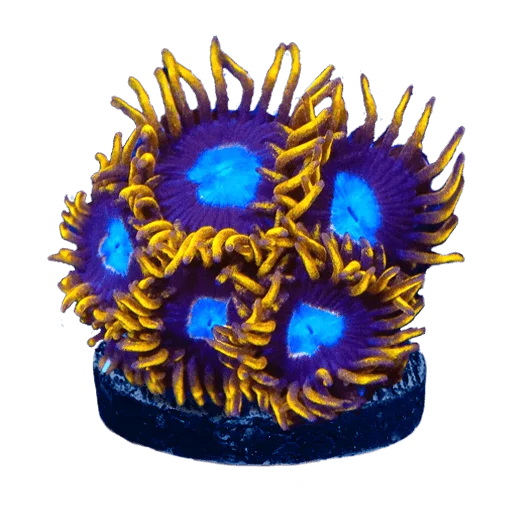
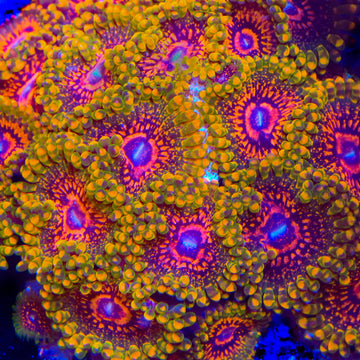
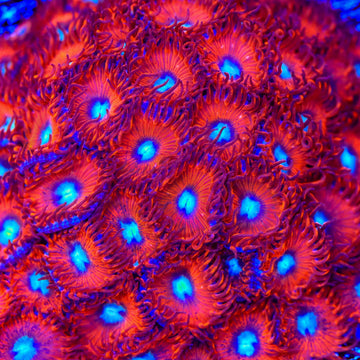
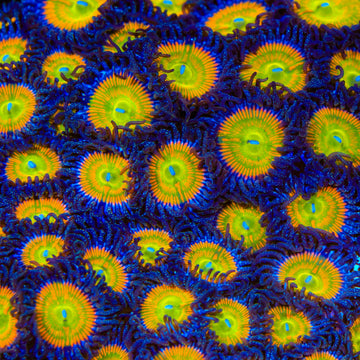
Magneto Zoanthids Coral displays small button-like polyps with short skirts in dense mats. Classified as Zoanthus sp., it is a soft colonial polyp coral; it prefers moderate light and low to moderate, steady water flow. It is primarily photosynthetic through symbiotic algae, but occasional small particulate foods can boost growth and help maintain coloration. Place on isolated rock to control spreading, and keep distance from aggressive stinging neighbors.
Quick Facts
Care
Easy
Lighting
Moderate
Flow
Moderate
Placement
Low–Mid
Temperament
Semi-aggressive (3–6 inches spacing)
Recommended Parameters
Temp
76–82°F
pH
8.1–8.4
Salinity
1.025–1.026
Calcium
400–450 ppm
AlkAlkalinity
8–10 dKH
Magnesium
1250–1350 ppm
Feeding
photosynthetic, microplankton, phytoplankton, rotifers, copepod nauplii, finely minced mysis/brine shrimp, powdered coral foods, amino acid supplements
Care & Placement
FAQ
Frequently Asked Questions
About the Magneto Zoanthids Coral
-
How do I keep Magneto Zoanthids’ reds from washing out under reef lights?
Aim for moderate PAR (100–150) with strong blue/violet (420–460 nm) and restrained white. Acclimate slowly if moving up in light. Maintain nutrients: nitrate 5–15 ppm, phosphate 0.03–0.10 ppm; ultra-low levels often mute reds. Avoid blind trace dosing—test first if using iodine/iron. Stable alkalinity (7.5–8.5 dKH) and low organics via fresh carbon help maintain clarity and pop. -
My polyps are stretching or staying tiny—what is this coral telling me?
Long stalks with smaller heads usually indicate insufficient light or too little flow; increase PAR slightly and add a gentle, random current. Tight, tiny polyps with retracted skirts often mean excess light; reduce intensity or photoperiod. Skirts that flutter but don’t thrash signal ideal flow. Verify salinity stability and temperature—swings exaggerate both behaviors. -
How do I handle sudden “zoa melt” in Magneto morphs?
Act fast: inspect at night for nudibranchs or sundial snails; remove manually. Dip affected frags (iodine 5–10 minutes, or 1:4 H2O2: tank water for 60–90 seconds on the mat, avoiding mouths). Frag away necrotic areas and increase flow. Improve stability: no rapid changes, maintain nutrients, and run fresh carbon. If bacterial, a broad-spectrum coral dip and UV can help. -
What tankmates or corals can cause problems for Magneto Zoanthids?
Keep distance from aggressive LPS (sweepers) and large Palythoa that can chemically suppress growth. Run carbon and maintain good skimming during soft coral wars. Avoid angel and butterfly fish that nip polyps. Watch for zoa-eating nudibranchs, sundial snails, and some asterina stars; a diligent wrasse (e.g., Melanurus) helps. Limit bulldozing hermits that irritate colonies.