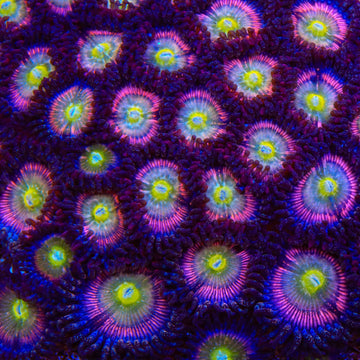
Johnny Pumpkin Seed Zoanthids Coral
Overview
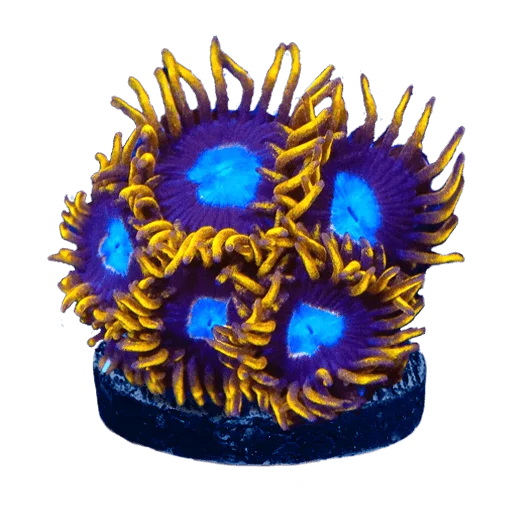
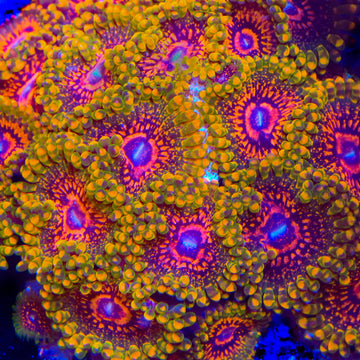
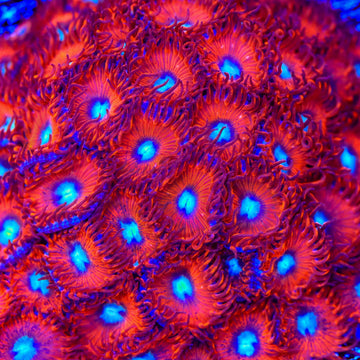
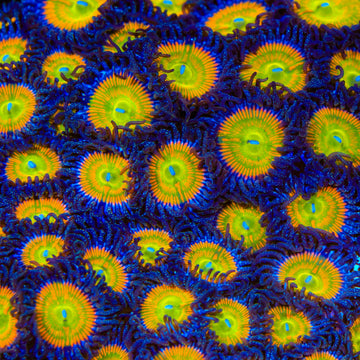
Johnny Pumpkin Seed Zoanthids Coral displays small button-like polyps with orange centers and contrasting skirts. Zoanthus sp., a soft colonial polyp, grows as a mat and prefers moderate light and moderate, indirect flow. It is primarily photosynthetic via symbiotic algae, but accepts occasional small meaty foods, which can support faster growth and stronger coloration. Place on an isolated rock to limit spreading and avoid contact with stinging or aggressive neighbors.
Quick Facts
Care
Easy
Lighting
Low–Moderate
Flow
Moderate
Placement
Low–Mid
Temperament
Semi-aggressive (2–3 inches spacing)
Recommended Parameters
Temp
76–80°F
pH
8.1–8.4
Salinity
1.025–1.026
Calcium
400–450 ppm
AlkAlkalinity
8–10 dKH
Magnesium
1250–1350 ppm
Feeding
photosynthetic (primary), phytoplankton, zooplankton, microplankton, rotifers, baby brine shrimp, cyclops, powdered coral foods, marine snow
Care & Placement
FAQ
Frequently Asked Questions
About the Johnny Pumpkin Seed Zoanthids Coral
-
Why does my Johnny Pumpkin Seed Zoanthids Coral change color under different lighting?
Zoanthus sp. pigments respond strongly to spectrum and PAR. Under heavy blue (350–470 nm), orange centers and green skirts typically pop, while high white light can wash tones and shorten skirts. Aim for moderate PAR (80–150) and stable spectrum; sudden jumps can cause “squinting” or bleaching. If colors dull, increase blue ratio gradually over 2–3 weeks and keep nutrients detectable (NO3 5–15 ppm, PO4 0.03–0.1) to avoid pale, starved hues. -
My colony is staying closed or “melting.” What uncommon causes should I check?
Beyond common swings, inspect for zoa-eating nudibranchs (camouflaged like polyps), sundial snails, and tiny zoa spiders. Look for pox-like white bumps; treat with Furan-2 dips if confirmed. Check for vermetid snail mucus threads irritating polyps, and for nearby leather corals releasing chemicals; run fresh carbon and increase water changes. Ensure moderate, indirect flow to keep detritus off the mat and stabilize alkalinity and salinity to prevent tissue recession. -
What’s the safest, most reliable way to propagate Johnny Pumpkin Seed Zoanthids?
Slice the mat between polyps (not through mouths) using a fresh scalpel, then mount on small plugs with gel cyanoacrylate. Heal frags in moderate flow, low–moderate light for 5–7 days before returning to normal PAR. Wear gloves and eye protection; Zoanthus sp. can contain palytoxin-like compounds. An iodine dip post-cut helps reduce infection, but avoid strong dips immediately before cutting, which can stress tissue and slow recovery. -
How can I control overgrowth without harming nearby corals?
Place Johnny Pumpkin Seed Zoanthids on isolated “island” rocks with a small sand gap to slow mat creep. Periodically trim the advancing edge and remove any runners that cross gaps. Avoid placing next to slow, encrusting SPS—they can be shaded out. If kept near LPS with long sweepers, give extra space to prevent stings. Maintain good flow so the mat doesn’t accumulate detritus, which fuels faster spread and smothering.