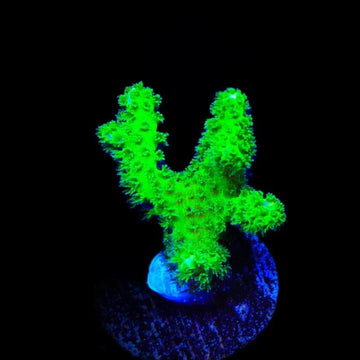
Green Pocillopora Coral
Overview
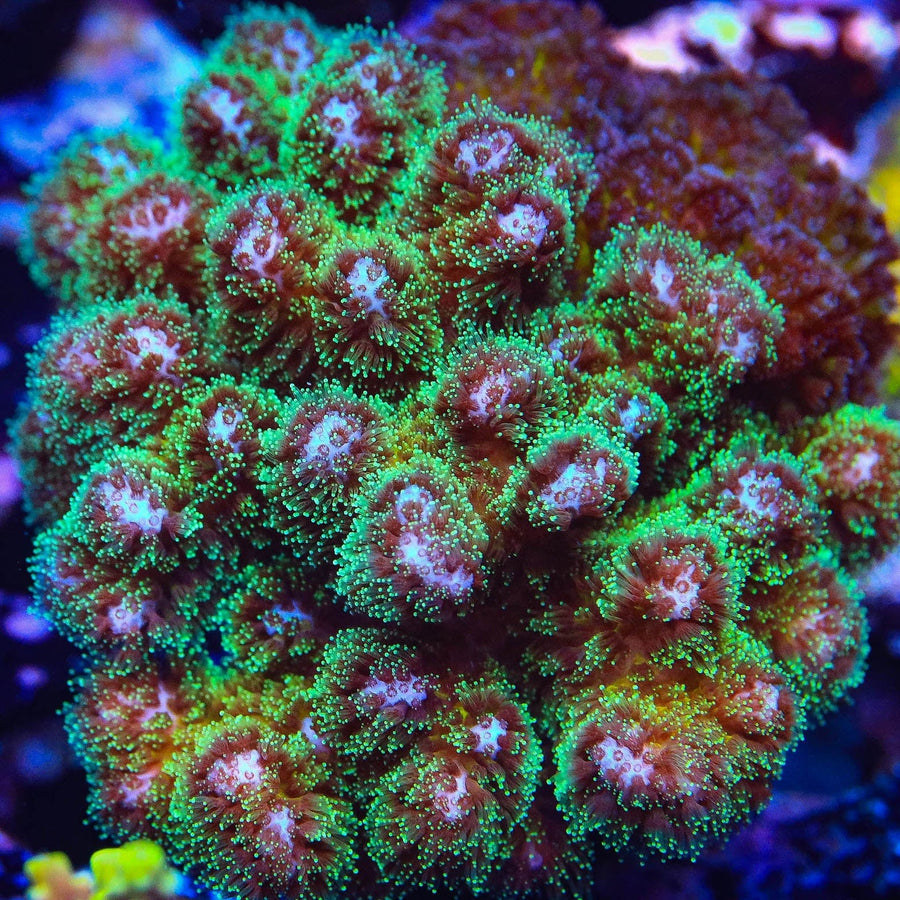
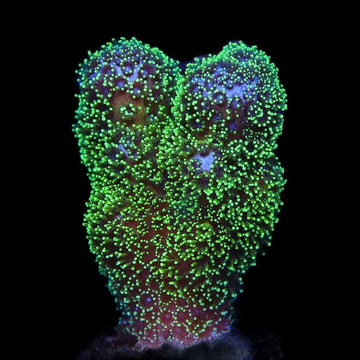
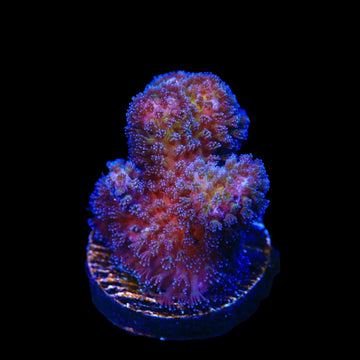
Green Pocillopora Coral shows dense, branching heads with fine, knobbed tips. Pocillopora damicornis is a small-polyp stony coral forming compact, bushy colonies; it prefers moderate to strong lighting and moderate to high, turbulent water flow. It is photosynthetic via symbiotic algae and can accept occasional micro-plankton or coral foods, which may support faster growth and maintain color. Place it away from aggressive neighbors and allow space for growth, as it can spread and may sting nearby corals.
Quick Facts
Care
Moderate
Lighting
Moderate–High
Flow
Moderate–High
Placement
Mid–High
Temperament
Semi-aggressive (3–6 inches spacing)
Recommended Parameters
Temp
76–80°F
pH
8.1–8.4
Salinity
1.025–1.026
Calcium
400–450 ppm
AlkAlkalinity
8–9 dKH
Magnesium
1280–1350 ppm
Feeding
photosynthetic (primary), microplankton, rotifers, copepod nauplii, Cyclops, oyster eggs, coral-specific powdered foods, amino acid supplements
Care & Placement
FAQ
Frequently Asked Questions
About the Green Pocillopora Coral
-
Why does my Green Pocillopora suddenly appear at random spots in the tank?
P. damicornis can reproduce asexually via planulae release and, under stress, polyp bailout. New colonies may pop up in overflows and shaded crevices. Maintain stable parameters to reduce bailout, run fine mechanical filtration during spawning events, and inspect overflows. If spread is unwanted, scrape early settlers and keep a watchman wrasse or similar micro‑predator to limit larvae survival. -
My colony’s base is receding while tips look fine—what’s the likely cause?
Base recession often stems from chronic low flow and shading as the colony bushes out. Increase crossflow to the lower branches, trim interior cluttered branches to open channels, and reduce vermetid snail irritation. Check alkalinity stability; repeated small swings can trigger slow tissue necrosis from the base up. Relocating to a slightly brighter, turbulent zone can halt loss. -
How can I preserve the vivid green color long term?
Strong blue/UV spectrum with moderate PAR (250–350 on upper surfaces), stable alkalinity, and balanced nutrients (nitrate 5–15 ppm, phosphate 0.03–0.1 ppm) support green fluorescence. Ultra‑low nutrients often dull color to pale; excess nutrients brown it out. Occasional dosing of amino acids and iron via regular water changes helps, but avoid chasing numbers—stability outweighs tweaks. -
What pests specifically target Pocillopora, and how do I manage them?
Aeolid nudibranchs that specialize on Pocillopora hide in branches and lay white egg spirals. Inspect at night with a flashlight, dip frags (iodine or commercial coral dip), and manually remove egg ribbons. A vigilant wrasse (e.g., Halichoeres) helps control hatchlings. Also watch for gall crabs and vermetids; the former are usually tolerated, the latter should be broken off and sealed.