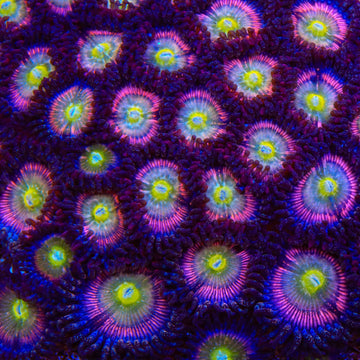
JF Daisy Duke Zoanthids Coral
Overview
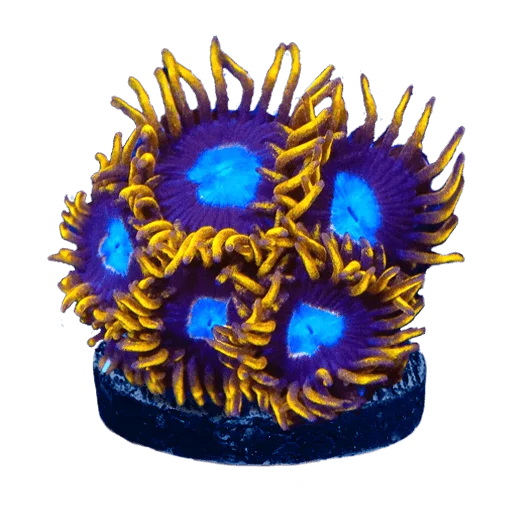
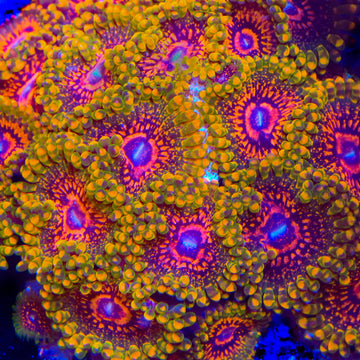
JF Daisy Duke Zoanthids Coral shows compact button-like polyps with a bright central disk and contrasting skirts. Zoanthus sp., a soft colonial polyp, does well under moderate light and low to moderate water flow. It is photosynthetic with symbiotic algae but accepts occasional small meaty or planktonic foods to support growth and maintain color. Place on an isolated rock with space around it, as it can spread and irritate or overgrow nearby corals.
Quick Facts
Care
Easy
Lighting
Moderate
Flow
Moderate
Placement
Low–Mid
Temperament
Semi-aggressive (2–3 inches spacing)
Recommended Parameters
Temp
76–80°F
pH
8.1–8.4
Salinity
1.025–1.026
Calcium
380–450 ppm
AlkAlkalinity
8–10 dKH
Magnesium
1250–1350 ppm
Feeding
photosynthetic, microplankton, phytoplankton, zooplankton, rotifers, cyclops, baby brine shrimp, powdered coral foods, marine snow
Care & Placement
FAQ
Frequently Asked Questions
About the JF Daisy Duke Zoanthids Coral
-
Why do my JF Daisy Duke polyps look washed out compared to vendor photos?
This morph shows its best orange/pink under higher blue spectrum and moderate PAR (150–250). Excess white light or very high PAR can mute centers and bleach skirts. Try a longer blue photoperiod, reduce whites, and acclimate any PAR change slowly. Stable nutrients (nitrate 5–15 ppm, phosphate 0.03–0.1) also keep pigments saturated; ultra‑low nutrients often dull colors. -
My colony is growing a mat but not sprouting new heads—what’s holding it back?
Zoanthus often lay down coenenchyme first, then pop polyps when flow and nutrient levels support tissue inflation. Increase random flow a bit so skirts sway, feed small particle foods 1–2x weekly, and avoid shading the mat with nearby frags. Trace elements (iodine, iron) via regular water changes can nudge budding without dosing risks. -
The polyps stay closed for days with tiny white bumps on the stalks—what should I do?
That’s likely zoa pox. Isolate the frag and perform Furan‑2 dips daily for 3 days (follow packet dosing), then every other day for a week if needed. Between dips, keep moderate flow and stable parameters. Avoid iodine dips during the Furan course. Inspect for pests (sundial snails, zoa‑eating nudibranchs) and remove if present. -
My skirts are getting very long and the polyps “reach” upward—normal or a warning sign?
Long skirts and “stretching” indicate the colony is seeking more light or steadier flow. Increase PAR gradually or shift to a brighter spot, and add a bit more random flow so polyps don’t trap detritus. If stretching continues, check for shading from neighboring frags and evaluate spectrum; blue‑heavy lighting maintains compact, colorful heads.