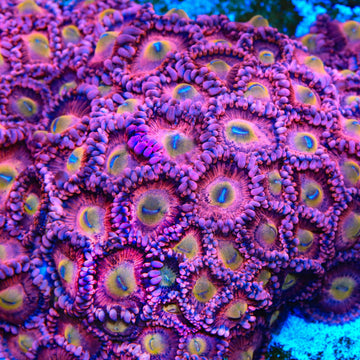
Mint Green Star Polyps Coral
Overview
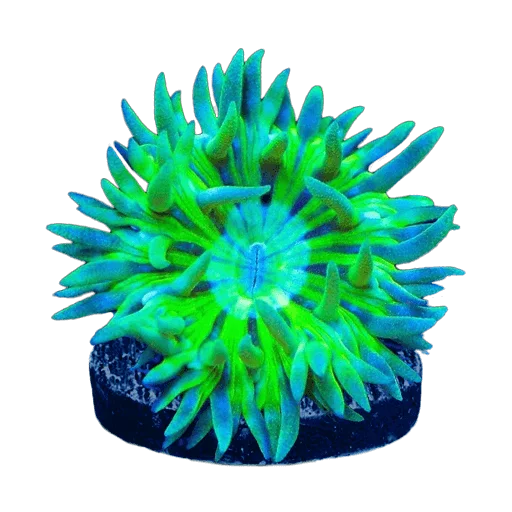
Mint Green Star Polyps Coral forms a bright mint mat of extending star-shaped polyps over a purple encrusting base. Pachyclavularia violacea is a fast-spreading encrusting soft coral that does well with moderate light and moderate to strong, indirect water flow. It is photosynthetic via symbiotic algae but can take occasional fine particulate foods, which may support faster growth and color stability. Place on an isolated rock or sand-separated area to control overgrowth and keep space from slower-growing neighbors.
Quick Facts
Care
Easy
Lighting
Low–Moderate
Flow
Moderate-High
Placement
Low–Mid
Temperament
Semi-aggressive (fast-growing, can overgrow neighbors; give 3–6 inches or isolate)
Recommended Parameters
Temp
76–80°F
pH
8.1–8.4
Salinity
1.025–1.026
Calcium
400–450 ppm
AlkAlkalinity
8–10 dKH
Magnesium
1280–1350 ppm
Feeding
photosynthetic (primary), phytoplankton, microplankton, marine snow, dissolved organic matter, fine zooplankton, coral-specific powdered foods
Care & Placement
FAQ
Frequently Asked Questions
About the Mint Green Star Polyps Coral
-
How do I control Mint Green Star Polyps Coral from overrunning nearby corals without constant fragging?
Mount it on an isolated “island” rock with a small sand moat so the purple stolon mat can’t bridge easily. Aim stronger, cross-current flow at the edges to discourage attachment. Trim the advancing mat with a razor and remove the peel completely. You can also lay a thin epoxy or reef-safe glue border on the host rock to create a physical stop. -
Why did my mint-green color fade to dull or brown despite good polyp extension?
Color in Pachyclavularia violacea shifts with light spectrum, nutrient balance, and trace elements. Excess white light or very low nutrients can reduce fluorescence, while too-blue lighting may mask mint tones. Check nitrate 5–15 ppm, phosphate 0.03–0.1 ppm, and stable alkalinity. Consider modest iron/iodine supplementation if tested low. Gradually adjust spectrum and PAR; avoid big jumps that shock zooxanthellae density. -
My colony stayed closed for several days—what uncommon causes should I check?
Inspect the stolon mat for film algae or cyanobacteria trapping detritus; blast with a turkey baster and increase random flow. Look for tissue lifting from bacterial irritation; a brief iodine dip can help. Verify salinity and alkalinity stability after large water changes. Recent cutting near the mat edge can trigger a “shutdown” period—wait 3–7 days post-fragging while maintaining stable parameters. -
Does this species chemically bother SPS or LPS even though its sting is weak?
Physical overgrowth is the bigger risk, but mild allelopathy can irritate sensitive corals in low-flow systems. Run fresh activated carbon and maintain good export to keep dissolved organics down. Prevent the mat from undercutting SPS bases by trimming borders monthly. A thin epoxy “speed bump” around threatened colonies helps. Give high-value LPS at least several inches and intercept creeping edges early.