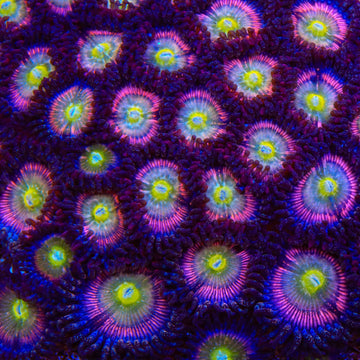
Candy Apple Pink Zoanthids Coral
Overview
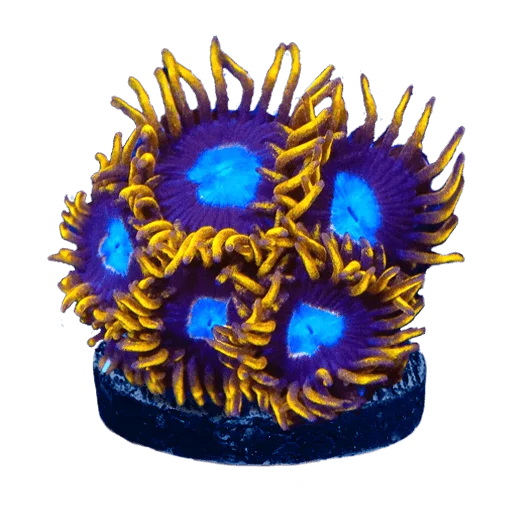
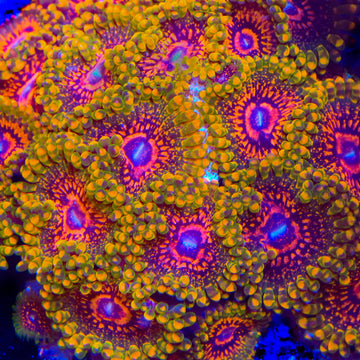
Candy Apple Pink Zoanthids Coral shows pink to red centers with green skirts and compact button-like polyps. Zoanthus sp., a soft colonial polyp, thrives under moderate light and low to moderate, steady water flow. It is photosynthetic via symbiotic algae but benefits from occasional small planktonic foods, which can support faster growth and maintain color. Place on a separate rock to control spreading and allow space from aggressive neighbors.
Quick Facts
Care
Easy
Lighting
Moderate–High
Flow
Moderate indirect
Placement
Low–Mid
Temperament
Peaceful to semi-aggressive (2–4 inches spacing)
Recommended Parameters
Temp
76–82°F
pH
8.1–8.4
Salinity
1.025–1.026
Calcium
400–450 ppm
AlkAlkalinity
8–10 dKH
Magnesium
1250–1350 ppm
Feeding
photosynthetic (primary), phytoplankton, microplankton, zooplankton, rotifers, cyclops, brine shrimp nauplii, oyster eggs, powdered coral foods (e.g., Reef-Roids)
Care & Placement
FAQ
Frequently Asked Questions
About the Candy Apple Pink Zoanthids Coral
-
How do I keep the signature pink ring on Candy Apple Pinks from fading to brown or green?
Prioritize blue/violet spectrum (420–460 nm) with moderate PAR (80–150) and avoid excessive white intensity. Maintain non-zero nutrients (NO3 5–15 ppm, PO4 0.03–0.1) to prevent paling, but don’t let them spike. Stable alkalinity and trace balance help; low iodine/iron can dull coloration. Increase flow slightly if you see film on skirts, and avoid shadowing that encourages zooxanthellae darkening. -
These zoas are multiplying slowly compared to my other Zoanthus—normal?
Candy Apple morphs often prioritize polyp size and ring coloration over rapid matting. Expect spurts after stability milestones (4–8 weeks). Encourage growth with slightly elevated nutrients, consistent 76–78°F, and moderate, indirect flow. Feeding fine particle foods 1–2x weekly at night can help. Growth stalls if shaded by faster neighbors; give a dedicated tile or isolated island. -
What pests specifically target Candy Apple Pinks, and how do I spot trouble early?
Zoa-eating nudibranchs and their egg spirals blend with the pink skirts; inspect under blue light with a white flashlight for nibbled edges and missing skirts. Zoa spiders hide at polyp bases; look for reluctant opening despite good parameters. Sundial snails leave distinct zigzag shells. Respond with manual removal and targeted dips (Lugol’s, H2O2 very brief, or Furan-2 for pox-like lesions). -
My colony “melts” after shipping—polyps stay small and slough off. What’s the recovery path?
Perform a temperature/parameter-matched dip on arrival, then give low–moderate light for 3–5 days and steady, cross-flow to keep detritus off. Avoid aggressive feeding until full extension returns. Run fresh carbon to limit chemical stress from neighbors. If lesions appear, isolate and use Furan-2 dips. Keep NO3 and PO4 detectable; ultra-clean systems prolong stress and delay re-inflation.