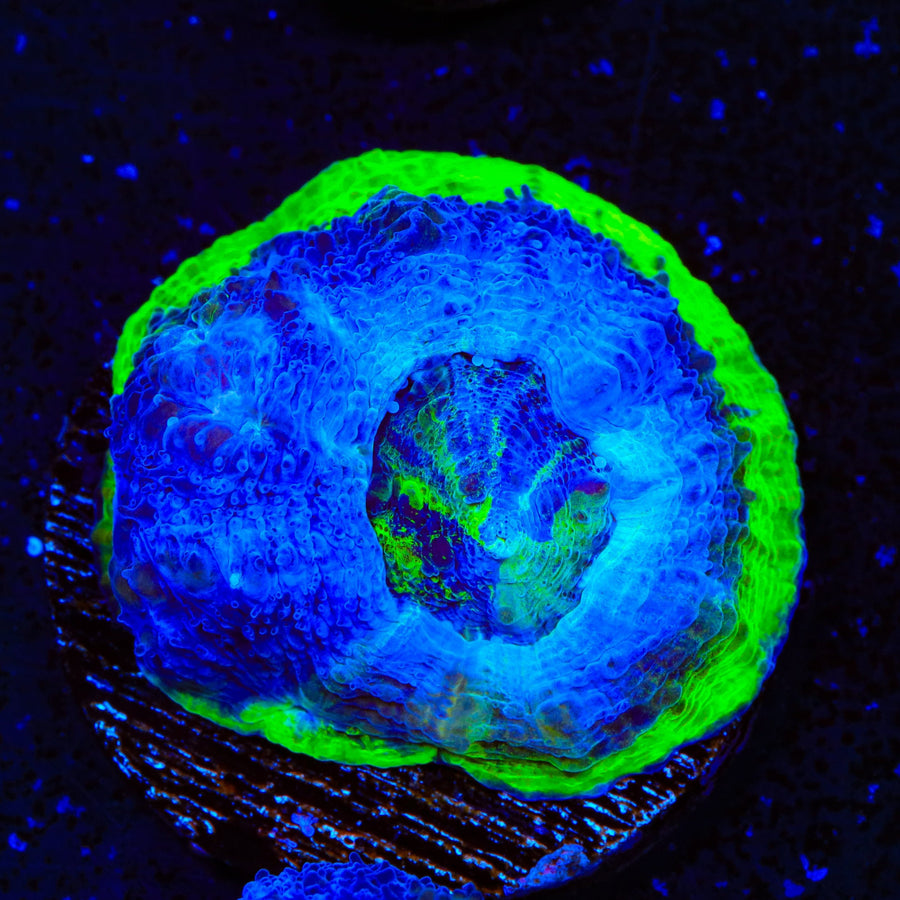
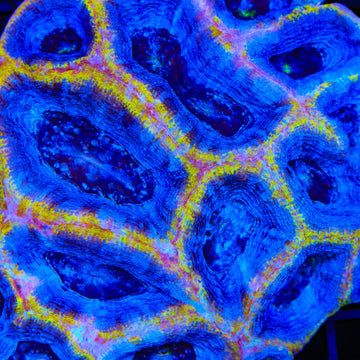
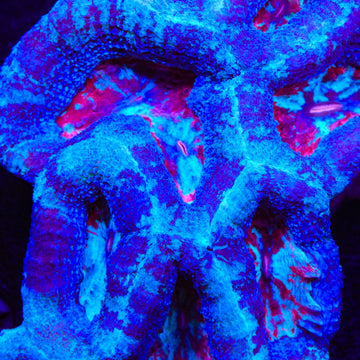
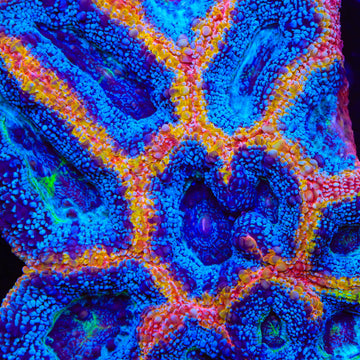
Death Star Bowerbankii Coral
Overview
Death Star Bowerbankii Coral shows thick, fleshy polyps with raised ridges and round valleys. Micromussa bowerbanki is a large-polyp stony coral that forms encrusting colonies, favoring moderate light and low to moderate, indirect flow. It hosts symbiotic algae for energy but benefits from occasional feedings of small meaty foods, which can improve growth and color. Place on stable rock with space from other corals, as its tentacles can sting nearby tissue.
Quick Facts
Care
Moderate
Lighting
Low–Moderate
Flow
Low–Moderate
Placement
Low–Mid
Temperament
Semi-aggressive (3–6 inches spacing)
Recommended Parameters
Temp
76–80°F
pH
8.1–8.4
Salinity
1.025–1.026
Calcium
400–450 ppm
AlkAlkalinity
8–9.5 dKH
Magnesium
1280–1380 ppm
Feeding
photosynthetic, mysis shrimp, enriched brine shrimp, copepods, cyclops, rotifers, finely chopped seafood, zooplankton, coral-specific powdered foods
Care & Placement
FAQ
Frequently Asked Questions
About the Death Star Bowerbankii Coral
-
Why is my Death Star Bowerbankii receding along the ridges while the mouths still look plump?
This often points to excess PAR or turbulent flow scouring the tissue at the skeletal edges combined with minor alkalinity swings. Aim for 60–120 PAR with diffused, indirect flow. Keep alk stable (8–9 dKH) and avoid rapid changes. Target-feed small meaty foods 2–3x weekly to help it rebuild tissue. Check for vermetid snails and spicules irritating flesh. -
How do I keep the dark “Death Star” centers with bright rings from washing out?
Provide a balanced spectrum (not only heavy blue)—some white and violet/UV helps definition. Maintain nutrients: nitrate 5–15 ppm, phosphate 0.03–0.10 ppm. Moderate PAR keeps rings vivid; higher light often mutes centers. Feed finely chopped marine meats or reef roids at night when tentacles peek out. Avoid aggressive carbon dosing that strips nutrients too fast. -
Can Micromussa bowerbanki touch other LPS, including other Micromussa?
It’s relatively assertive. Expect short but potent nighttime sweepers up to ~2 inches and chemical competition. Give 2–3 inches of space minimum; more if flow might push tentacles. Run fresh carbon and ensure good skimming if mixing multiple LPS. Even among Micromussa species, avoid direct contact to prevent slow, unnoticed tissue loss at the margins. -
How should I respond to sudden brown jelly or “tissue blowout” after shipping?
Immediately siphon loose tissue, perform an iodine dip, and increase gentle flow to affected edges. Trim clearly dead skeleton to stop spread. Keep temperature/alkalinity rock steady and avoid high light for a week. If progression continues, consider a broad-spectrum coral dip or a short bath with prescribed antibiotics in a separate container. Resume small feedings once tissue stabilizes.