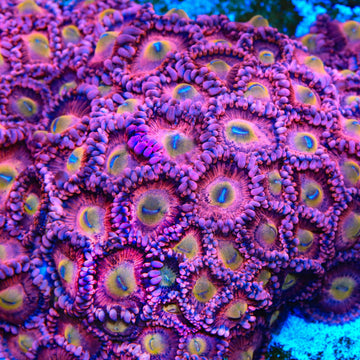
JF Bloodshot Zoanthids Coral
Overview
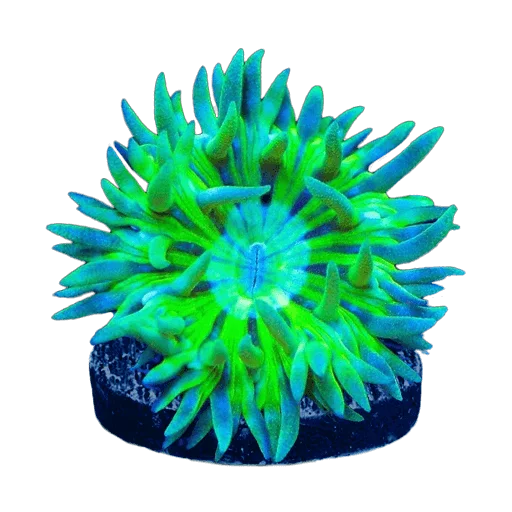
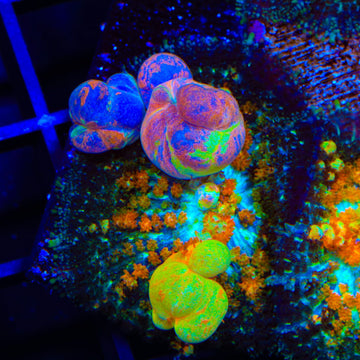
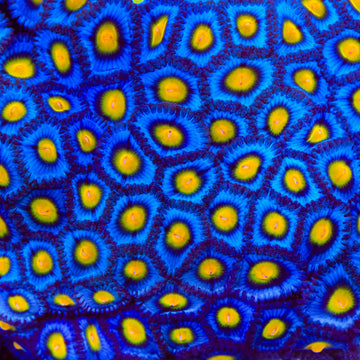
JF Bloodshot Zoanthids Coral displays bright red-centered polyps with dark rims and short skirts. Classified as Zoanthus sp. Coral, this is a soft, mat-forming polyp colony that prefers moderate light and low to moderate, indirect flow. It is primarily photosynthetic via symbiotic algae but accepts small meaty foods or coral foods, which can support faster growth and deeper color. Place on isolated rock to control spreading and keep distance from stinging neighbors.
Quick Facts
Care
Easy
Lighting
Moderate
Flow
Moderate, indirect
Placement
Low–Mid
Temperament
Semi-aggressive (may overgrow neighbors; allow 3–4 inches spacing)
Recommended Parameters
Temp
76–82°F
pH
8.1–8.4
Salinity
1.025–1.026
Calcium
400–450 ppm
AlkAlkalinity
8–10 dKH
Magnesium
1250–1350 ppm
Feeding
photosynthetic (primary), phytoplankton, zooplankton, microplankton, rotifers, copepods, cyclops, baby brine shrimp, powdered coral foods (e.g., Reef-Roids)
Care & Placement
FAQ
Frequently Asked Questions
About the JF Bloodshot Zoanthids Coral
-
How do I keep the vivid “bloodshot” reds from fading on JF Bloodshot Zoanthids?
Prioritize blue-heavy spectrum (420–460 nm) with moderate PAR (100–150) and stable, non-zero nutrients (NO3 5–15 ppm, PO4 0.03–0.1). Avoid abrupt swings, overly white lighting, and shading that prompts stretching and dulling. Gentle, indirect flow prevents film buildup that mutes colors. Trace elements (iron/manganese) help when dosed cautiously; test to avoid overdoing it. Light-acclimate new frags. -
Why do my Bloodshot polyps stay closed while other Zoanthus sp. look fine?
Suspects include nudibranchs, sundial snails, zoa pox, bacterial film, or stings from nearby LPS. Inspect after lights out for predators and egg spirals. Increase random flow, verify stable salinity/alk/temp, and consider an iodine dip for bacterial issues or a very mild hydrogen peroxide dip for algae film. Remove chemical warfare sources or run fresh carbon. Treat quickly to prevent “melting.” -
Will JF Bloodshot overrun rockwork, and how can I manage its spread?
It can form fast carpets under stable nutrients and moderate light. Place on an isolated “island” rock or create a sand gap to slow mat bridging. Periodically chip back the leading edge or redirect growth onto removable rubble “fences.” Keep distance from slow encrusters; flow can guide the mat’s direction. Regular pruning maintains clean borders. -
Do they need target feeding, or is light enough?
Light drives most of their energy, but they benefit from occasional fine particulate foods (rotifers, reef roids) and amino acids. Broadcast sparingly 1–2 times weekly; heavy spot feeding often triggers film algae and irritation. Feed when skirts are most extended and maintain export to keep nutrients balanced. Stability yields better growth than frequent heavy feeding.