Highlighter Frogspawn Coral
Overview
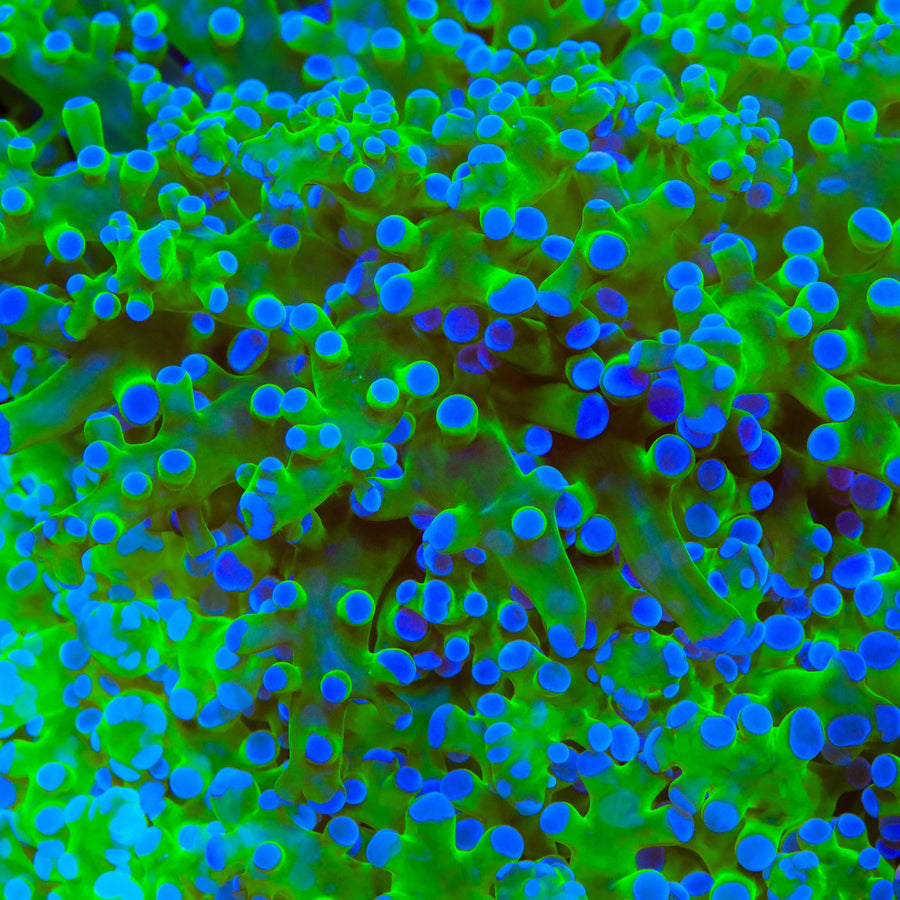
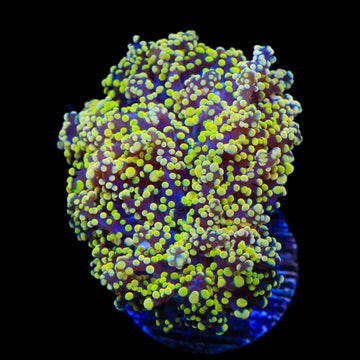
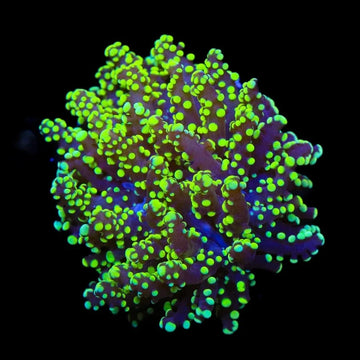
Highlighter Frogspawn Coral shows branching heads with fluorescent green, multi-tipped tentacles. Euphyllia divisa is a large-polyp stony coral with a branching skeleton; it prefers moderate light and gentle to moderate, indirect water flow. It relies on symbiotic algae for most nutrition but accepts occasional small meaty foods, which can support faster growth and maintain color. Place it where its long sweeper tentacles have room, keeping several inches from other corals to prevent stings.
Quick Facts
Care
Moderate
Lighting
Moderate
Flow
Moderate, indirect
Placement
Mid–Low
Temperament
Semi-aggressive (6–8 inches clearance)
Recommended Parameters
Temp
76–80°F
pH
8.1–8.4
Salinity
1.025–1.026
Calcium
400–450 ppm
AlkAlkalinity
8–10 dKH
Magnesium
1280–1350 ppm
Feeding
photosynthetic (primary), mysis shrimp, enriched brine shrimp, finely chopped shrimp or clam, zooplankton, microplankton, coral-specific powdered foods, marine snow
Care & Placement
FAQ
Frequently Asked Questions
About the Highlighter Frogspawn Coral
-
Why does my Highlighter Frogspawn lose neon color under bright whites, and how can I keep it glowing?
High-intensity white-heavy lighting can wash out fluorescent proteins. Give it a blue-leaning spectrum (peaks around 420–460 nm), moderate PAR (120–180), and stable nutrients (NO3 5–15 ppm, PO4 0.03–0.1). Avoid sudden photoperiod changes; ramp LEDs slowly. Adequate magnesium and balanced trace levels help, but don’t chase bottles—prioritize stability and regular water changes. -
Is my Euphyllia divisa safe to frag, and how do I tell branching from wall growth?
Check the skeleton. Branching forms have distinct, cylindrical branches between heads; wall forms grow as continuous valleys and are risky to cut. For branching, use bone cutters or a diamond saw between heads, dip in iodine, and place in low-to-moderate flow to heal. Avoid fragging wall specimens; they often suffer recession or infection. -
My frogspawn sends out long sweepers at night—how far should I space neighbors, including other Euphyllia?
Allow 6–8 inches around it; sweepers can extend surprisingly far in low light. It usually coexists with frogspawn and many hammers, but torches are more aggressive and can win stinging contests. Keep vermetid snails and bristleworms away from the base, as irritation triggers longer sweepers. If conflict occurs, redirect flow to reduce direct contact. -
What causes sudden tissue bailout on one head while others look fine?
Acute stress—rapid salinity or temperature swing, severe alkalinity drop, or direct flow blasting—can trigger bailout. Immediately stabilize parameters, reduce flow on the colony, and perform an iodine dip. Siphon any sloughed tissue. Inspect for vermetid mucus and hidden pests. The bailed polyp can sometimes be contained in a low-flow cup with rubble to reattach.