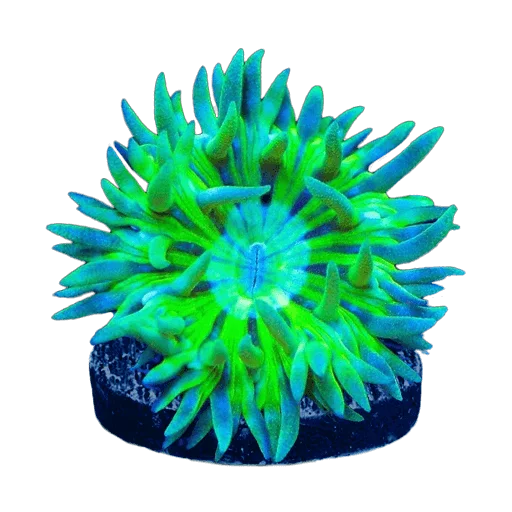
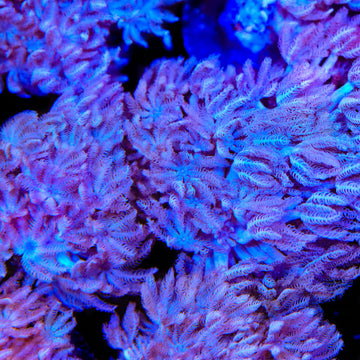
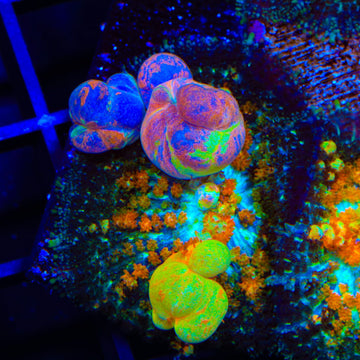
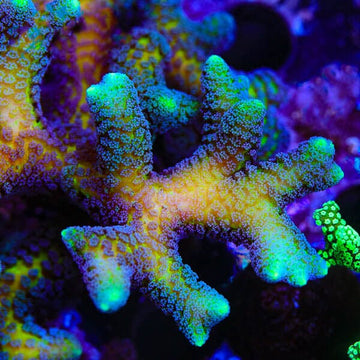
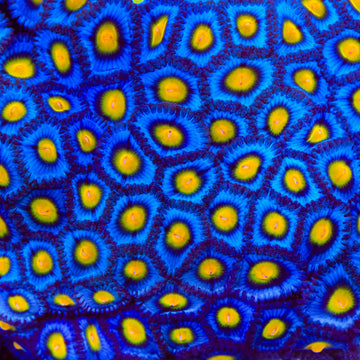
Green Long Polyp Toadstool Leather Coral
Overview
Green Long Polyp Toadstool Leather Coral shows a broad, tan to green cap with extended bright green polyps that sway in flow. Classified as Sarcophyton sp., it is a soft leather coral with a toadstool-like stalk and cap, preferring moderate light and moderate, indirect water flow. It relies mainly on symbiotic algae for nutrition, though occasional small particulate foods can support growth and polyp extension. Place it with ample space and avoid contact with other corals, as it can grow large and release chemicals that irritate neighbors.
Quick Facts
Care
Easy
Lighting
Moderate–High
Flow
Moderate, indirect
Placement
Mid–High
Temperament
Peaceful to semi-aggressive (3–6 inches spacing)
Recommended Parameters
Temp
76–80°F
pH
8.1–8.4
Salinity
1.025–1.026
Calcium
380–430 ppm
AlkAlkalinity
8–10 dKH
Magnesium
1250–1350 ppm
Feeding
photosynthetic (primary), phytoplankton, microplankton, rotifers, marine snow, dissolved organics
Care & Placement
FAQ
Frequently Asked Questions
About the Green Long Polyp Toadstool Leather Coral
-
My Green Long Polyp Toadstool stopped extending and has a shiny film—normal or a problem?
Periodic “shedding” is normal. The coral produces a waxy coat to slough off algae and debris. Help it along with strong, turbulent flow across the cap and stable alkalinity. If the film persists over a week or tissue looks pitted, do a short Lugol’s iodine dip, increase carbon use, and check for shading or fish/clownfish irritation. -
Why is the green fluorescence fading under my lights?
Green morphs rely on adequate blue spectrum and moderate PAR (roughly 100–250). Too little blue or overly white-heavy lighting reduces glow. Excess nutrients can fuel film algae on the cap that mutes color. Improve photoperiod balance, increase turbulent flow to keep the surface clean, maintain nitrate/phosphate in moderate ranges, and avoid abrupt light increases that cause chronic retraction. -
Can this coral chemically affect neighbors, and how do I manage it in mixed reefs?
Sarcophyton releases terpenoid compounds that can stunt or irritate nearby corals, especially SPS downstream in the flow path. Space it generously, aim flow to export downstream, run fresh activated carbon and change it regularly, and keep up with water changes. If SPS show burned tips or poor polyp extension, try relocating the leather or redirecting flow to a high-export area. -
My clownfish keep hosting it and the polyps won’t stay out—should I intervene?
Persistent hosting can stress the coral, preventing extension and slowing growth. Encourage clowns to move by offering an alternative (e.g., a large euphyllia or anemone if appropriate), adjusting rockwork, or relocating the leather temporarily. Increase random flow so fish find it less comfortable, and monitor for abrasions. If tissue becomes damaged, give the coral a rest in a protected, higher-flow position.