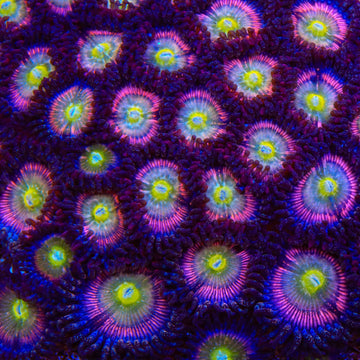
Awesome Blossom Zoanthids Coral
Overview
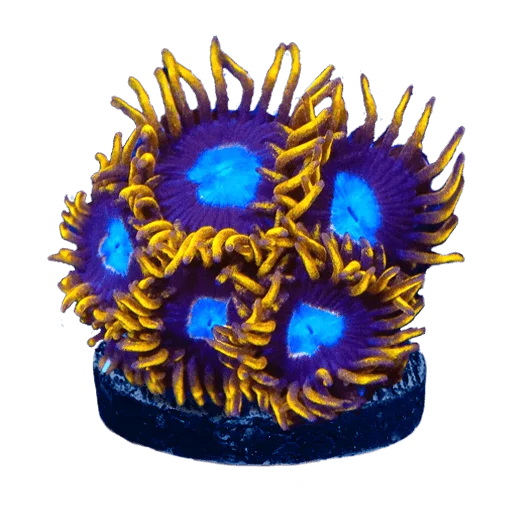
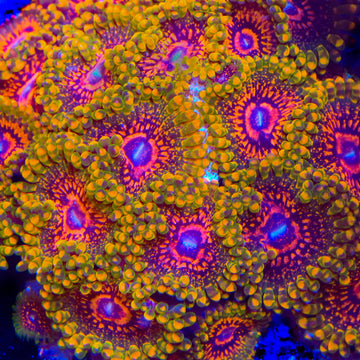
Awesome Blossom Zoanthids Coral shows compact button polyps with bright contrasting centers and fringed skirts. Zoanthus sp. is a colonial soft polyp coral that forms encrusting mats; it does well with moderate light and moderate, indirect flow. It is primarily photosynthetic through symbiotic algae but benefits from occasional small particulate foods to support growth and maintain color. Place on an isolated rock to control spread, keep distance from aggressive neighbors, and handle with care due to potential toxins.
Quick Facts
Care
Easy
Lighting
Low–Moderate
Flow
Moderate, indirect
Placement
Low–Mid
Temperament
Semi-aggressive (fast-growing, may overrun neighbors; 3–4 inches spacing)
Recommended Parameters
Temp
76–80°F
pH
8.1–8.4
Salinity
1.025–1.026
Calcium
380–430 ppm
AlkAlkalinity
8–10 dKH
Magnesium
1250–1350 ppm
Feeding
Photosynthetic (primary), phytoplankton, microplankton, rotifers, oyster eggs, powdered coral foods (e.g., Reef-Roids), marine snow, amino acids
Care & Placement
FAQ
Frequently Asked Questions
About the Awesome Blossom Zoanthids Coral
-
Why do my Awesome Blossom Zoanthids change color under different lighting, and how can I keep their glow stable?
Zoanthus sp. pigments shift with spectrum and intensity. High blue/UV (380–450 nm) boosts fluorescence; excess white or very high PAR can wash tones. Aim for 80–180 PAR, strong blue channel, and gradual adjustments over 2–3 weeks. Maintain stable nutrients (nitrate 5–15 ppm, phosphate 0.03–0.08 ppm). Brief evening blue “viewing” periods preserve pop without stressing the colony. -
My colony is “melting” after appearing fine for weeks—what’s the likely cause and fix?
Sudden decline often follows instability: rapid PAR changes, alkalinity swings, or dips in nutrients. Check for pests (zoa-eating nudibranchs, sundial snails) at night. Perform an iodine or broad-spectrum coral dip, stabilize alk 7.5–9 dKH, and restore modest nutrients. Increase intermittent flow to prevent film algae buildup. Fresh carbon and a 10–20% water change help if toxins are suspected. -
How can I encourage tight polyp formation and skirt extension without causing stretching?
Provide alternating, moderate flow so skirts dance but polyps aren’t folded over. Use a mixed spectrum with strong blue, not excessive white, and target 80–150 PAR to avoid lanky growth. Maintain consistent potassium (380–420 ppm) and iodide; both support coloration and polyp vigor. Avoid ultra-low nutrients; light feeding with fine zooplankton or amino blends 1–2× weekly can improve form. -
Will Awesome Blossom Zoanthids overtake neighbors, and how do I manage aggression?
They spread via a creeping mat and can overgrow slower corals. Isolate on a “zoa island” rock with a sand moat, and prune edges monthly. Expect chemical competition in mixed reefs; run carbon and perform regular water changes after major pruning or rescapes. Keep stinging LPS a few inches away; direct flow can prevent edge contact without moving either colony.