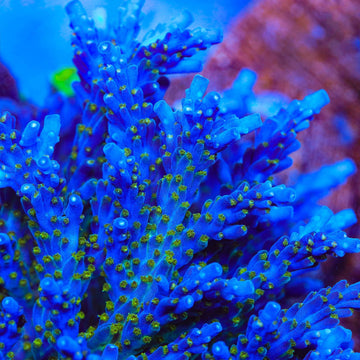
Laura's Purple Polyp Acropora Coral
Overview
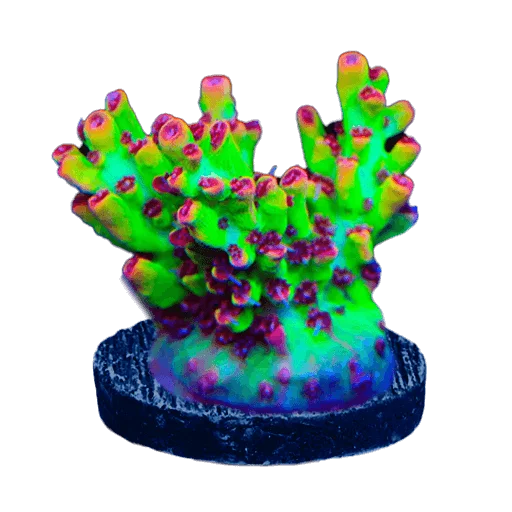
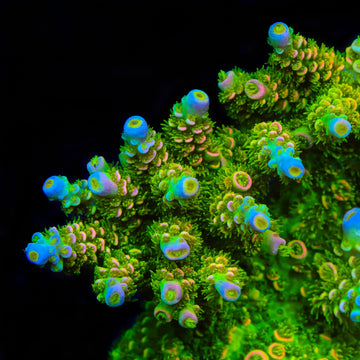
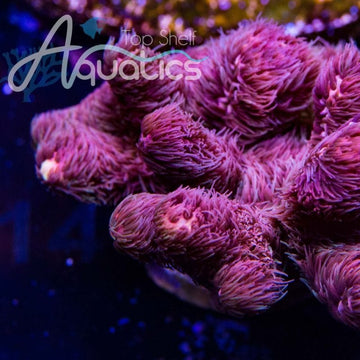
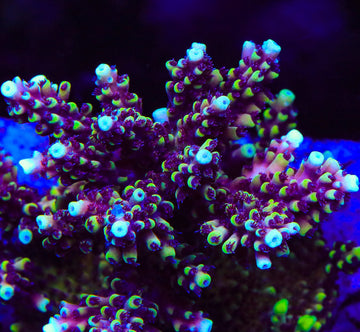
Laura's Purple Polyp Acropora Coral shows vivid purple polyps on slender, branching skeletons. Acropora sp. is a small-polyp stony branching coral that prefers strong lighting and high, turbulent water flow. It relies mainly on symbiotic algae for energy but can benefit from occasional small-particle foods to support growth and color. Place high on stable rockwork with space from aggressive neighbors, and maintain stable water parameters.
Quick Facts
Care
Difficult
Lighting
High
Flow
High
Placement
High
Temperament
Peaceful (3–6 inches spacing)
Recommended Parameters
Temp
76–80°F
pH
8.1–8.4
Salinity
1.025–1.026
Calcium
400–450 ppm
AlkAlkalinity
7–9 dKH
Magnesium
1280–1350 ppm
Feeding
photosynthetic, microzooplankton, rotifers, copepod nauplii, oyster eggs, powdered SPS coral foods, amino acid supplements
Care & Placement
FAQ
Frequently Asked Questions
About the Laura's Purple Polyp Acropora Coral
-
Why do the purple polyps on Laura’s Purple Polyp Acropora fade or brown out?
Color shifts usually track with spectrum, nutrients, and trace elements. Aim for strong blue/UV (420–430 nm) and stable PAR 250–350. Keep nitrate 2–10 ppm, phosphate 0.03–0.08 ppm to avoid ultra-low nutrient paling or excess zoox browning. Maintain stable alkalinity (7.5–8.5 dKH). Check for shadowing as the colony grows; polyps under shaded branches often dull. Periodic ICP testing can flag iodine, iron, and manganese shortages that mute purple tones. -
How can I guide its growth form to avoid shading and dead bases?
Mount the frag high with strong, alternating flow so branches thicken and spread rather than spindly vertical shoots. Angle the plug so the axial tip faces the light and give space for lateral encrusting before vertical growth. Trim or relocate nearby SPS to prevent light deprivation at the base. Encourage early encrustment by starting mid-tank for 2–4 weeks, then moving to final high-light placement once the base has anchored. -
My polyp extension is great at night but minimal by day—normal or a warning?
Modest daytime retraction is common in high light, but sudden loss can signal pests or instability. Look for tiny bite marks/Aefw dust when bastered, or red bugs clustered on polyps. Stabilize alk and pH first, then employ a targeted dip (e.g., Bayer or commercial coral dip) outside the display. A wrasse such as Halichoeres can help with ongoing pressure. Verify flow: too laminar can irritate tissue; aim for strong, randomized movement. -
How do I respond to sudden STN/RTN on this coral specifically?
First halt the trigger: lock in temperature and alkalinity, and reduce light 20–30% temporarily. Increase chaotic flow across the affected zone to keep tissue clean. Trim 5–10 mm into healthy tissue to isolate advancing loss and remount saved pieces on fresh plugs. Consider an iodine bath for frags. Avoid heavy feeding or big water chemistry changes during recovery; allow 48–72 hours of stability before ramping light back up.