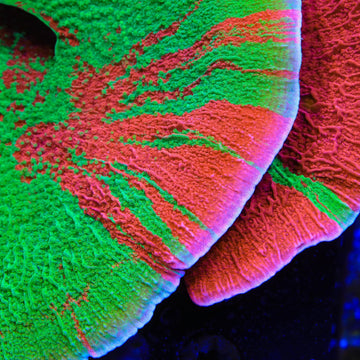
Bubblegum Digitata Montipora Coral
Overview
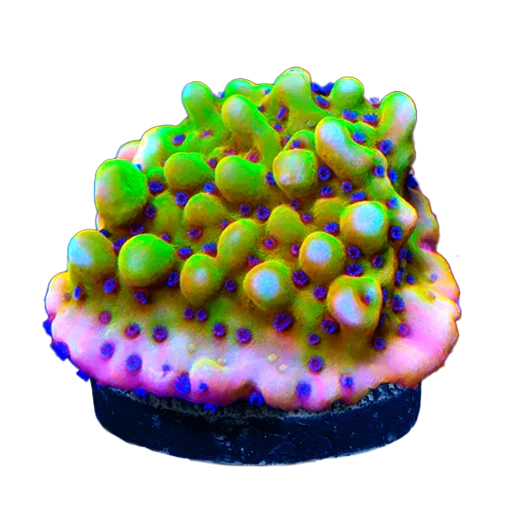
Bubblegum Digitata Coral shows branching, finger-like growth with pastel pink to reddish tones. Montipora digitata is a small-polyp stony coral that forms upright branches; it does best under moderate to high light and moderate to strong, turbulent flow. It relies mainly on symbiotic algae for energy but can take fine particulate foods, which may support growth and color stability. Place high on rockwork with space around the colony, and avoid contact with aggressive neighbors or stinging sweeper tentacles.
Quick Facts
Care
Moderate
Lighting
Moderate–High
Flow
Moderate–High
Placement
Mid–High
Temperament
Peaceful (2–4 inches spacing)
Recommended Parameters
Temp
76–80°F
pH
8.1–8.4
Salinity
1.025–1.026
Calcium
400–450 ppm
AlkAlkalinity
7.5–9 dKH
Magnesium
1280–1350 ppm
Feeding
photosynthetic, phytoplankton, microplankton, zooplankton, rotifers, copepod nauplii, oyster eggs, marine snow, coral-specific powdered foods
Care & Placement
FAQ
Frequently Asked Questions
About the Bubblegum Digitata Montipora Coral
-
My Bubblegum Digitata’s branch tips are paling while the base stays colored—what’s the usual culprit?
Tip paling often follows alkalinity spikes or sudden PAR increases. Digitata grows fast at the tips, so imbalances show there first. Verify stable KH (no big daily swings), increase light gradually, and ensure adequate potassium and iodine levels to support pink tissue and blue polyps. Improve flow around the tips to reduce film buildup; if tips burn, trim to healthy tissue and stabilize parameters. -
How do I maintain the vibrant pink with blue polyp contrast on Montipora digitata?
Target a balanced, low-to-moderate nutrient range (nitrate 5–15 ppm, phosphate 0.03–0.1 ppm) with stable parameters. Provide strong blue spectrum without abrupt intensity jumps. Trace elements matter: potassium supports reds/pinks, iron can deepen greens (avoid overdose), and iodine aids polyp vigor. Regular small water changes replenish trace levels; if dosing, test first. Good flow and clean surfaces prevent dulling biofilms. -
What’s the most reliable fragging method to preserve the colony’s branching shape?
Let the base encrust solidly before cutting. Use bone cutters to take 2–4 cm branch tips with a sliver of encrusted base if possible; this anchors quickly and resists toppling. Avoid crushing; make clean cuts above any shaded or necrotic zones. Mount frags horizontally for fuller branching, or vertical for taller candelabra growth. Keep KH and temperature steady post-frag to prevent recession. -
How can I spot and eradicate Montipora-eating nudibranchs on digitata?
Look for patchy, scalloped bite marks and white, overnight tissue loss on shaded undersides and branch junctions. Inspect at night with a flashlight for tiny white nudi bodies; eggs appear as small white spirals. Remove affected branches for dips (iodine or specialized coral dips), manually pick nudis and egg coils, and repeat every few days to break the cycle. Improve flow and reduce detritus traps where they hide.