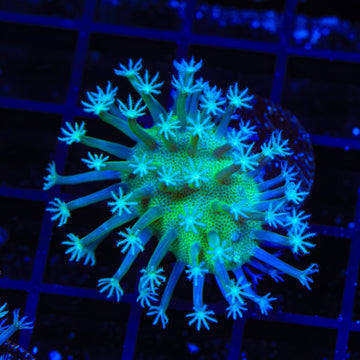
Green Toadstool Leather Coral
Overview
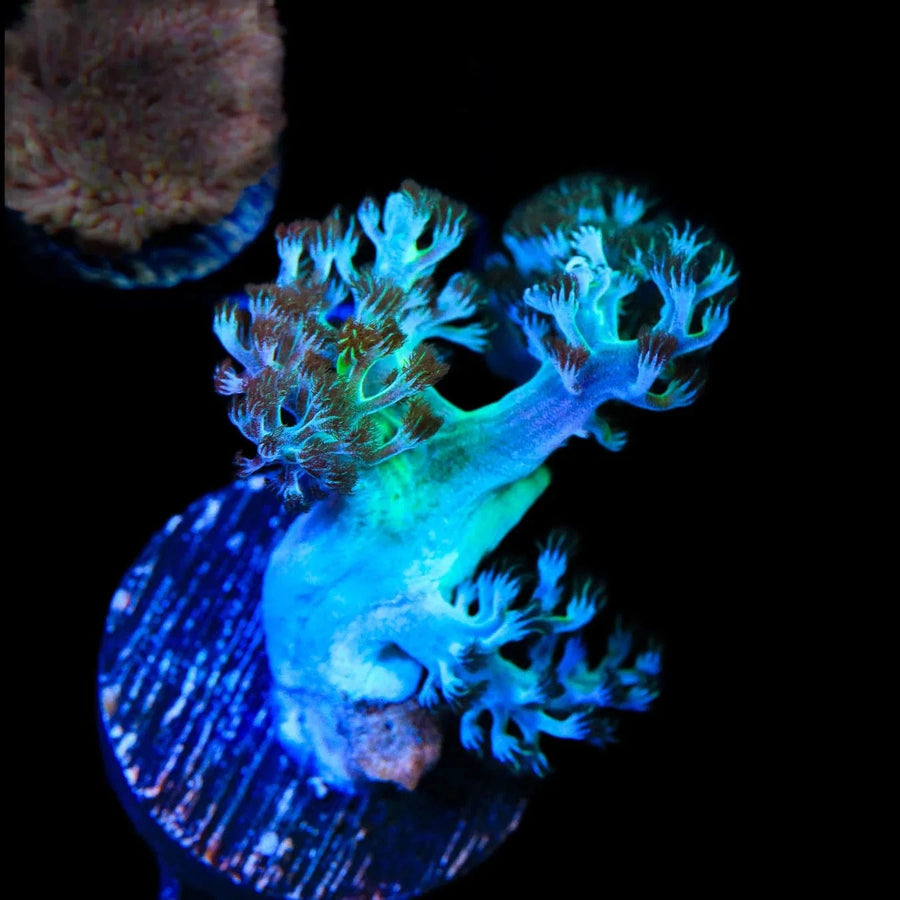
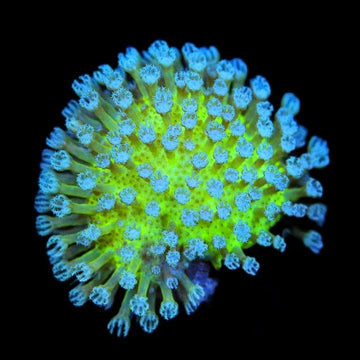
Green Toadstool Leather Coral features a mushroom-like cap with short green polyps that extend in a dense mat. Sarcophyton sp. is a soft leather coral with a stalked, toadstool form; it prefers moderate lighting and moderate to strong, varied water flow. It is primarily photosynthetic with symbiotic algae but benefits from dissolved nutrients or occasional fine particulate foods, which can support faster growth and sustained color. Place it where it has room to expand and avoid contact with other corals, as it can release irritants and shade neighbors.
Quick Facts
Care
Easy
Lighting
Moderate–High
Flow
Moderate-Strong
Placement
Mid–High
Temperament
Semi-aggressive (allelopathy; 6–8 inches spacing)
Recommended Parameters
Temp
76–80°F
pH
8.1–8.4
Salinity
1.025–1.026
Calcium
380–430 ppm
AlkAlkalinity
8–10 dKH
Magnesium
1250–1350 ppm
Feeding
photosynthetic (primary), phytoplankton, microplankton, marine snow, bacterioplankton, coral-specific powdered foods
Care & Placement
FAQ
Frequently Asked Questions
About the Green Toadstool Leather Coral
-
Why is my Green Toadstool Leather Coral closed for days or even weeks?
Periodic “shedding” is normal. It releases a waxy film to clean its surface, often staying closed until the layer sloughs off. Boost random, moderate–strong flow to help it shed, keep lighting stable, and run fresh activated carbon. Avoid moving or handling it during this phase. If closure exceeds two weeks, check for pests, allelopathy from neighbors, or abrupt parameter swings, and consider an iodine dip for localized tissue issues. -
The cap is folding and forming odd lobes—is something wrong?
Sarcophyton often changes shape to optimize light and flow, forming ruffles and folds as it grows. This is usually healthy, but watch for areas that stay dull or recede along a crease—signs of stagnant flow or abrasion. Increase cross-flow, ensure the rim isn’t shading the center excessively, and trim if it starts touching other corals. If tissue breaks down, frag past the affected margin and consider a brief iodine bath. -
Why is the green color dull under my lights but glows under blues?
The “green” is largely fluorescent proteins that pop under strong blue/actinic. Intense white-heavy spectra can wash it out. Gradually acclimate to your lights, use a balanced spectrum with ample blue, and avoid near-zero nutrients—ultra-lean tanks can pale leathers. Target roughly 5–15 ppm nitrate and 0.03–0.1 ppm phosphate. Iron and iodine availability can influence soft coral vigor; regular water changes and prudent supplementation help maintain coloration. -
Can I keep Sarcophyton with SPS and LPS without issues?
Yes, with planning. Toadstools release terpenoid compounds that can stress stony corals, especially downcurrent. Provide space, position it so flow doesn’t carry its exudates directly into SPS, and run high-quality carbon changed frequently. Strong skimming and periodic water changes reduce chemical load. Physical contact can irritate neighbors even without long sweepers, so maintain clearance and prune the rim when growth encroaches.