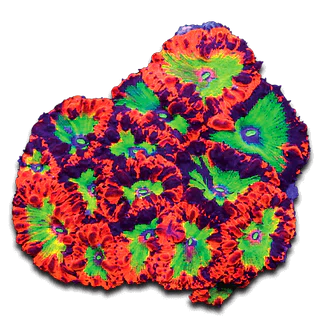
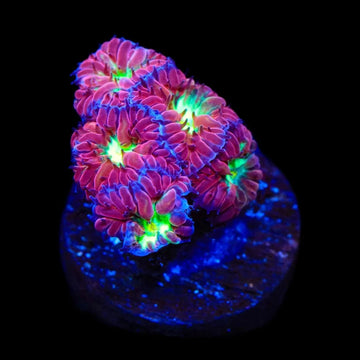
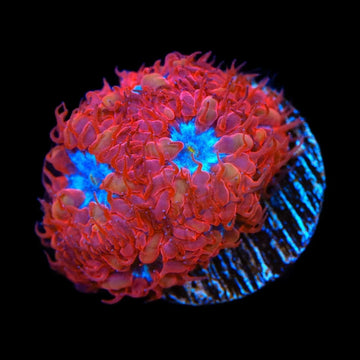
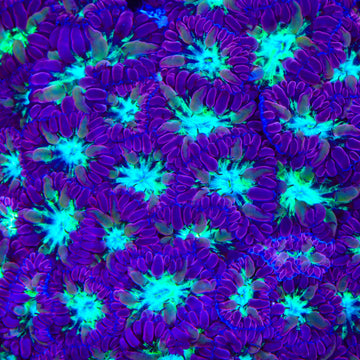
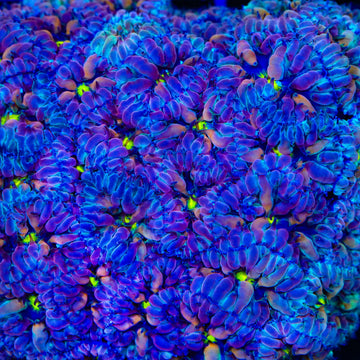
Cracker Jack Blastomussa Coral
Overview
Cracker Jack Blastomussa Coral shows round, fleshy polyps with contrasting ringed mouths. Blastomussa wellsi is a large-polyp stony coral forming clustered heads; it prefers moderate light and low to moderate, gentle flow. It is photosynthetic via symbiotic algae but benefits from occasional small meaty feedings, which can support faster growth and maintain color. Place on stable rock or sand with space around it, as sweeper tentacles can sting nearby corals.
Quick Facts
Care
Moderate
Lighting
Low–Moderate
Flow
Low–Moderate
Placement
Low–Mid
Temperament
Peaceful (2–3 inches spacing)
Recommended Parameters
Temp
76–80°F
pH
8.1–8.4
Salinity
1.025–1.026
Calcium
400–450 ppm
AlkAlkalinity
8–10 dKH
Magnesium
1250–1350 ppm
Feeding
photosynthetic, mysis shrimp, enriched brine shrimp, finely chopped krill or clam, zooplankton/copepods, microplankton, coral-specific powdered foods, marine snow
Care & Placement
FAQ
Frequently Asked Questions
About the Cracker Jack Blastomussa Coral
-
My Cracker Jack Blastomussa polyps inflate at night but stay shrunken midday—what’s the usual cause?
Blastomussa wellsi often deflates under excess light or direct, turbulent flow. Aim for low–moderate PAR (60–120) with gentle, indirect current. Check stability: swings in alkalinity, temperature, or salinity cause midday sulking. Inspect for irritants like vermetid snails or sand grains trapped under tissue. Maintain moderate nutrients (nitrate 5–15 ppm, phosphate 0.03–0.1 ppm). Gradual light acclimation and a slight shade overhang typically restore daytime inflation. -
How can I keep the “Cracker Jack” reds and oranges from washing out or browning?
Color depth tracks spectrum, PAR, and nutrients. Use a blue-leaning spectrum (14–20K) and avoid PAR above ~150. Too “clean” systems pale this coral; too “dirty” leads to browning. Target moderate nutrients and stable alkalinity (7.5–8.5 dKH). Trace balance matters—large, frequent carbon dosing or heavy GFO can strip color. Slow any filtration changes and monitor weekly; subtle shifts show in the rim and oral disk first. -
What’s the best way to feed this coral without causing tissue recession or fouling?
Feed after lights dim, when feeding tentacles extend. Offer small meaty fare (mysis, reef roe, finely chopped clam) once or twice weekly. Turn off pumps 10–15 minutes, and deliver small portions to each head; large chunks can tear tissue or sit and rot. Rinse oily foods. Resume gentle flow to clear leftovers. Consistent, modest feedings improve polyp expansion and growth without spiking nutrients. -
Mine recedes when near other LPS, yet it has short sweepers—why the setback?
B. wellsi is easily irritated by chemical and physical aggression despite modest sweepers. Keep distance from Euphyllia, Favids, Chalices, and aggressive mushrooms. Avoid direct contact with zoas or encrusters that can overgrow the base. Provide space from rock edges that chafe inflated tissue. If housed on sand, keep detritus off the rim with gentle crossflow, and remove vermetids or bristleworms that provoke chronic retraction.