Blue Tip Frogspawn Coral
Overview
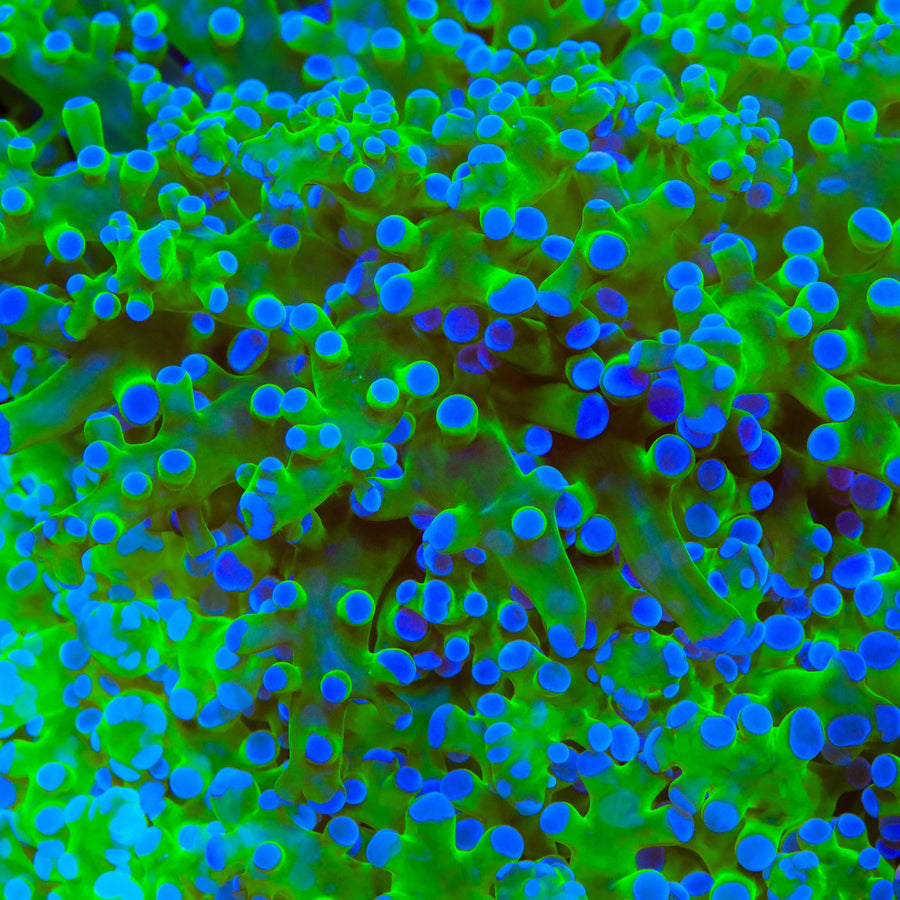
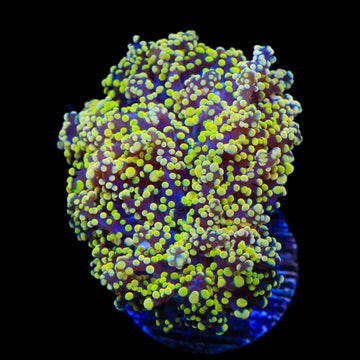
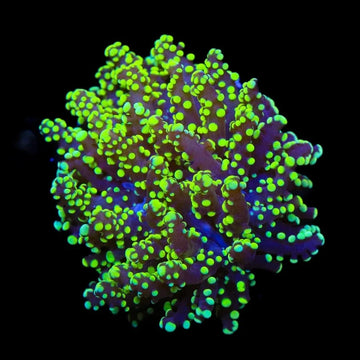
Blue Tip Frogspawn Coral shows branching heads with fleshy, hammer-shaped tentacles tipped in blue. Fimbriaphyllia paradivisa is a branching large-polyp stony coral that prefers moderate light and gentle to moderate, indirect flow. It relies on symbiotic algae for most nutrition but accepts small meaty foods, which can support growth and maintain color. Place it with space around the colony, as sweeper tentacles can sting nearby corals.
Quick Facts
Care
Moderate
Lighting
Moderate
Flow
Low to Moderate
Placement
Mid–Low
Temperament
Semi-aggressive (6–10 inches spacing)
Recommended Parameters
Temp
76–80°F
pH
8.1–8.4
Salinity
1.025–1.026
Calcium
400–450 ppm
AlkAlkalinity
8–10 dKH
Magnesium
1280–1400 ppm
Feeding
photosynthetic, mysis shrimp, enriched brine shrimp, finely chopped seafood (krill/shrimp), zooplankton, microplankton, marine snow, coral-specific powdered foods
Care & Placement
FAQ
Frequently Asked Questions
About the Blue Tip Frogspawn Coral
-
My Blue Tip Frogspawn’s blue highlights are fading—what’s the likely cause and fix?
Fading tips often follow spectrum shifts, low blue/actinic intensity, or elevated nutrients that darken zooxanthellae. Keep moderate PAR (80–150) heavy in 420–460 nm, maintain low but non-zero nitrate and phosphate, and avoid rapid light changes. Stable alkalinity and magnesium help skeletal health, which supports pigment stability. Don’t dose trace elements blindly—test first and use activated carbon if yellowing water is muting fluorescence. -
How does Fimbriaphyllia paradivisa branch, and what’s the safest way to frag it?
It forms thin, tree-like branches with clear separation points. Cut the bare skeleton between heads using bone cutters or a low-speed diamond saw—never through living tissue. Dip in iodine, remove any loose skeleton shards, and mount so the head isn’t torqued by flow. Allow recovery in moderate light/flow, then resume target feeding. Avoid fragging during recent alkalinity swings or after transport. -
How can I tell normal slime from brown jelly, and what’s an effective response?
Normal mucus is clear and transient; brown jelly appears as opaque, coffee-colored blobs with rapid tissue loss and foul odor. Immediately siphon the goo, remove the affected head, and perform an iodine or low-dose hydrogen peroxide dip. Increase flow around remaining tissue, run fresh carbon, consider a small water change, and quarantine if possible. UV can reduce spread in heavily stocked systems. -
What flow pattern suits this coral, and how do I prevent polyp bailout?
Aim for a gentle, alternating sway—polyps should extend fully without collapsing or whipping. Direct, laminar blasts or constant turbulence can bruise tissue and trigger bailout, especially after alkalinity or temperature swings. Use cross-flow or pulsed gyres, soften pump output with angles, and stabilize pH overnight via surface agitation or a reverse-lit refugium. Keep rock edges smooth where tentacles contact.