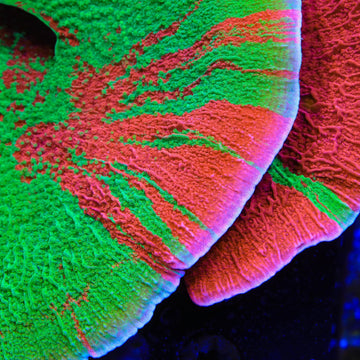
JF Pink Rim Montipora Coral
Overview
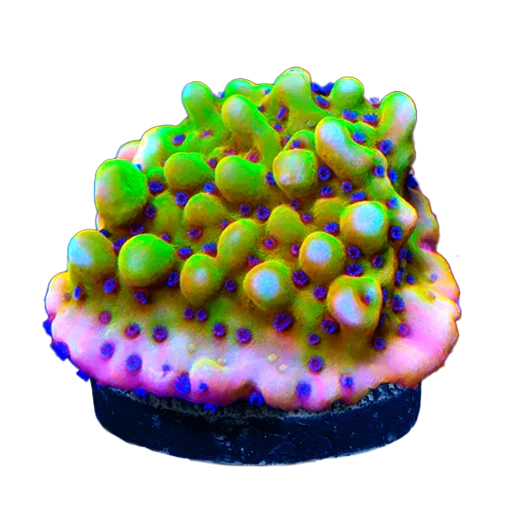
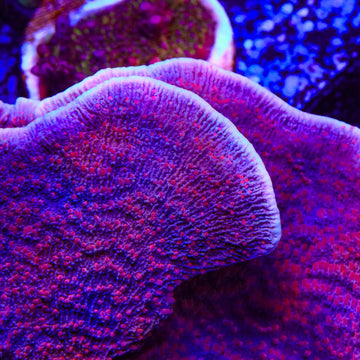
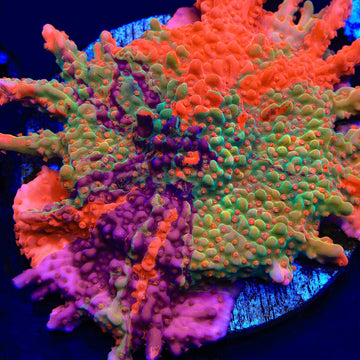
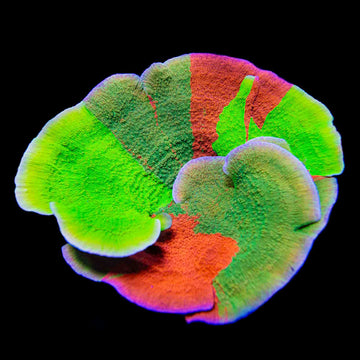
JF Pink Rim Montipora Coral shows plating growth with a distinct pink edge around tan to green surfaces. Montipora capricornis is a hard plating SPS coral that prefers moderate to high light and moderate water flow. It is photosynthetic with symbiotic algae, and can take occasional fine particulate foods, which may support growth and maintain color. Place on stable rockwork with room to expand, and avoid contact with aggressive stinging corals.
Quick Facts
Care
Moderate
Lighting
Moderate–High
Flow
Moderate–High
Placement
Mid–High
Temperament
Peaceful (2–3 inches spacing)
Recommended Parameters
Temp
76–80°F
pH
8.1–8.4
Salinity
1.025–1.026
Calcium
400–450 ppm
AlkAlkalinity
7.5–9 dKH
Magnesium
1250–1350 ppm
Feeding
photosynthetic, microplankton, phytoplankton, rotifers, marine snow, powdered coral foods, amino acid supplements
Care & Placement
FAQ
Frequently Asked Questions
About the JF Pink Rim Montipora Coral
-
How do I maintain the bright pink rim on JF Pink Rim Montipora (Montipora capricornis)?
Target 250–350 PAR with strong blue spectrum (420–460 nm). Keep nitrate 2–10 ppm and phosphate 0.03–0.08 ppm; extremes mute the rim. Stable alkalinity (8–9 dKH) is key. Adequate potassium (380–420 ppm) and iron traces support reds/pinks—dose only if tested. Avoid rapid light or nutrient shifts; acclimate to higher light over 1–2 weeks. -
My plate is shading itself—what’s the best placement to control growth?
Mount the initial frag at a slight downward tilt and give lateral space. Moderate–strong, cross-current flow sheds detritus under the shelves. If stacking occurs, preemptively trim inner shelves to allow light through. Mounting higher in the rockwork encourages upward whorls; lower placement promotes cupping. Keep 3–4 inches from neighbors to reduce chemical irritation. -
The rim is receding while the center looks fine—what’s causing this?
Rim loss often follows alkalinity dips or sudden PAR changes; the growing edge is most sensitive. Check for nighttime alk swings, verify PAR at the rim after shading develops, and inspect for nudibranch bite marks along edges. Increase turbulent flow to prevent detritus settling on the lip. Stabilize alk, restore light to the edge by trimming, and treat pests if found. -
Are there pests specific to Montipora I should watch for with this morph?
Montipora-eating nudibranchs are the main risk. Look for tiny white slugs and crescent bite tracks on the rim and undersides. Dip new frags (iodine or specialized dips) and use a flashlight after lights out. If infested, manual removal plus repeated dips every 3–4 days for 2–3 weeks breaks the life cycle. Wrasses help with incidental control, not eradication.