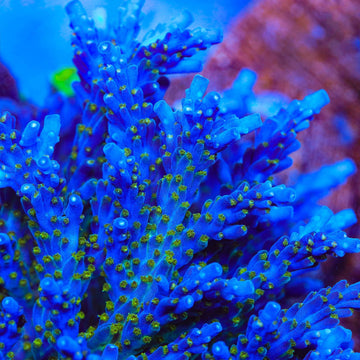
BkChem Froot Loops Acropora Coral
Overview
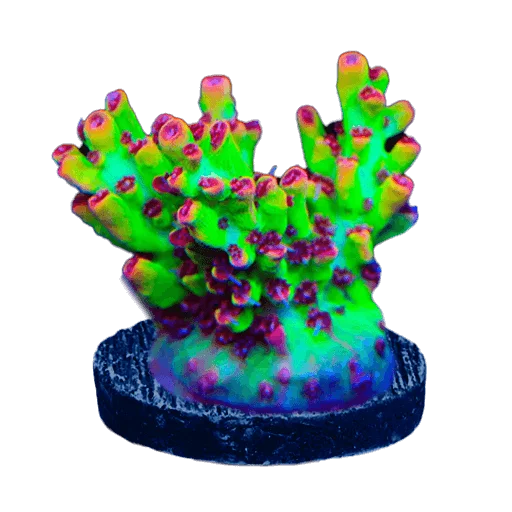
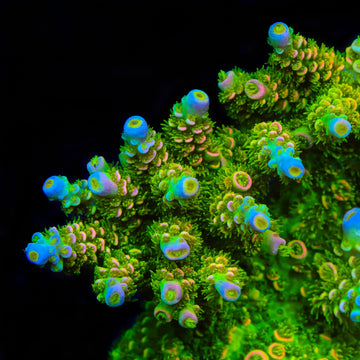
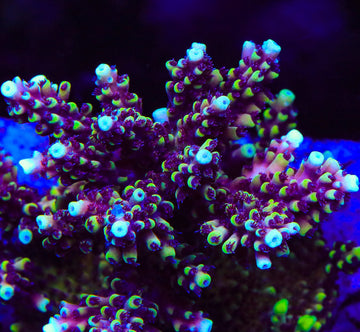
Froot Loops Acropora Coral shows multicolored branch tips with small radial corallites. Acropora tenuis is a branching small-polyp stony coral that prefers strong lighting and high, turbulent water flow. It relies on symbiotic algae for most nutrition, with occasional small particulate foods supporting growth and color stability. Mount high with room for upward growth and keep distance from stinging corals to avoid tissue damage.
Quick Facts
Care
Difficult
Lighting
High
Flow
High
Placement
High
Temperament
Peaceful (2–3 inches spacing)
Recommended Parameters
Temp
76–80°F
pH
8.1–8.4
Salinity
1.025–1.026
Calcium
420–450 ppm
AlkAlkalinity
7.5–9 dKH
Magnesium
1300–1400 ppm
Feeding
photosynthetic, microplankton, phytoplankton, zooplankton, rotifers, copepod nauplii, oyster eggs, powdered coral foods, amino acid supplements
Care & Placement
FAQ
Frequently Asked Questions
About the BkChem Froot Loops Acropora Coral
-
Why is my Froot Loops Acropora losing its vivid colors despite strong lighting?
A. tenuis can pale under excessive PAR or imbalanced spectrum. Aim for 300–350 PAR with a blue-heavy band (420–470 nm) and gradual acclimation. Maintain nitrate 5–15 ppm and phosphate 0.03–0.08 to avoid starvation fade. Consistent alkalinity (7.5–8.5 dKH) and stable temperature help pigment retention. Trace elements like potassium, iodine, and manganese support yellows/pinks—dose only if tested. -
How can I prevent slow base recession on this coral?
Base recession often starts from trapped detritus and shadowing. Provide strong, randomized flow that sweeps the base (crossfire from two sources beats a single laminar stream). Keep the first inch elevated off rock to limit debris buildup, and periodically turkey-baste the underside. Ensure nearby colonies aren’t shading the base, and avoid rapid alkalinity shifts that weaken tissue. -
What’s the best method to frag Acropora tenuis without stalling growth?
Let the colony encrust solidly before cutting. Target secondary branches, avoiding the main axial tip. Make clean cuts with bone cutters, then mount so the cut face is vertical for quick skin-over. Use thick gel adhesive at multiple contact points. Dip frags (iodine-based) and heal in moderate flow and 250–300 PAR for 7–14 days before moving higher. -
How do I maximize the “Froot Loops” polyp pop and contrast?
Emphasize blue/near-UV channels (400–470 nm) during the peak photoperiod while keeping whites modest to prevent washing out. Maintain mild nutrients and steady, slightly lower alkalinity (around 8 dKH) for tighter tips and richer color. Feed small-particle foods sparingly at night to avoid browning. Provide space from aggressive neighbors to prevent sting-induced dulling and maintain even light on all faces.