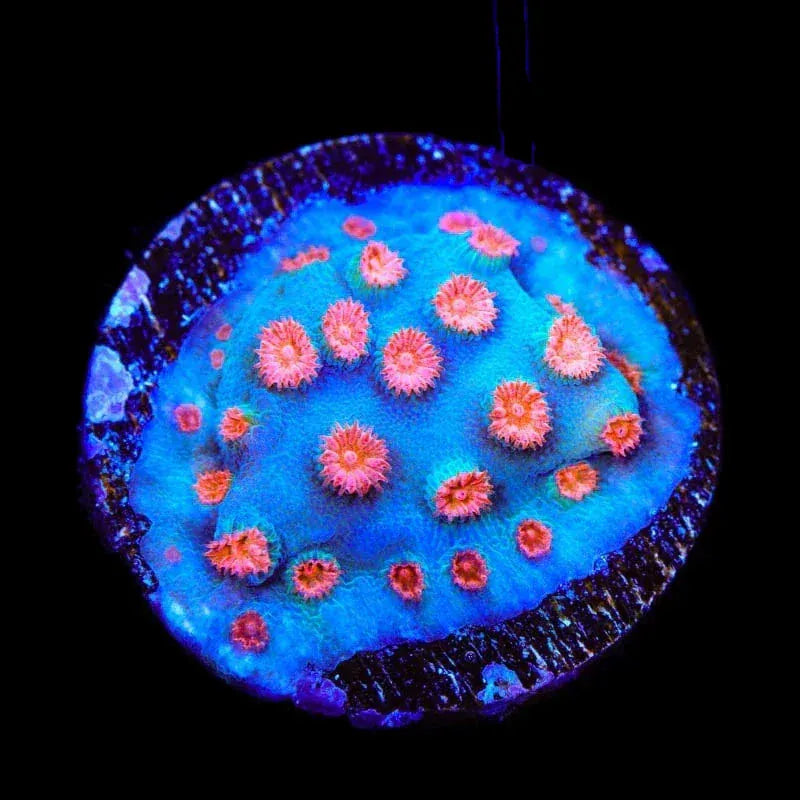
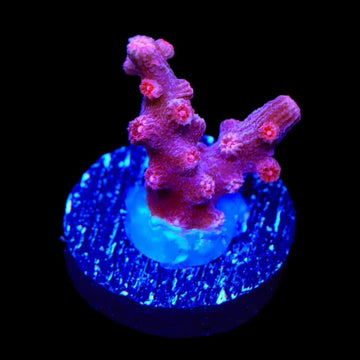
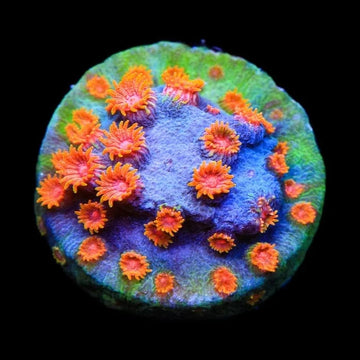
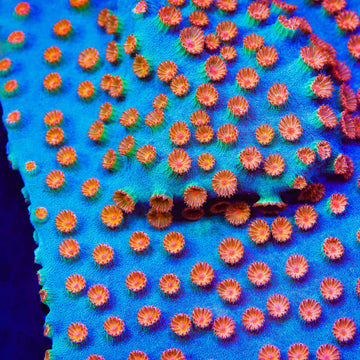
Meteor Shower Cyphastrea Coral
Overview
Meteor Shower Cyphastrea Coral shows a mottled blue base with bright orange polyps and small, encrusting bumps. Cyphastrea sp., an encrusting small-polyp stony coral, grows as a low, mat-like crust and prefers low to moderate light with gentle to moderate, indirect flow. It is photosynthetic via symbiotic algae but accepts fine particulate foods, which can support faster growth and maintain color. Place on stable rock away from aggressive neighbors, leaving room for slow lateral spread without shading higher-light corals.
Quick Facts
Care
Easy
Lighting
Low–Moderate
Flow
Low–Moderate
Placement
Low–Mid
Temperament
Peaceful (1–2 inches spacing)
Recommended Parameters
Temp
76–80°F
pH
8.1–8.4
Salinity
1.025–1.026
Calcium
400–450 ppm
AlkAlkalinity
8–9 dKH
Magnesium
1280–1350 ppm
Feeding
photosynthetic, microzooplankton, rotifers, cyclops/copepods, oyster eggs, reef roids/powdered coral foods, marine snow, amino acid supplements
Care & Placement
FAQ
Frequently Asked Questions
About the Meteor Shower Cyphastrea Coral
-
My Meteor Shower Cyphastrea’s blue base is paling and orange polyps look dull—what’s the likely cause?
This coral prefers low PAR (50–120) and blue-heavy spectrum. High intensity or excessive white can bleach the base and mute polyp color. Maintain stable alkalinity (7.5–9 dKH), moderate nutrients (NO3 5–15 ppm, PO4 0.03–0.1), and gentle, indirect flow. Gradually reduce light over 1–2 weeks and watch for deeper blue return. Trace imbalance (iodine/iron) rarely contributes; avoid abrupt corrections. -
How can I encourage an even, fast encrust on rock or the back wall?
Place the frag on clean, roughened surfaces with low, indirect light and moderate crossflow. Cyphastrea spreads fastest along micro-crevices, so lightly scuff smooth plastic or glass and use a magnetic shelf to start a “bridge.” Keep detritus off the growth edge, and avoid shading it with macroalgae. Stability beats feeding for growth; small weekly feedings help, but steady parameters drive the rim forward. -
Daytime polyp extension is minimal—should I be concerned and how should I feed it?
It’s naturally more nocturnal. Minimal daytime extension is normal if tissue is full and color stable. For feeding, broadcast fine particulates (e.g., reef roids, rotifers) after lights dim, or gently target-feed with return flow off and low gyre. Avoid blasting; mucus strings indicate overfeeding. If polyps stay retracted day and night, check for vermetid irritation, nipping fish, or excessive flow. -
Is it aggressive, and how close can I place it to other corals?
It has short sweepers and mild sting, but it wins by slow smothering. Give 2–3 cm buffer from zoanthids and encrusting montiporas to prevent overgrowth. Keep it well away from long-sweeper LPS (favia, euphyllia, galaxea) that can burn it. If space is tight, isolate on its own plug/island and periodically trim the edge to protect neighbors.