Blueberry Blastomussa Coral
Overview
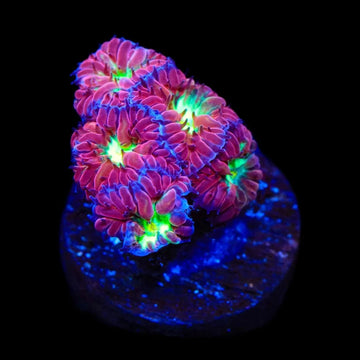
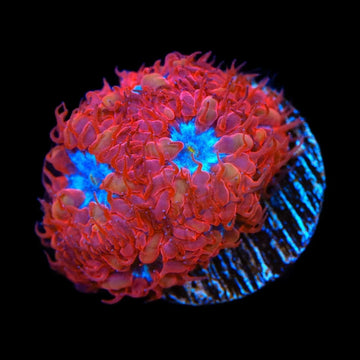
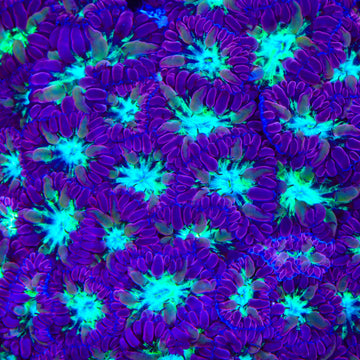
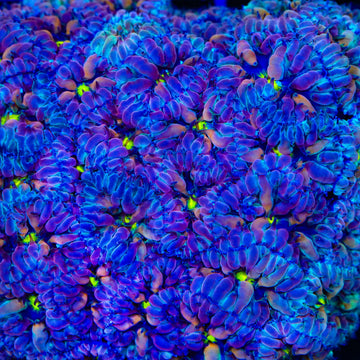
Blueberry Blastomussa Coral shows fleshy, rounded polyps with contrasting blue to purple centers and thick rims. Scientifically known as Blastomussa wellsi Coral, it is a large-polyp stony coral that prefers low to moderate lighting and gentle, indirect water flow. It relies on symbiotic algae for energy but benefits from occasional small meaty feedings, which can improve growth and maintain color. Place it on a stable substrate with space from more aggressive corals, and avoid direct, high flow or intense light.
Quick Facts
Care
Moderate
Lighting
Low–Moderate
Flow
Low-moderate
Placement
Low–Mid
Temperament
Peaceful (2–3 inches spacing)
Recommended Parameters
Temp
76–80°F
pH
8.1–8.4
Salinity
1.025–1.026
Calcium
400–450 ppm
AlkAlkalinity
8–9 dKH
Magnesium
1280–1350 ppm
Feeding
photosynthetic (primary), mysis shrimp, enriched brine shrimp, copepods, rotifers, cyclops, microplankton, finely minced seafood, coral-specific powdered foods
Care & Placement
FAQ
Frequently Asked Questions
About the Blueberry Blastomussa Coral
-
My Blueberry Blastomussa inflated for weeks, then suddenly stayed deflated. What should I check first?
Start with stability: verify alkalinity (8–9 dKH), salinity (1.025–1.026), and temperature swings. Check phosphate isn’t stripped (aim 0.03–0.08 ppm) and nitrate 5–15 ppm. Inspect for vermetid snails or aiptasia irritating the tissue. Reduce flow if polyps wrinkle. If there’s tissue sloughing, perform an iodine dip and siphon detritus around the base to prevent bacterial issues. -
Why is my “Blueberry” morph turning more green or brown under my lights?
B. wellsi from deeper water prefers moderate PAR (60–120) with strong blue spectrum. High white intensity or PAR >150 can wash colors and drive zooxanthellae density upward, browning the coral. Shift to a bluer schedule, lower intensity gradually (10–15% over 2–3 weeks), and maintain nutrients in the moderate range to preserve lilac/blue tones. -
How can I feed Blastomussa wellsi for growth without causing bacterial film or algae?
Target feed at dusk when feeding response is strongest. Offer small portions of mysis, calanus, or fine reef foods once or twice weekly. Turn off flow 10–15 minutes, resume gently after capture. Avoid oversized pieces that rot. Rinse frozen foods, keep total weekly input modest, and increase export (skimming, filter floss) after feeding sessions. -
What’s the safest way to frag a multi-head Blastomussa colony?
Use bone cutters or a band saw to cut the skeleton between heads, never through fleshy polyps. Make clean, decisive cuts, then place frags in low flow and moderate light. Dip in iodine or a broad-spectrum coral dip to reduce infection risk. Allow 1–2 weeks of recovery before increasing flow, and keep detritus off the cut edges.