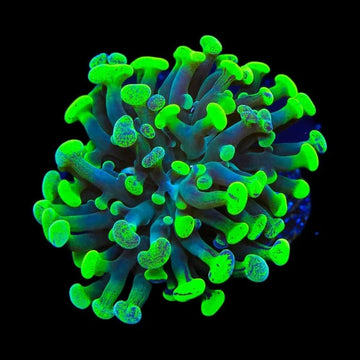
Lime Hammer Coral
Overview
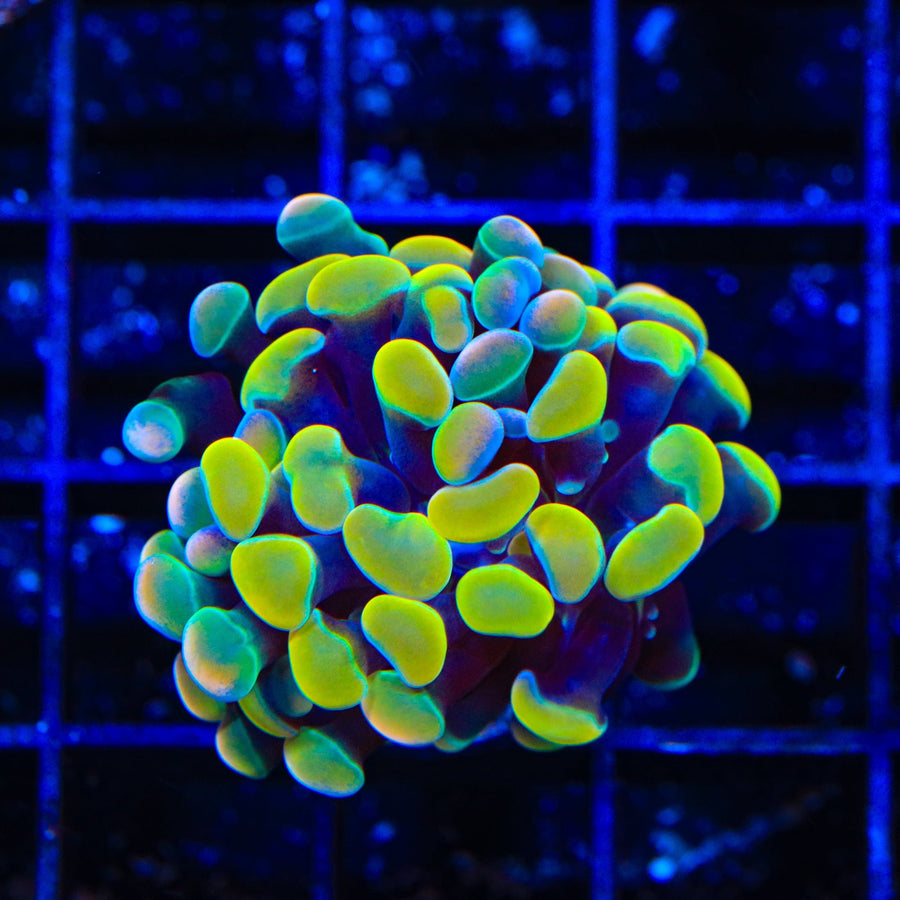
Lime Hammer Coral features lime-green hammer-shaped tentacle tips. Fimbriaphyllia paraancora is a branching large-polyp stony coral that prefers moderate light and gentle to moderate, indirect water flow. It relies on symbiotic algae but also accepts small meaty foods; occasional feeding can support faster growth and richer color. Place it in a stable low-to-mid position with ample space, as its sweeper tentacles can sting nearby corals.
Quick Facts
Care
Moderate
Lighting
Moderate
Flow
Moderate, indirect
Placement
Mid–Low
Temperament
Aggressive (6–8 inches spacing)
Recommended Parameters
Temp
77–80°F
pH
8.1–8.4
Salinity
1.025–1.026
Calcium
420–450 ppm
AlkAlkalinity
8–9 dKH
Magnesium
1280–1350 ppm
Feeding
photosynthetic, mysis shrimp, enriched brine shrimp, finely chopped marine meats (krill, shrimp), copepods, zooplankton/microplankton, coral-specific micro foods
Care & Placement
FAQ
Frequently Asked Questions
About the Lime Hammer Coral
-
How can I tell if my Lime Hammer Coral is the branching form (Fimbriaphyllia paraancora) and why does it matter?
F. paraancora grows as distinct, forked branches with individual heads, unlike the single continuous “wall” of F. ancora. This matters for resilience and propagation: branching forms recover from damage faster, are easier to frag between branch junctions, and tolerate minor die-off without losing the entire colony. Mount to allow outward branching and future splits. -
My lime-green tips are fading under blue LEDs—what fine-tuning helps restore color without stressing the coral?
Aim for moderate PAR (80–150) with strong blue/UV channels and stable nutrients (nitrate 2–10 ppm, phosphate 0.03–0.10 ppm). Sudden “ultra-clean” conditions often pale hammers; increase feeding slightly and reduce aggressive skimming if needed. Avoid big spectrum jumps; adjust 10% weekly. Check iron-heavy supplements cautiously—overuse can brown tissue. -
What flow pattern prevents recession or brown jelly on F. paraancora without collapsing the polyps?
Use a wide, alternating flow that gently moves tentacles without folding them over. If flesh retracts on one side or skeleton shows, reduce direct laminar streams and reposition slightly downstream of a rock. After a bump or frag, increase aeration and flow around (not onto) tissue to lower bacterial risk. Siphon debris from branch bases. -
Can Lime Hammer touch other Euphyllia like frogspawn or torch safely?
It varies by colony. Some hammers tolerate F. divisa (frogspawn) contact, but many wage slow chemical warfare that ends in recession. Torches (F. glabrescens) usually win and can burn hammers. Keep 7–10 cm clearance at minimum, more in higher flow. Watch for filament release or localized retraction and move corals before tissue loss appears.