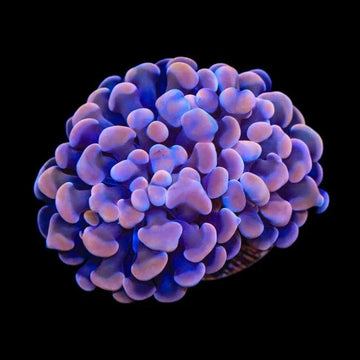
Green Highlighter Tip Hammer Coral
Overview
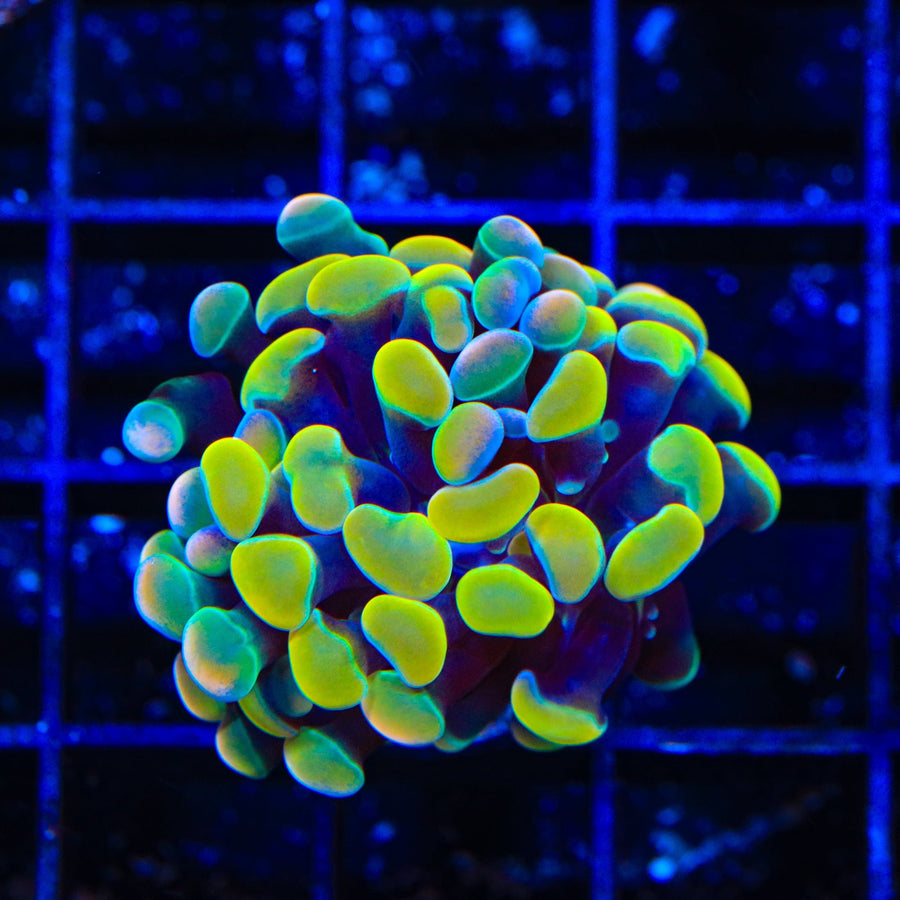
Green Highlighter Tip Hammer Coral has wall-like heads with anchor-shaped tentacle tips highlighted in bright green. Fimbriaphyllia paraancora is an LPS, wall-forming hammer coral that prefers moderate light and gentle to moderate, indirect water flow. It relies on symbiotic algae but accepts occasional small meaty foods, which can support growth and color. Place with ample space from other corals due to stinging sweepers, and avoid strong, direct flow that can damage tissue.
Quick Facts
Care
Moderate
Lighting
Moderate
Flow
Moderate, indirect
Placement
Mid–Low
Temperament
Semi-aggressive (maintain 4–6 inches clearance for sweeper tentacles)
Recommended Parameters
Temp
76–80°F
pH
8.1–8.4
Salinity
1.025–1.026
Calcium
400–450 ppm
AlkAlkalinity
8–10 dKH
Magnesium
1280–1350 ppm
Feeding
photosynthetic, mysis shrimp, enriched brine shrimp, finely chopped shrimp or clam, copepods, rotifers, zooplankton, microplankton, coral-specific powdered foods, marine snow
Care & Placement
FAQ
Frequently Asked Questions
About the Green Highlighter Tip Hammer Coral
-
How is Fimbriaphyllia paraancora different from wall hammers, and why does it matter for care?
F. paraancora forms branching heads, not a continuous “wall.” That means it’s easier and safer to frag between branches, and damage to one head is less likely to spread. Branching also changes water flow needs—aim for gentle, rolling movement that keeps polyps inflated without folding. Allow 3–6 inches clearance for sweepers. Mount securely so branches don’t rub rockwork, which can cause tissue tears and slow recession at the base. -
My Green Highlighter tips look dull under whites—how do I keep that neon pop?
Keep PAR moderate (around 80–150), prioritize strong blue/violet spectrum (420–460 nm), and avoid abrupt light changes. Stable nutrients support color: target nitrate 5–15 ppm, phosphate 0.03–0.10 ppm—too lean can wash it out, too rich browns it. Consistent alk 8–9 dKH, Ca ~420 ppm, Mg ~1350 ppm. Trace balance matters; regular water changes often restore iron/manganese that fuel green fluorescence without risking overdosing. -
What’s the best response to sudden brown, slimy tissue (brown jelly) on a head?
Act fast: siphon the slime, remove the colony, and frag away any affected heads well into healthy skeleton. Follow with a concentrated iodine or chlorhexidine coral dip and increase flow slightly to prevent stagnation. Reduce organics with fresh carbon and a larger water change. Check for stressors—swinging alkalinity, overly low flow, or recent injury. Isolate the coral for observation; discard tools or disinfect to avoid cross‑contamination. -
Can clownfish or shrimp live in it, or will they cause problems?
Some clownfish will adopt it, but persistent rubbing can bruise tissue, block polyp extension, and invite infection. If a pair fixates on it, provide a decoy (e.g., a large soft coral or anemone substitute) or use a mesh cage until they redirect. Feeding shrimp often steal food and pick at polyps; target feed after lights dim and distract shrimp elsewhere. Watch for localized recession where animals make frequent contact.