Firey Blastomussa Coral
Overview
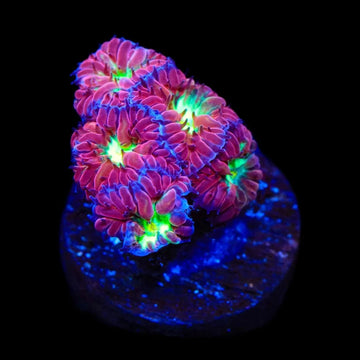
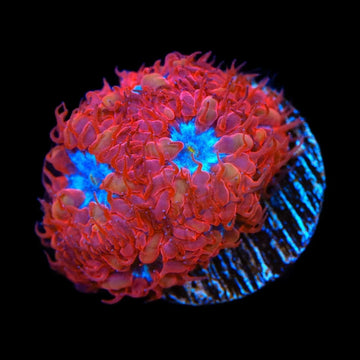
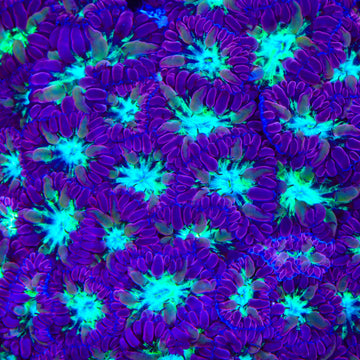
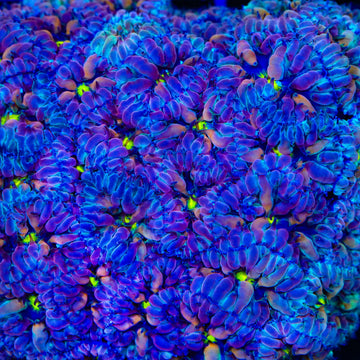
The Firey Blastomussa Coral shows large, fleshy, circular polyps with contrasting mouths. Blastomussa wellsi is an LPS stony coral that forms dome-shaped colonies; it prefers low to moderate light and gentle to moderate water flow. It relies on symbiotic algae but also accepts small meaty foods, which can boost growth and polyp expansion. Place on stable rock with space from neighbors to avoid irritation, and acclimate slowly to changes in lighting.
Quick Facts
Care
Moderate
Lighting
Low–Moderate
Flow
Low–Moderate
Placement
Low–Mid
Temperament
Semi-aggressive (2–3 inches spacing)
Recommended Parameters
Temp
76–80°F
pH
8.1–8.4
Salinity
1.025–1.026
Calcium
400–450 ppm
AlkAlkalinity
8–9 dKH
Magnesium
1250–1350 ppm
Feeding
photosynthetic, mysis shrimp, enriched brine shrimp, finely chopped marine meats (shrimp, clam), zooplankton, microplankton, coral-specific powdered foods, small LPS pellets
Care & Placement
FAQ
Frequently Asked Questions
About the Firey Blastomussa Coral
-
My Firey Blastomussa Coral inflates during the day but deflates at night—is that normal for Blastomussa wellsi?
Yes. B. wellsi often cycles through inflation and deflation tied to light and feeding rhythms. Night deflation can expose mouths for feeding. If it stays deflated for days, check for excessive flow, sudden PAR increases, or alkalinity swings. Stabilize parameters, reduce direct blast, and try small meaty foods at lights-out to encourage recovery. -
Color on my Firey morph is fading despite “perfect” numbers—what tweaks does B. wellsi prefer?
This species often prefers slightly nutrient-richer water than ultra-low systems. Aim for modest nitrate (5–15 ppm) and phosphate (0.03–0.1 ppm). Provide moderate PAR (60–120) with strong blue spectrum. Avoid rapid spectrum changes; ramp shifts over weeks. If still pale, increase targeted feeding 2–3x weekly and reduce mechanical filtration intensity. -
My Blastomussa won’t accept food—any tricks specific to this species?
Trigger feeding response with a small amino or finely minced food “tease” 5–10 minutes before offering larger particles (mysis, chopped clam). Target at dusk when tentacles are most receptive. Reduce flow briefly to keep food on mouths. If still resistant, check for vermetid snails or persistent nipping from wrasses/shrimps that deter polyp extension. -
Can Blastomussa wellsi sit near aggressive LPS, and does it have sweepers?
B. wellsi has short tentacles and is generally peaceful. It lacks long sweepers, so it’s more likely to be stung than to sting. Give 5–8 cm clearance from acans, favids, and euphylliids. Watch for slow tissue nicks along the rim—often from neighboring stingers or vermetid webs—and adjust spacing or remove irritants promptly.