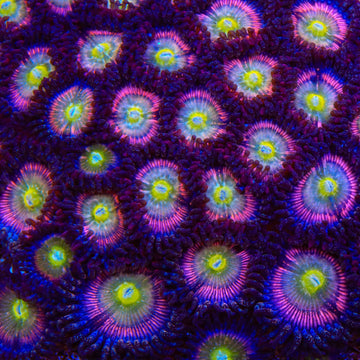
Mohawk Zoanthids Coral
Overview
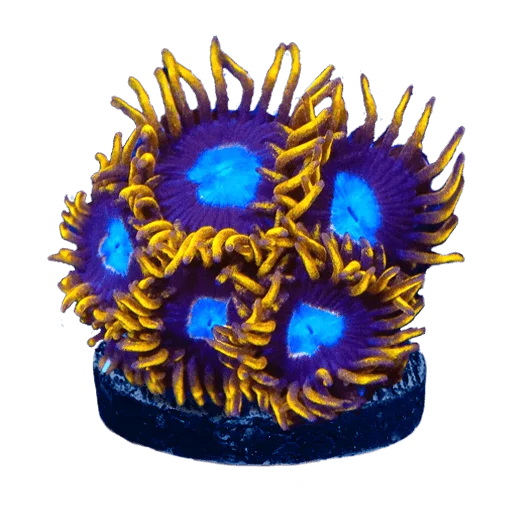
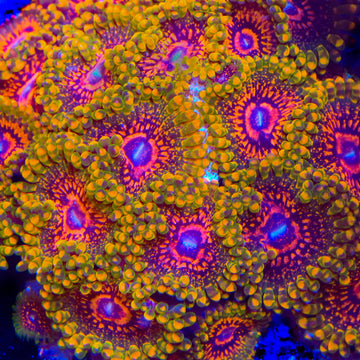
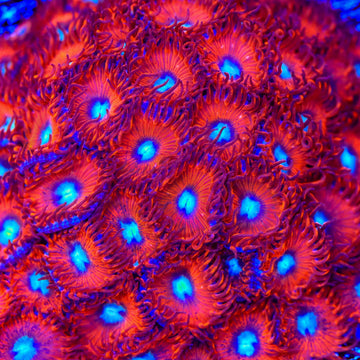
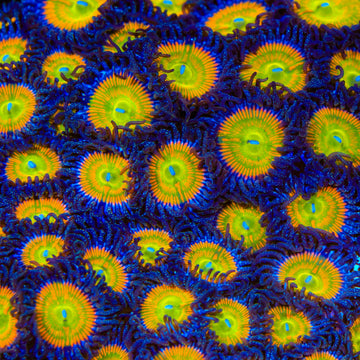
Mohawk Zoanthids Coral displays dense mats of small button polyps with bright orange skirts and contrasting centers. Zoanthus sp., a soft colonial polyp, does well under moderate light and low to moderate water flow. Primarily photosynthetic with symbiotic algae, it can take occasional fine particulate foods to support growth and color. Place on an isolated rock to control spreading, and handle with care due to potential palytoxin; keep space from aggressive neighbors.
Quick Facts
Care
Easy
Lighting
Low–Moderate
Flow
Moderate
Placement
Low–Mid
Temperament
Semi-aggressive (2–4 inches spacing)
Recommended Parameters
Temp
76–80°F
pH
8.1–8.4
Salinity
1.025–1.026
Calcium
380–450 ppm
AlkAlkalinity
8–10 dKH
Magnesium
1280–1350 ppm
Feeding
photosynthetic, microplankton, phytoplankton, zooplankton, reef roids, powdered coral foods, finely minced mysis shrimp, brine shrimp particles, copepods, marine snow
Care & Placement
FAQ
Frequently Asked Questions
About the Mohawk Zoanthids Coral
-
Why do my Mohawk Zoanthids shift from fiery orange centers to duller tones under the same PAR?
This morph is highly spectrum-sensitive. Blue-heavy lighting keeps the orange eye vivid and the skirts neon, while whiter spectrums push toward browns/greens. PAR in the 100–180 range usually holds color; too low leads to stretching, too high can wash pigment. Adjust spectrum before PAR, and give 2–3 weeks for pigments to stabilize after changes. -
My colony is “melting” after rapid growth—what’s the likely cause and fix?
Fast-expanding mats can trap detritus and irritate the coenenchyme, inviting bacterial issues. Increase random flow across the mat, turkey-baste weekly, and stabilize alk and pH. If polyps close and tissue recedes, perform iodine or Furan-2 dips, trim necrotic edges, and re-mount healthy sections to fresh plugs for recovery. -
How can I speed growth without sacrificing color or polyp size?
Keep nutrients detectable (NO3 5–15 ppm, PO4 0.03–0.1 ppm) and avoid ultra-clean systems. Provide moderate, turbulent flow so skirts flicker, not whip. Target feed tiny particle foods sparingly 1–2x weekly; overfeeding fuels film algae on the mat. Amino acids can help, but reduce dosage if skirts look stringy or polyps inflate excessively. -
What pests uniquely threaten Mohawk Zoanthids, and how do I confirm them?
Zoa-eating nudibranchs and their egg spirals (curled white ribbons) blend with the skirts; check after lights out with a blue flashlight. Sundial snails have distinct black-white spiral shells. Zoa spiders hide under the mat. Quarantine, manual removal, and sequential dips (peroxide, iodine) work; inspect between polyps with a soft brush, repeating every few days to break life cycles.