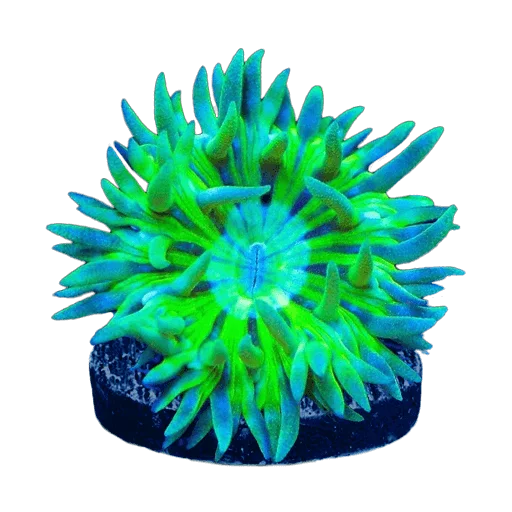
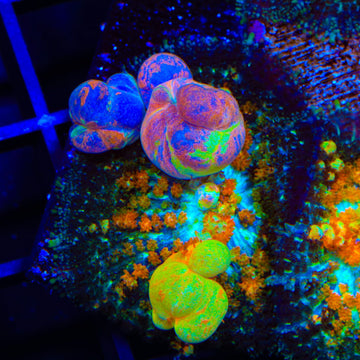
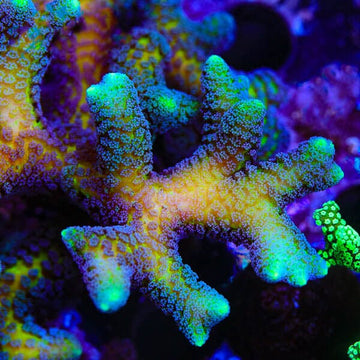
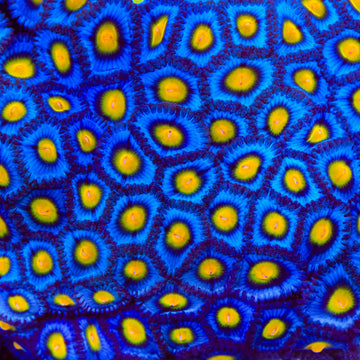
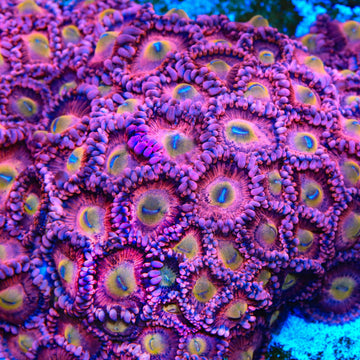
JF Dizzy Spell Montipora Coral
Overview
JF Dizzy Spell Montipora Coral features dense, small polyps and a mottled, swirling pattern on thin plates or encrusting edges. Montipora sp. is a small-polyp stony coral that grows as plating or encrusting forms, preferring moderate to high light and strong, turbulent water flow. It is primarily photosynthetic with symbiotic algae but benefits from occasional fine particulate foods to support growth and color. Place on stable rock with space to expand and keep clear of aggressive corals that may sting.
Quick Facts
Care
Moderate
Lighting
Moderate–High
Flow
Moderate–High
Placement
Mid–High
Temperament
Peaceful (2–3 inches spacing)
Recommended Parameters
Temp
76–80°F
pH
8.1–8.4
Salinity
1.025–1.026
Calcium
400–450 ppm
AlkAlkalinity
7.5–9 dKH
Magnesium
1250–1350 ppm
Feeding
photosynthetic (primary), microplankton, phytoplankton, very fine zooplankton, rotifers, bacterioplankton, powdered coral foods, amino acids
Care & Placement
FAQ
Frequently Asked Questions
About the JF Dizzy Spell Montipora Coral
-
Why does my JF Dizzy Spell Montipora keep encrusting instead of forming plates?
This strain often lays down a thick encrusting base before lifting into shelves. Plate formation speeds up once it hits stable, higher PAR (250–350) and strong, chaotic flow. If it stays flat, increase random flow, reduce shading from nearby corals, and keep alkalinity/calcium steady. Sudden parameter swings or low phosphate (<0.02 ppm) stall vertical growth. -
The swirling colors faded to dull green/brown—how can I restore pattern and contrast?
Color washout usually points to low light or elevated nutrients. Target PAR 250–350 with a blue-heavy spectrum, hold nitrate around 2–10 ppm and phosphate 0.02–0.08 ppm. Check potassium (380–420 ppm) and iron/manganese; deficits mute blues and purples. Avoid zero nutrients, but cut back on heavy feeding and white channels if pigments look flat. -
How do I detect and deal with Montipora-eating nudibranchs on this coral?
Inspect at night for tiny white nudis and crescent bite marks on undersides and edges. Remove affected pieces, manually brush eggs, and dip frags (e.g., Bayer-based or potassium dips) on a schedule every 3–4 days for 2–3 weeks to break the life cycle. Quarantine new frags, and reduce hiding spots by trimming dense plating overhangs. -
My edges are peeling in high flow—should I reduce flow or change placement?
Keep strong, turbulent flow but avoid direct laminar jets on the plating rim, which can lift tissue. Aim alternating or gyre-style movement across the colony. Tissue peel also follows alkalinity swings and abrupt PAR changes, so stabilize dKH (8–9), match salinity/temperature during moves, and ramp light changes over 1–2 weeks.