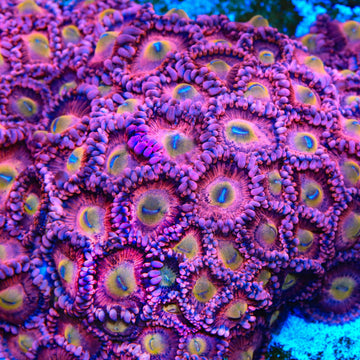
JF Fairy Ring Favia Coral
Overview
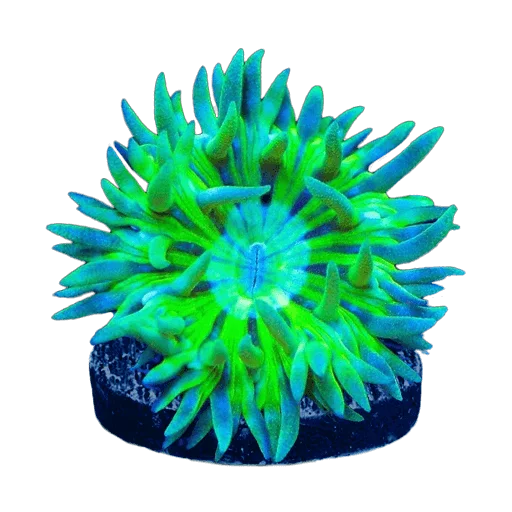
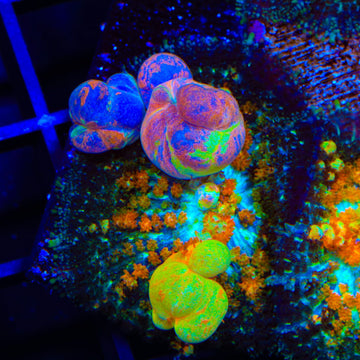
JF Fairy Ring Favia Coral shows concentric ringed polyps with raised ridges on a boulder-like skeleton. Favia favus is a stony brain coral; keep it under moderate light and moderate, indirect flow. It is photosynthetic with symbiotic algae but benefits from occasional small meaty feedings, which can increase growth and color. Provide several inches of space for nighttime sweeper tentacles and avoid placing it where tissue may rub on sharp rock.
Quick Facts
Care
Easy
Lighting
Low–Moderate
Flow
Moderate
Placement
Low–Mid
Temperament
Aggressive (long sweeper tentacles; 6+ inches spacing)
Recommended Parameters
Temp
76–80°F
pH
8.1–8.4
Salinity
1.025–1.026
Calcium
400–450 ppm
AlkAlkalinity
8–10 dKH
Magnesium
1250–1350 ppm
Feeding
photosynthetic, mysis shrimp, enriched brine shrimp, finely chopped marine meats (shrimp, krill), rotifers, zooplankton, microplankton, marine snow, coral-specific powdered foods (e.g., Reef-Roids)
Care & Placement
FAQ
Frequently Asked Questions
About the JF Fairy Ring Favia Coral
-
How do I keep the JF Fairy Ring pattern from fading or blurring over time?
Keep PAR moderate (80–150) with strong blue actinic for contrast. Too much white or PAR >200 can wash rings or brown the ridges. Provide stable nutrients (nitrate 5–15 ppm, phosphate 0.03–0.1 ppm) and avoid rapid alkalinity swings. Gentle, cross-flow prevents detritus from settling between corallites, which can shadow tissue and mute color. If fading begins, lower light by 20–30% and increase nighttime target feeding for two weeks. -
Why does this Favia send out long sweepers some nights but not others?
Sweepers expand with changing cues: nearby chemical signals, higher dissolved organics, or after heavy feeding. This morph can push 2–4 inch sweepers sporadically. Maintain a 3–4 inch buffer from neighbors and reduce turbulent blasts that trigger defense. If sweepers increase suddenly, check for new competitors (e.g., Galaxea, Euphyllia), recent carbon changes, or a big feeding event. Consistent flow and spacing reduces fluctuation. -
My colony is receding from the base while the top looks fine—what’s the likely cause?
Check for detritus accumulation and vermetid snails at the base; their mucus nets irritate tissue. Increase gentle undercurrent, elevate the colony slightly, and remove vermetids mechanically with glue caps or careful chipping. Inspect for shaded, stagnant areas and adjust rockwork. Verify stability: dKH 7.5–9, Ca 400–450, Mg 1250–1400. A 10–15% water change and iodine dip can halt early recession. -
Can this coral adapt to higher light if I want faster growth?
It tolerates higher light with patient acclimation, but growth gains are modest versus feeding and flow optimization. Increase PAR by 10–15% weekly while monitoring polyp extension and ring contrast. If ridges pale or center darkens, back down. Moderate flow that keeps surfaces clean plus targeted nighttime feedings of 0.5–1 mm foods usually improves growth more safely than big light jumps.