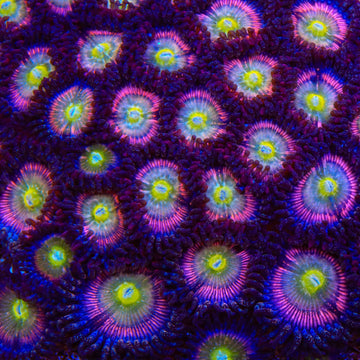
GB Butt Kisser Zoanthids Coral
Overview
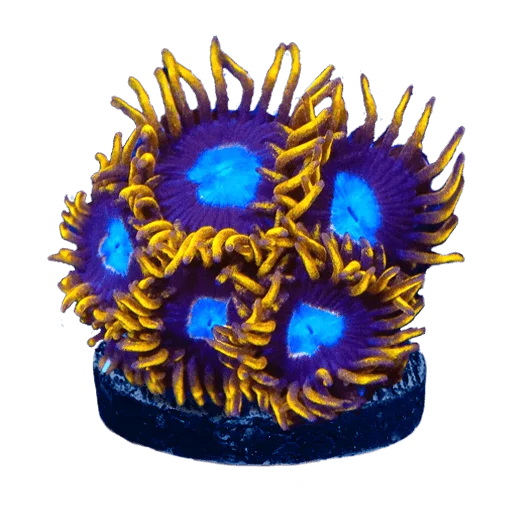
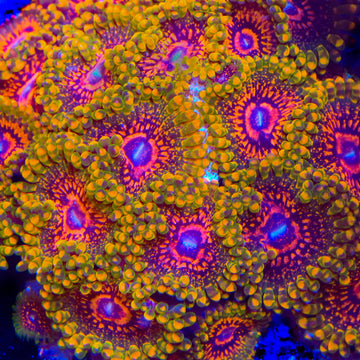
GB Butt Kisser Zoanthids Coral shows small button polyps in dense mats with contrasting oral discs. Zoanthus sp. Coral is a soft, colonial polyp that spreads by encrusting; it does well under moderate light and low to moderate water flow. It relies on symbiotic algae for energy but accepts occasional small particulate foods, which can boost growth and color stability. Place on isolated rock to control spread, keep space from aggressive neighbors, and handle with care due to potential toxins.
Quick Facts
Care
Easy
Lighting
Low–Moderate
Flow
Moderate indirect
Placement
Low–Mid
Temperament
Peaceful to semi-aggressive (2–4 inches spacing)
Recommended Parameters
Temp
76–80°F
pH
8.1–8.4
Salinity
1.025–1.026
Calcium
400–450 ppm
AlkAlkalinity
8–10 dKH
Magnesium
1250–1400 ppm
Feeding
photosynthetic (primary), rotifers, cyclops, baby brine shrimp, copepods, microplankton, phytoplankton, powdered coral foods
Care & Placement
FAQ
Frequently Asked Questions
About the GB Butt Kisser Zoanthids Coral
-
Why do my GB Butt Kisser Zoanthids change color under different lighting?
This morph holds its saturation best under blue‑heavy spectrum with moderate PAR (roughly 80–150). In very high PAR, skirts may shorten and centers can wash out; in low PAR, they may brown or stretch. Ramp light changes slowly over 2–3 weeks. Keep nitrate 5–15 ppm and phosphate 0.03–0.1 ppm to avoid pale, starved polyps or dulling from excess nutrients. -
My polyps are staying closed for days—what’s the likely cause and fix?
Check for zoa‑eating nudibranchs, sundial snails, and spiders; inspect at night and dip with iodine or a coral dip. Verify flow isn’t blasting the colony; aim for steady, indirect movement. Correct parameter swings—alkalinity and temperature shifts often trigger shutdown. If lesions appear, consider targeted Furan‑2 baths for suspected zoa pox, and stabilize nutrients. -
How fast will this morph spread, and how do I keep it from overrunning nearby corals?
GB Butt Kissers encrust quickly once settled. Mount on an isolated rock “island” or use a sand moat to confine the mat. Trim the leading edge monthly by peeling or slicing the mat with a scalpel. Run fresh carbon to mitigate chemical skirmishes and give stony corals at least a few inches of buffer space. -
Do they benefit from feeding, or is light enough?
Light supports most needs, but targeted feeding boosts growth and recovery after fragging. Once or twice weekly, broadcast very fine foods (rotifers, reef roids, or similarly sized) with pumps briefly off. Avoid overfeeding that spikes nutrients. You’ll often see faster mat extension and fuller skirts when feeding is paired with stable parameters and consistent blue spectrum.