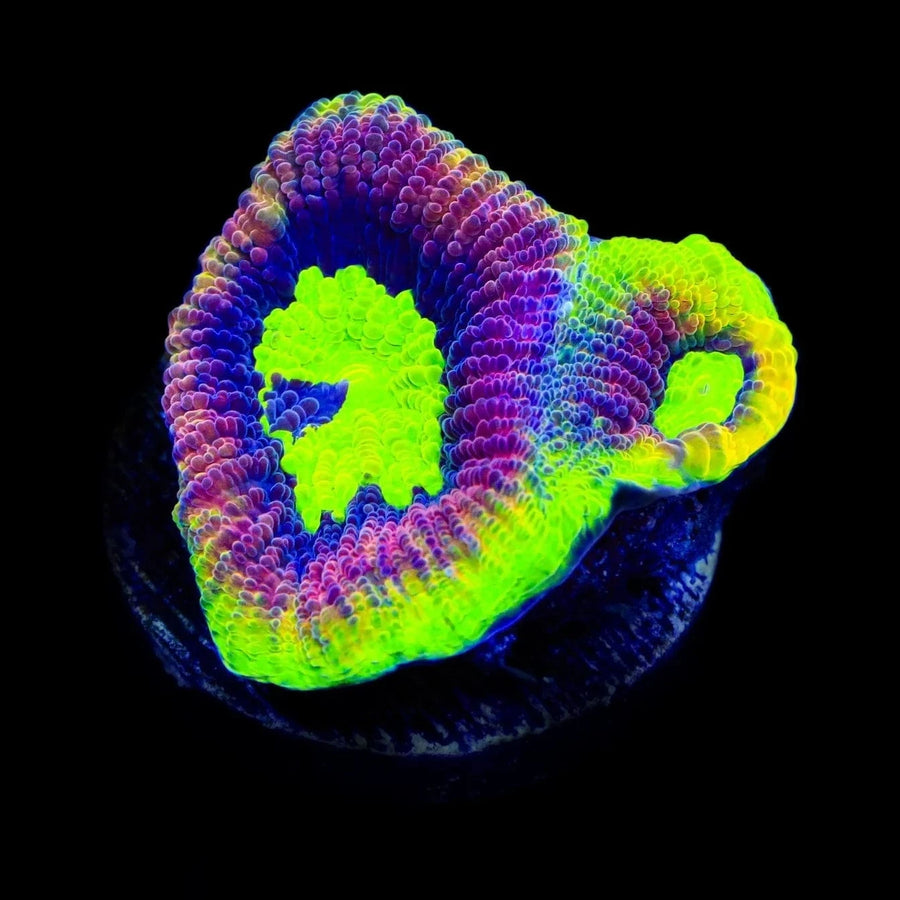
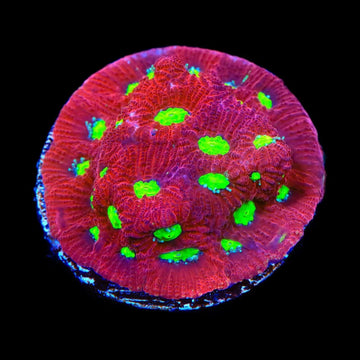
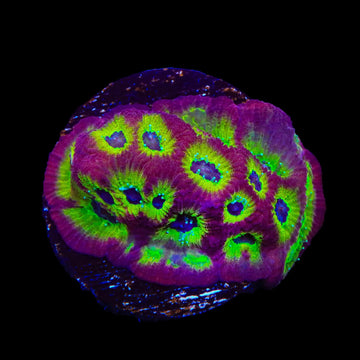
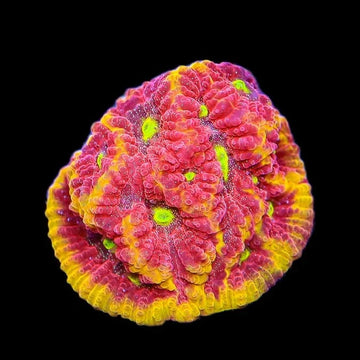
CB Bubbleyum Favia Coral
Overview
CB Bubbleyum Favia Coral shows large, rounded polyps with contrasting mouths and ridged walls. Favia favus is a stony, encrusting to dome-forming brain coral; it does well under moderate lighting and low to moderate, steady flow. It relies on symbiotic algae for energy but accepts small meaty foods at night, which can improve growth and color. Place it with space from neighbors, as sweeper tentacles can sting nearby corals.
Quick Facts
Care
Easy
Lighting
Low–Moderate
Flow
Moderate
Placement
Low–Mid
Temperament
Aggressive (4–6 inches spacing for sweeper tentacles)
Recommended Parameters
Temp
76–80°F
pH
8.1–8.4
Salinity
1.025–1.026
Calcium
400–450 ppm
AlkAlkalinity
8–10 dKH
Magnesium
1250–1350 ppm
Feeding
photosynthetic, mysis shrimp, brine shrimp, finely chopped seafood, zooplankton, microplankton, coral-specific powdered foods, marine snow
Care & Placement
FAQ
Frequently Asked Questions
About the CB Bubbleyum Favia Coral
-
Why does my CB Bubbleyum Favia change from hot pink/green to duller tones under some lights?
Favia favus fluoresces strongest under blue/UV-heavy spectra. High white intensity can mute pinks, and excessive PAR can cause top-down paling. Aim for moderate PAR (80–150), ramp light slowly after acclimation, and keep stable nutrients (nitrate 5–15 ppm, phosphate 0.03–0.08). If colors wash out, reduce whites, shorten peak photoperiod, and ensure trace-depleting carbon isn’t overused. -
How aggressive is this coral at night, and how should I place it?
It extends 1–2 inch sweeper tentacles after lights out. Give at least 2–3 inches clearance from fleshy LPS and chalices, more in high flow. Mount on an isolated rock to prevent encrusting “creep.” If neighbors show sting marks, shift flow to keep tentacles from being carried into them and increase spacing. -
What’s the best way to frag a CB Bubbleyum Favia without damaging polyps?
Use a diamond saw to cut between corallites (look for distinct walls). Avoid crushing with bone cutters, which shatter septa and cause recession. After cutting, place frags in low-moderate light, strong but indirect flow, and stable alkalinity (8–9 dKH). Target feed lightly during healing. Tissue that bridges cuts usually regrows within 2–4 weeks. -
My colony inflated and extruded white filaments—what does that mean?
Those are mesenterial filaments, typically a stress or defense response (sting from neighbors, rapid alkalinity swing, or pests). Check for recent parameter changes, remove nearby aggressors, and increase nighttime flow. If tissue damage appears, siphon detritus, perform a gentle iodine-based dip, and keep light lower until recovery. Watch for brown jelly and act quickly if seen.