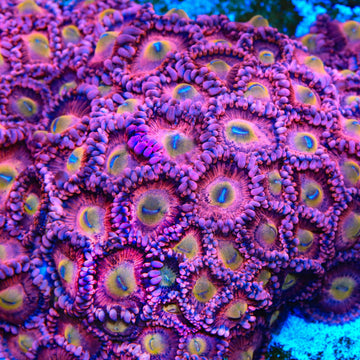
ACI Golden Girls Cyphastrea Coral
Overview
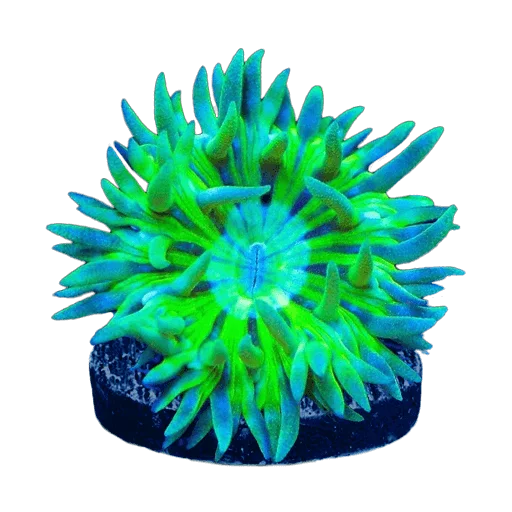
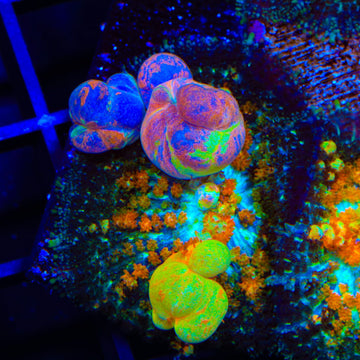
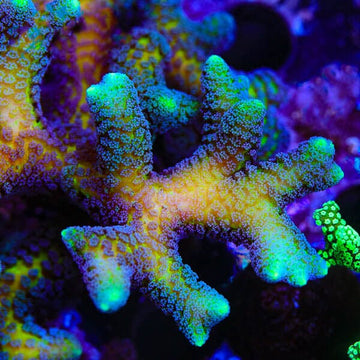
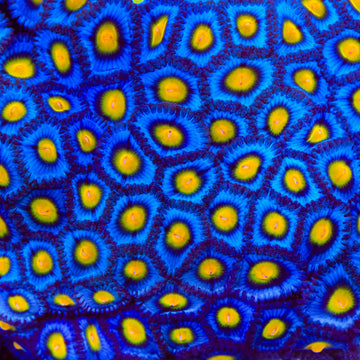
ACI Golden Girls Cyphastrea Coral shows golden-yellow polyps on a contrasting base with small star-like corallites. Cyphastrea sp. is an encrusting hard coral that forms a bumpy surface; it prefers low to moderate light and gentle to moderate water flow. It relies on symbiotic algae for most nutrition but accepts fine particulate foods, which can support growth and maintain color. Place it on stable rock away from aggressive neighbors, and allow space for gradual encrusting expansion.
Quick Facts
Care
Easy
Lighting
Low–Moderate
Flow
Low-Moderate
Placement
Low–Mid
Temperament
Peaceful (2–3 inches spacing)
Recommended Parameters
Temp
76–80°F
pH
8.1–8.4
Salinity
1.025–1.026
Calcium
420–450 ppm
AlkAlkalinity
8–9.5 dKH
Magnesium
1250–1350 ppm
Feeding
photosynthetic, microplankton, rotifers, copepods, cyclops, oyster eggs, baby brine shrimp nauplii, coral-specific powdered foods (e.g., Reef-Roids), marine snow
Care & Placement
FAQ
Frequently Asked Questions
About the ACI Golden Girls Cyphastrea Coral
-
How do I keep the “Golden Girls” coloration vibrant without bleaching my Cyphastrea?
Aim for low–moderate PAR (60–120) with a strong blue spectrum. Too much white light or PAR >150 can wash the gold to pale or greenish tones; too little light browns it out. Light-acclimate over 2–3 weeks, maintain stable alkalinity and nutrients (nitrate 5–15 ppm, phosphate 0.03–0.1), and avoid sudden carbon dosing that can strip color. -
My ACI Golden Girls is encrusting over nearby rockwork—how do I control its spread?
Mount it on a small “island” plug or isolated rock with a sand moat. If it approaches prized corals, cut a shallow chisel line in the rock or create a “frag fence” using bare epoxy. It has a modest sting but wins by slow overgrowth, so physical barriers and periodic trimming are effective. -
The coral has patchy recession at the edges—what’s the likely cause and fix?
Common triggers are alkalinity swings, vermetid snails casting mucus nets, or detritus grinding into the skin under low flow. Verify dKH stability (target 8–9), remove vermetids at the base, and increase random flow just enough to keep the surface clean without blasting polyps. Iodine-based dips help if early bacterial irritation is suspected. -
What feeding strategy actually benefits this Cyphastrea?
Nighttime broadcast of fine foods (rotifers, reef roids, powdered zooplankton) 1–3 times weekly supports tissue and color. Turn off skimmer/return for 20–30 minutes to keep particles suspended. Don’t overfeed; this species thrives with moderate nutrients and stable chemistry more than heavy target feeding.