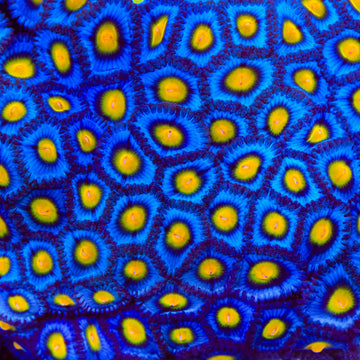
Green Palythoa Grandis Coral
Overview
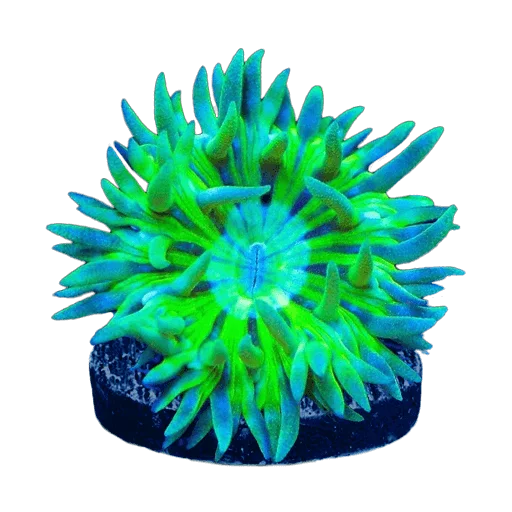
Giant Green Palythoa Coral shows very large, bright green oral discs with thick, fleshy polyps on a spreading mat. Palythoa grandis is a colonial zoanthid-type soft coral that thrives under moderate light and low to moderate water flow. It is largely photosynthetic via symbiotic algae but benefits from occasional small meaty foods, which can speed growth and maintain color. Place on isolated rock to limit spread and handle carefully, as this species can contain dangerous palytoxin.
Quick Facts
Care
Easy
Lighting
Low–Moderate
Flow
Moderate indirect
Placement
Low–Mid
Temperament
Semi-aggressive (3–6 inches spacing)
Recommended Parameters
Temp
76–80°F
pH
8.1–8.4
Salinity
1.025–1.026
Calcium
400–450 ppm
AlkAlkalinity
8–10 dKH
Magnesium
1250–1350 ppm
Feeding
photosynthetic (primary), mysis shrimp, enriched brine shrimp, finely chopped seafood, zooplankton, microplankton, coral-specific powdered foods, marine snow
Care & Placement
FAQ
Frequently Asked Questions
About the Green Palythoa Grandis Coral
-
Why do my Giant Green Palythoa (Palythoa grandis) polyps stretch tall or stay tightly cupped?
Tall, “umbrella” stretching usually means they’re reaching for light or avoiding excessive flow; tightly cupped or shrinking can indicate too much PAR or sudden light changes. Aim for moderate light and steady, cross-tank flow. Acclimate slowly when increasing intensity. If they shade themselves with mat overgrowth, thin the edges. Stable nutrients support fuller extension without “reaching.” -
What’s the best way to prevent P. grandis from overrunning the aquascape and irritating neighbors?
Mount on an isolated “island” rock or sand-ringed pedestal so the mat can’t creep onto the main structure. Trim the advancing edge regularly and siphon cuttings. Run fresh activated carbon and keep space from SPS and sensitive LPS, which can be chemically and physically irritated. Redirect flow to keep detritus from settling along the growth front. -
Why did my green fade to brown or shift under new lighting, and how can I bring back the pop?
P. grandis often appears browner under high nutrients or warm-heavy spectra. Target moderate PAR and stronger blue-violet channels (420–470 nm) for fluorescence. Avoid abrupt changes; increase intensity over 2–3 weeks. Improve export to reduce excess nutrients, but don’t strip them to zero. Consistent feeding and stability help maintain pigment without pushing to dull, zooxanthellae-heavy tones. -
Which pests or infections target P. grandis, and what actually works?
Watch for zoa-eating nudibranchs, sundial snails, and zoanthid “spiders.” Night inspections help. Use targeted removal plus coral-safe dips (e.g., iodine or commercial solutions); repeat to catch hatchlings. For zoa pox, a separate bath with Furan-2 is commonly used. Increase flow around the mat to deter detritus and film algae. Quarantine new colonies before adding to the display.