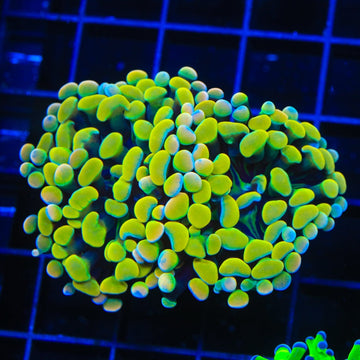
Cotton Candy Torch Coral
Overview
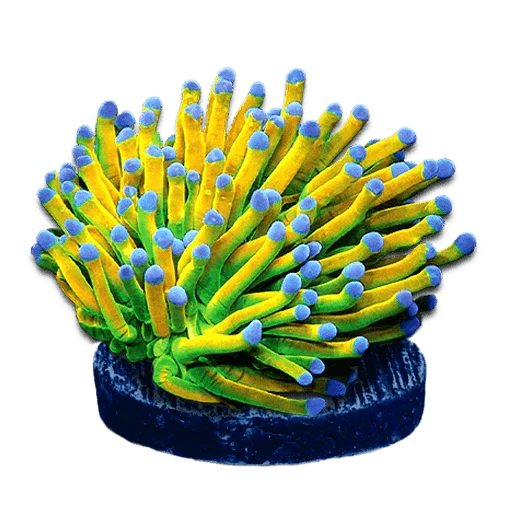
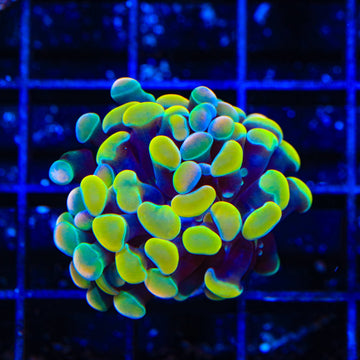
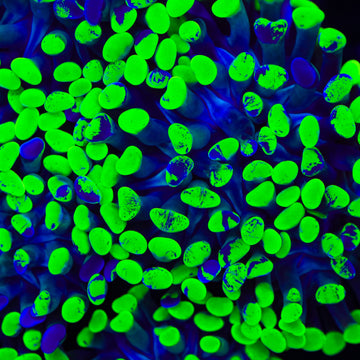
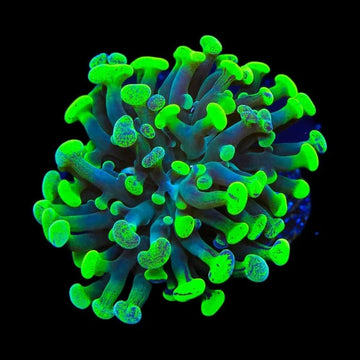
Cotton Candy Torch Coral has long, waving tentacles with pink tips and a contrasting base. Euphyllia glabrescens is a large-polyp stony coral with a branching skeleton; it prefers moderate lighting and gentle to moderate, indirect flow. It relies on symbiotic algae for energy but accepts small meaty foods, which can support faster growth and fuller polyp extension. Place it with space around the colony, as long sweeper tentacles can sting nearby corals and invertebrates.
Quick Facts
Care
Moderate
Lighting
Moderate
Flow
Moderate indirect
Placement
Mid–Low
Temperament
Aggressive (6–10 inches spacing)
Recommended Parameters
Temp
77–80°F
pH
8.1–8.4
Salinity
1.025–1.026
Calcium
420–450 ppm
AlkAlkalinity
8–9.5 dKH
Magnesium
1280–1350 ppm
Feeding
photosynthetic (primary), mysis shrimp, enriched brine shrimp, finely chopped krill or clam, zooplankton/copepods, microplankton, coral-specific microfoods (e.g., Reef Roids)
Care & Placement
FAQ
Frequently Asked Questions
About the Cotton Candy Torch Coral
-
My Cotton Candy Torch’s pink tips faded. Is this light or nutrients?
Often both. Aim for moderate PAR (150–250) with strong blue/UV for fluorescence, but keep nutrients non-zero: NO3 around 5–15 ppm and PO4 0.03–0.10 ppm. Ultra‑low nutrients wash out color and reduce polyp extension. Stable alk 8–9 dKH, Ca 420–460 ppm, Mg 1350–1450 ppm. Avoid rapid changes; small, consistent adjustments bring color back over weeks. -
Why are the tentacles short and “angry” despite good parameters?
Flow is usually the culprit. Torches like a pulsing, indirect current—enough to sway but not whip. Pointed, laminar streams cause retraction. Check for irritants: vermetid snails casting mucus, hydroids, or stings from nearby corals. Run fresh carbon after any medication use, and verify no stray metals (especially copper) via ICP if retraction persists. -
What’s the best way to prevent brown jelly disease on torches?
Prevention: stability, moderate flow, and quick removal of damaged tissue. At first sign (brown, stringy slime, rapid recession), isolate the head, perform an iodine dip, and increase aeration/flow around the colony. Siphon loose jelly, trim necrotic areas, and maintain clean, oxygenated water. Keep nutrients reasonable and avoid large parameter corrections during recovery. -
Can Cotton Candy Torches coexist with other Euphyllia?
They’re often more aggressive than hammers/frogspawn, with sweepers reaching 6–10 inches at night. Give a wide buffer and avoid direct contact. Chemical competition can still occur in tight spaces, so run carbon and ensure good export. If mixing, place torches on the higher‑flow edge of the zone; they tolerate more movement than most Euphyllia cousins.