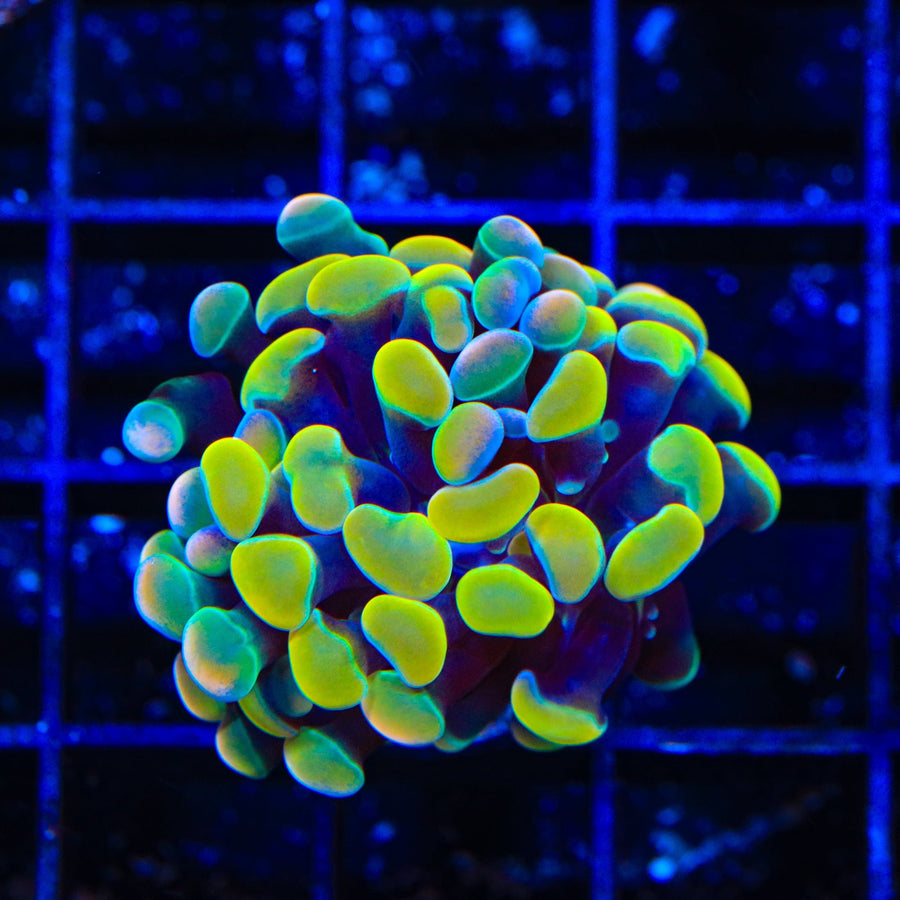
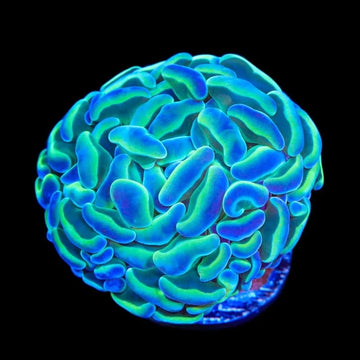
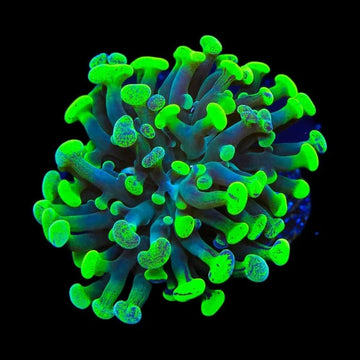
Key Lime Pie Hammer Coral
Overview
Key Lime Pie Hammer Coral shows green to yellow hammer-shaped tentacle tips with branching heads. Fimbriaphyllia paraancora is a branching large-polyp stony coral that prefers moderate light and gentle to moderate, indirect flow. It relies on symbiotic algae for most nutrition but accepts occasional small meaty foods, which can support faster growth and stronger color. Place with ample space from other corals due to long stinging sweepers, and avoid high-flow areas that can cause tissue damage.
Quick Facts
Care
Moderate
Lighting
Moderate
Flow
Moderate, indirect
Placement
Mid–Low
Temperament
Semi-aggressive (6–8 inches spacing)
Recommended Parameters
Temp
76–80°F
pH
8.1–8.4
Salinity
1.025–1.026
Calcium
400–450 ppm
AlkAlkalinity
8–10 dKH
Magnesium
1280–1350 ppm
Feeding
photosynthetic, mysis shrimp, enriched brine shrimp, finely chopped seafood (shrimp, clam), zooplankton, microplankton, LPS pellets, coral-specific microfoods
Care & Placement
FAQ
Frequently Asked Questions
About the Key Lime Pie Hammer Coral
-
How can I keep the “Key Lime Pie” neon color from fading in my Fimbriaphyllia paraancora?
Run a blue-leaning spectrum (heavy in 420–470 nm) with moderate PAR (80–150). Avoid ultra-low nutrients; target nitrate 5–15 ppm and phosphate 0.03–0.10 ppm. Stable alkalinity (8–9 dKH), calcium (420–460 ppm), and magnesium (1300–1400 ppm) support pigment stability. Too much white light or rapid nutrient drops mute color. Gentle target feeding 1–2x weekly can help, but overfeeding increases infection risk. -
How do I read its polyp shape to tune light and flow?
Long, inflated “hammers” with gentle sway indicate good conditions. Overextended, thin tentacles reaching upward suggest low light; pale tissue and withdrawn tentacles point to excess light. Whipping, torched tissue or torn edges mean flow is too direct; aim for diffuse, oscillating movement. Recession at the skeleton rim often tracks alkalinity swings or mechanical abrasion—stabilize parameters and adjust placement to avoid rubbing. -
Can different hammer morphs touch, and what neighbors should I avoid?
Only allow heads from the same colony or known clones to touch. Different genotypes, even within Fimbriaphyllia, may sting each other over time. Give 3–6 inches clearance; at night, sweepers can extend farther. Avoid contact with torches (F. glabrescens), which pack stronger stings. Keep distance from abrasive rocks and sand that can cut tissue at the septa and invite infection. -
Why did a head bail out, and can it be saved?
Polyp bailout can follow rapid parameter swings, chemical stress (allelopathy), excessive direct flow, or acute light shock. If a head detaches, place it in a low-flow specimen cup with rubble under moderate light and stable parameters; some will reattach. Run fresh carbon, perform small water changes, and verify ammonia is zero. Review recent changes—large dosing corrections and aggressive lighting shifts are common triggers.